







20 May – The new art space Jia Art, designed by Foster + Partners, has officially opened to the public. Located in Putuo District, Shanghai, the gallery forms an integral part of the overall masterplan for the Changfeng mixed-use development. Positioned on the southern plot of the scheme, at the intersection of two major urban axes, it has been conceived as the cultural and social heart of the district.
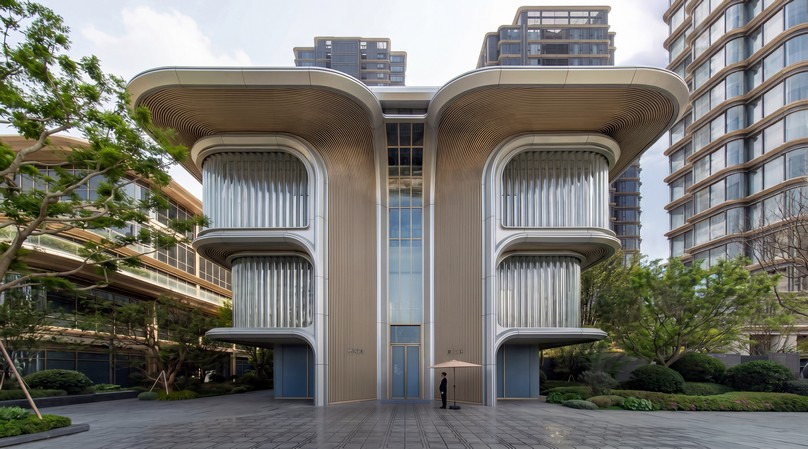
The design is inspired by spring blessing flowers, with the gallery’s form emulating four petals – the petals grow from the building’s base, curving upwards and outwards to create the roof.
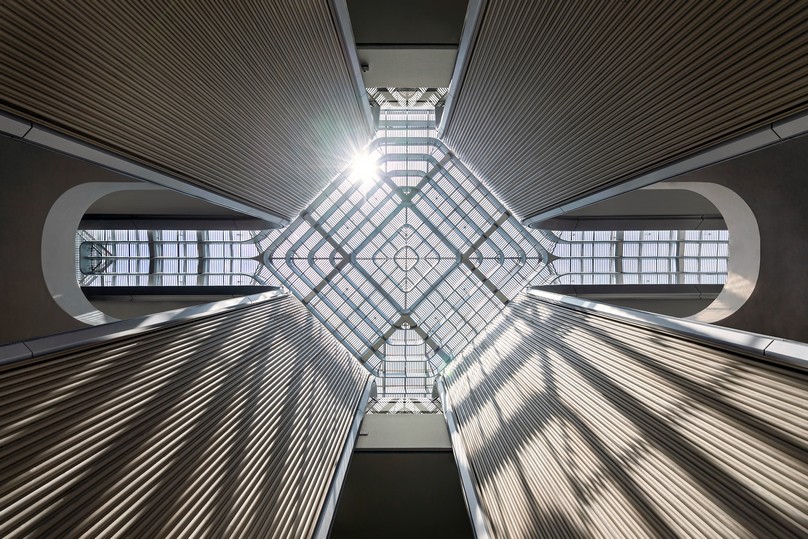
Natural light enters the gallery’s atria and exhibition spaces through a central glass skylight, which integrates seamlessly with the petaloid form.
Norman Foster, Founder and Executive Chairman of Foster + Partners, remarked: “The Jia Art project highlights the importance of integrating art and culture into urban life. It will inject fresh vitality into public spaces, foster a sense of community identity, and strengthen the connection between the new Changfeng district and the wider fabric of Shanghai.”
Gerard Evenden, Head of Studio at Foster + Partners, added: “We are delighted to witness the official opening of Jia Art. As a core element of the Changfeng development, the gallery will help establish Putuo District as a vibrant new destination. Its distinctive architectural form, dynamic façade design, and light-filled exhibition spaces not only respond to the surrounding urban context but also embody the spirit of community promoted by the masterplan.”
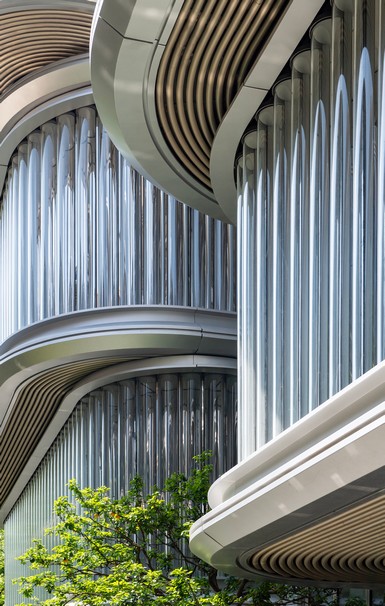
The façade features tubular glass ribs that travel vertically up the building, alongside mirror-finished stainless-steel curved back panelling. 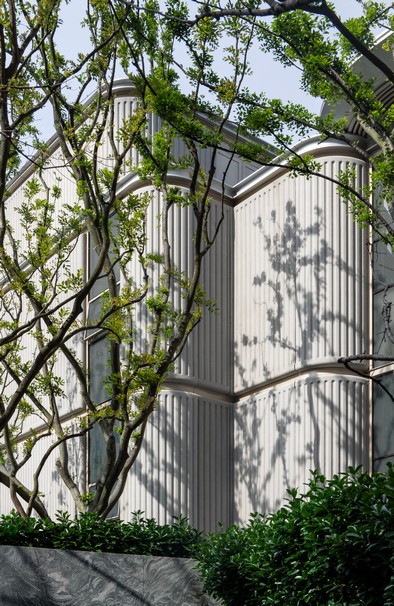
Ultra-High Performance Concrete panels on the west facade enhance privacy.
With a total floor area of approximately 5,000 square metres, Jia Art combines exhibition, event, and educational functions, providing the local community with a central venue for entertainment, exchange, and cultural engagement. The gallery showcases both contemporary and traditional art, and is composed of two buildings linked by a double-height atrium. The north building houses the main exhibition spaces, while the south building accommodates supporting facilities, additional galleries, and lecture halls.
The architectural design draws inspiration from the blooming wintersweet flowers in Changfeng Park. The building’s form resembles four petals rising from the base, curving outward to define the roofline. A skylight integrated into the petal geometry brings soft natural light into the atrium and galleries.
John Blythe, Senior Partner at Foster + Partners, commented: “This museum takes inspiration from the geometry of a blossoming flower, with flowing curved surfaces extending outward from the centre. Its internal symmetry creates a sense of calm and balance within the fast-paced urban environment.”
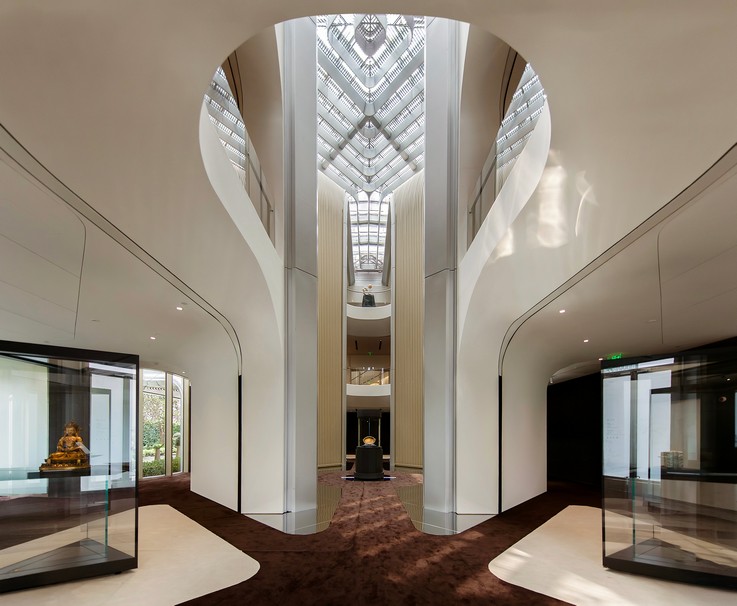
Exhibition spaces feature a soft, natural colour palette that works in harmony with the petal motif. 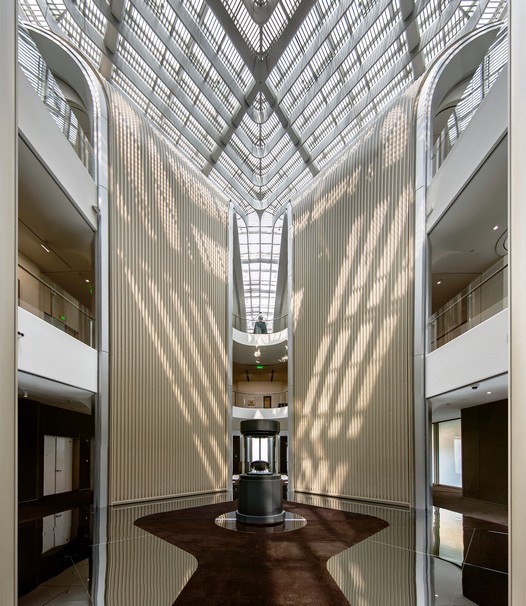
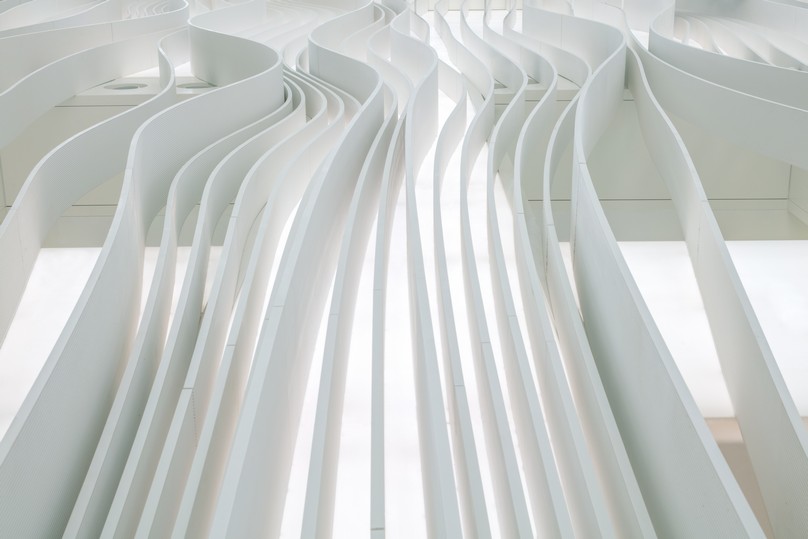
The central atrium is characterised by its striking curved form that echoes the building’s exterior.
The gallery’s welcoming scale complements the wider development, offering residents and visitors a warm, open public environment. The façade features vertical curved glass tubes backed by mirrored stainless steel panels. By day, the curtain wall reflects natural light; by night, it glows from within, creating a dynamic architectural presence. The west elevation employs ultra-high-performance concrete panels (UHPC), enhancing privacy for interior spaces.
The central atrium, defined by striking curves, echoes the building’s external form. A seamless design language unites interior and exterior, while the galleries adopt a soft, natural colour palette that harmonises with the petal-inspired architecture.
The Changfeng Complex embodies the “Live-Work-Play” urban design philosophy, integrating retail, offices, affordable housing, public amenities, cultural buildings, and leisure areas. Extensive landscaping on the western side connects with the Suzhou Creek green corridor, reinforcing the project’s commitment to wellbeing and community belonging.
Read more at fosterandpartners.com