










• Schindler Elevators Power Europe’s Highest Research Facility

    22 October 2025

    With temperatures dropping as low as -37°C and an altitude of nearly 3,600 meters, installing and maintaining two elevators at the Sphinx Observatory in the Swiss Alps was anything but a standard project.

    Built on a mountain summit at 3,571 meters in Switzerland, the Sphinx Observatory is the highest research facility of its kind in Europe and one of the highest in the world. Here, scientists conduct atmospheric, astronomical, and glaciological studies that support vital long-term experiments and global monitoring efforts. Every day, researchers, laboratory staff, and thousands of visitors depend on two Schindler elevators – among the fastest in Europe – to access the observatory and its panoramic viewing deck.

    When the facility first opened in 1937, visitors and scientists relied on a single elevator. As tourism grew, rides to the top became lengthy and long waits became the norm. In the 1990s, the original elevator was replaced with two modern Schindler elevators, dramatically improving efficiency and reliably. Recently, the twin elevators underwent a modernization process to ensure they continue operating smoothly. At such high altitude and under extreme conditions, where temperatures often plunge to -37°C, the project demanded meticulous planning, innovative engineering and expert human oversight.

    “We encountered all kinds of challenges in this project,” explains Roger Zehr, technical project lead at Schindler. “All heavy parts and materials had to be transported by train, and the motor was delivered to the machine room completely disassembled for easier transport. The altitude itself was a challenge, as it affects breathing and concentration and can cause headaches and dizziness. It was crucial for our team to acclimatize first and get proper rest to be able to work safely.”

    Elevated requirements

    The Schindler elevators at the Sphinx Observatory were built for performance – they travel upwards 108 meters in just 25 seconds. Above their shafts, carved inside the mountain rock, sit two massive machines, each weighing more than two tons, responsible for pulling the lift cars.

    To adapt to the demands of this remote, high-altitude location, various hardware modifications were made. At the customer’s request, the system was also equipped with lightning protection.

    “We routed all individual wires from the control system, cabin, and shaft through lightning protection elements,” Zehr explains. “This made the assembly process far more complex. Normally, the hanging cable comes with finished connectors that simply plug in on both sides.”

    Teamwork on track

    Both the initial installation in the 1990s and the recent modernization relied heavily on the partnership with the Jungfrau Railway, which was essential for transporting materials, parts, and personnel. Their destination was Jungfraujoch Station, Europe’s highest train station, located beneath the Sphinx Observatory. The Jungfrau Railway climbs 1,400 meters in just 30 minutes, running on a specially engineered track system designed to handle the extreme gradient.

    Kurt Weber, a retired Schindler technician who worked on the installation of the elevators over 30 years ago, recalls how crucial strong collaboration with the railway team was from the very beginning.

    “We exchanged phone numbers, and I told them to call me anytime if they needed anything, even on weekends – that reassured them”, Weber recalls. “Once, one of them called me while I was on holiday in Egypt, and I was able to help over the phone. He still reminds me of that today. It’s something special.”

    For Zehr, that same spirit of collaboration continues to define the project.

    “The teamwork was unique in such a one-of-a-kind, hard-to-reach place, everyone is very helpful and understanding,” he reflects. “The location itself is extraordinary. It was a fantastic project to work on.”
    More Technology & Products
    Grow Where You Glow: MAERICH’s G-Spot Tech Rewrites Urban Nature
    Underground gardens are no longer sci-fi. MAERICH’s G-Spot Recessed Grow-Light Series, designed with WOHA, flips the switch on what lighting tech can do, bringing nature back to the city, even where sunlight doesn’t reach. No Sun, No Problem: The Future of Biophilic Lighting MAERICH’s G-Spot Recessed Grow-Light Series is a sharp, modular lighting system engineered for spaces where [...]
    Izakaya reinvented with a touch of American white oak
    Kaya Restaurant at newly opened Standard Hotel in Singapore elevates its interiors with natural materials Photography: Jovian Lim Designed by Colin Seah of Ministry of Design, the interiors play up the hotel’s love and obsession with all things rich in biophilia and mid-century modern, intensifying it with pizzazz through their selection of carefully crafted custom furniture, a dramatic [...]
    Mass Timber, Maximum Impact – Vancouver’s PNE Amphitheatre Blends Sustainability, Sound, & Spectacle
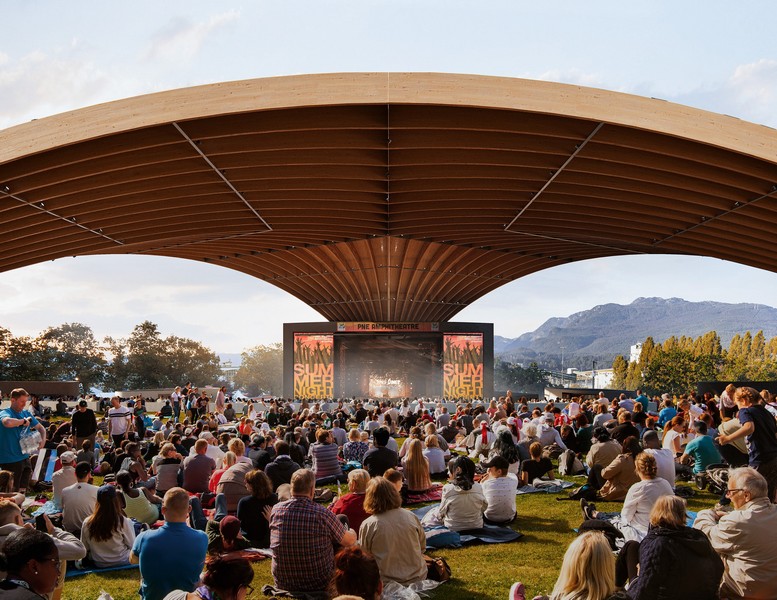
    There’s a new headline act in Vancouver, and it’s made almost entirely of wood. The PNE Amphitheatre (aka the Freedom Mobile Arch) pushes the limits of what mass timber can do. This striking outdoor venue, set to host crowds of up to 10,000 and major events like the FIFA Fan Festival™, commands attention with its 105-metre starburst roof structure made of regional glulam and [...]
    Where Architecture Meets Algorithm, Where Brutalism Meets Bioluminescence
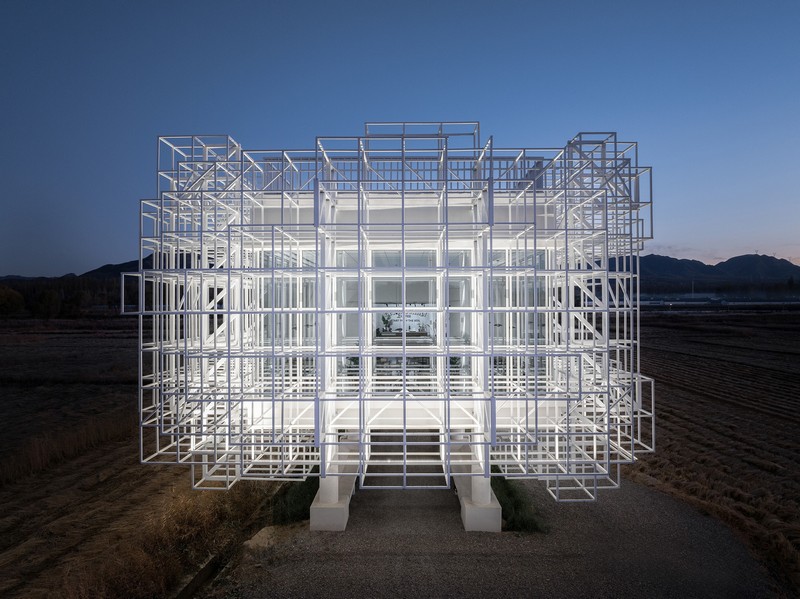
    Rising from the windswept plains of Zhangbei County in northern China, Zhangbei Mirage is far more than an observation deck – it’s a technological ode to transparency, structure, and the poetry of light. Designed by Beijing-based lighting studio Puri Lighting Design, the project is a masterclass in how space and luminance can merge to create not just a building, but a sensory [...]
    Timber Canopy, Civic Soul: Uberlândia’s Architectural Landmark
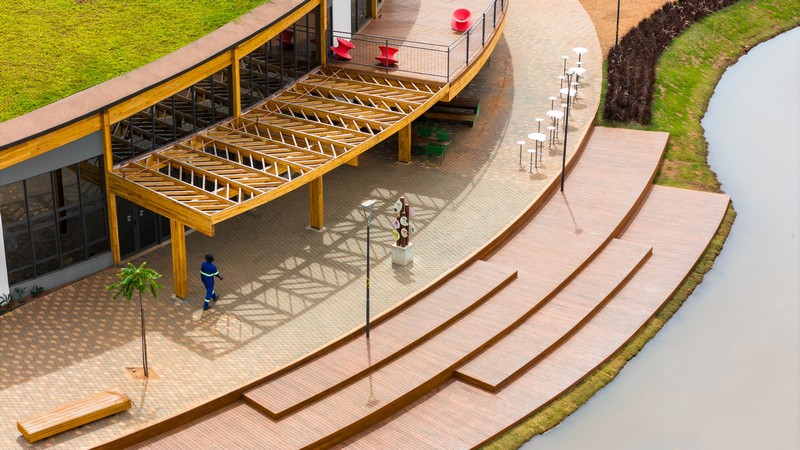
    Set within the vibrant landscape of Uberlândia, Brazil, Casa Una is a bold intersection of architecture, sustainability, and community life. Designed by MDAD Arquitetura e Design with interiors by TODOS Arquitetura, Casa Una anchors Parque Una as a flexible, open-hearted hub for cultural events, civic engagement, and everyday connection. The architecture is defined by a sweeping curved [...]
    Toward Carbon Neutrality: An Innovative Design Partnership Launches a More Sustainable Concrete Brick
    In the global race to combat climate change, the construction industry stands at a critical crossroads. With nearly 40% of global carbon emissions tied to building and infrastructure development, the pressure to innovate has never been greater. But innovation isn’t just about creating sleeker skylines—it’s about reimagining what we build with, how we build, and why. The journey toward [...]
    Flowing elegance with Brunner new Wave table.
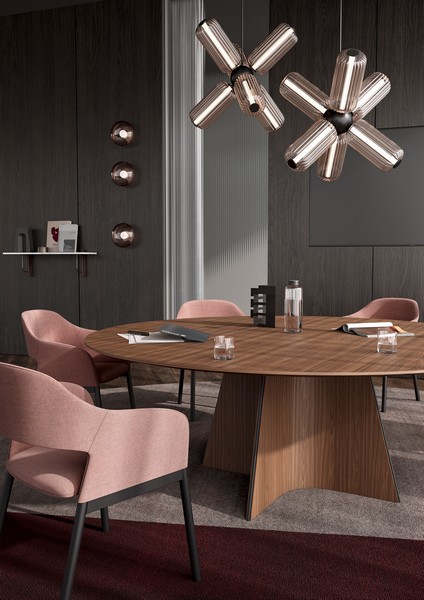
    Brunner’s new conference table system Wave combines elegance and functionality. The striking wave shape of the table legs creates a unique design, while the robust steel construction ensures maximum stability even with large dimensions. The flexible supporting structure, including cable guide rail, allows for a wide range of table shapes and numerous customisation options. A table that [...]
    Deep Time Palace: A Monument of Concrete and Memory
    Standing beneath the plaza of the Palace Museum of the Manchurian Regime in Changchun, you wouldn’t suspect that beneath your feet, a vast and intricate architectural wonder lies buried—the largest fair-faced concrete underground megastructure in Northeastern China. Photography: CreatAR Images Designed by Wutopia Lab and completed after six years of meticulous planning, Deep Time [...]
    Macau LRT Seac Pai Van & Hengqin Extension Lines begins commercial operations
    (2 December 2024, Tokyo) Mitsubishi Heavy Industries, Ltd. (MHI) has completed the delivery of the Macau Light Rapid Transit¹ (Macau LRT) Seac Pai Van and Hengqin Extension Lines. This comes after the completion of Barra Extension Line2 delivered last year, which was awarded by the Public Works Bureau (DSOP) of the Macau Special Administrative Region of China. The Seac Pai Van Line and the [...]