












JLL’s 2026 Global Real Estate Transparency Index shows Asia Pacific accounts for half of the world’s top 10 transparency improvers, while Hong Kong ranks as Asia’s third most transparent real estate market, behind only Japan and Singapore
Key Takeaways
- Hong Kong maintains its global standing: Hong Kong ranks 14th globally with a composite score of 1.97, remaining firmly in the “Transparent” tier.
- Transparency Supports Investment Growth: Highly transparent markets recorded the strongest growth in investment volumes over the past two years, attracting USD 1.4 trillion of real estate capital, supported by scale, technology adoption and increasing allocations to growth sectors.
- Alternative sectors, debt markets, digitisation and energy are driving transparency gains: Progress is being fuelled by greater transparency across alternative sectors, credit markets and energy performance tracking, with digitisation contributing to progress as over 90% of occupiers and investors now use AI tools.
JLL (NYSE: JLL) has released the 14th edition of its Global Real Estate Transparency Index (GRETI), which shows that two-thirds of global markets improved their transparency levels over the past two years. While established markets continue to attract the majority of global capital, countries across Asia Pacific (APAC) and the Middle East and North Africa (MENA) have emerged as key drivers of transparency gains, supported by rapid digitisation and proactive government reforms.
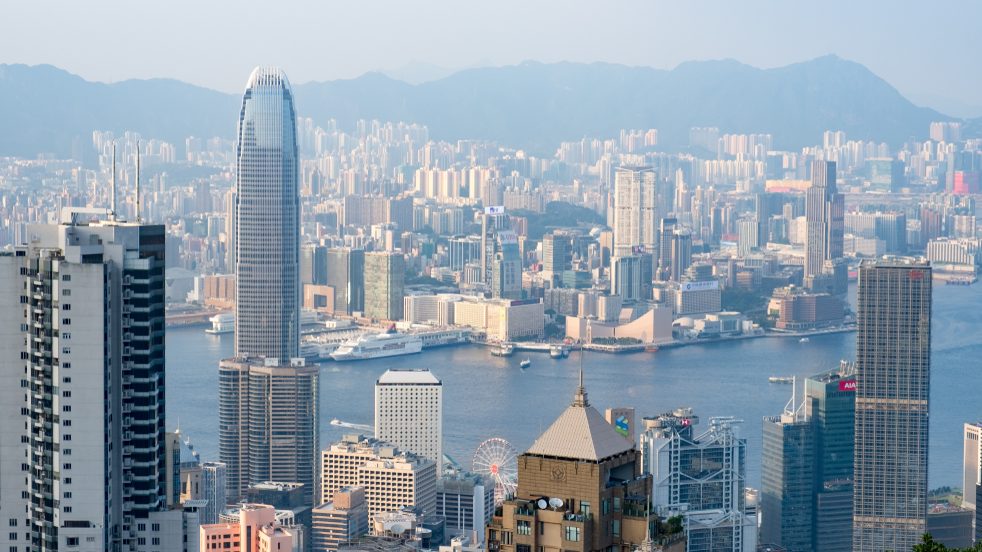
Hong Kong maintained its 14th-place global ranking, with a composite score of 1.97, unchanged from the previous edition. The city remains within the “Transparent” tier and continues to rank among the most transparent real estate markets in Asia. Within the region, only Japan and Singapore ranked higher, placing 12th and 13th globally, respectively.
Alex Barnes, Co-CEO at JLL in Greater China, said:
“Hong Kong’s continued ranking among the world’s most transparent real estate markets underscores the strength and maturity of its market framework. As global investors become increasingly discerning, access to reliable market information, regulatory certainty and technology-driven data will play an ever more important role in sustaining investor confidence and supporting capital flows. Further progress in emerging sectors, including alternative assets, credit markets and building performance, will strengthen Hong Kong’s competitiveness as a leading international real estate investment hub.”
Asia Pacific recorded the strongest regional improvement in this year’s survey, accounting for half of the world’s top 10 most improved markets. India led the gains, supported by the expansion of its digital infrastructure, greater availability of market data and a growing REIT sector. Vietnam, South Korea, Australia, already among the world’s most transparent markets, and Thailand also made significant progress by strengthening corporate governance standards, enhancing legal enforcement and increasing disclosure across alternative property sectors. As a result, cross-border investment into Asia Pacific has rebounded sharply, driving direct transaction volumes in key markets, including India and Vietnam, to record highs.
In several MENA markets, ongoing institutionalisation has helped attract foreign capital despite geopolitical challenges. Saudi Arabia, Dubai, Abu Dhabi and Qatar were among the world’s top improvers, supported by national initiatives such as Saudi Arabia’s Vision 2030 reforms and the Dubai Land Department’s REST programme. These measures are enhancing market transparency and strengthening the institutional framework required by international investors and lenders.
As market conditions become increasingly fragmented, commercial real estate transparency has become a critical driver of global liquidity and capital allocation. Transaction volumes across the “Highly Transparent” markets have risen by 64% over the past two years, outperforming the rest of the world by 20 percentage points. As investors increasingly prioritise scale, timely price discovery and reliable data to manage risk, these 13 markets now account for 56% of the world’s income-producing real estate and more than 80% of global direct investment.
Beyond traditional property sectors, greater transparency is broadening the investable universe to include more operationally intensive and non-traditional real estate assets. Alternative sectors such as data centres and infrastructure now account for 20% of global direct transaction volumes, with investors placing increasing emphasis on transparency around energy grid capacity, power availability and operational resilience.
Dominic Silman, Chief Economist for LaSalle, said:
“Over the past cycle, transparency gains have been concentrated in debt markets and niche and alternative sectors, which are steadily closing the gap with traditional sectors in terms of data availability. Improving transparency within an alternative sector is often a leading indicator of greater institutionalisation and increased investment activity.”
At the same time, regulatory reforms are attracting increasing flows of private wealth, retail and pension capital into real estate, driving demand for more standardised, higher-frequency reporting and greater valuation transparency.
FAQs
- Why is transparency in some markets in the Asia-Pacific and Middle East improving so rapidly compared to the rest of the world?
Answer: These countries are seeing the results of long-term government strategies aimed at economic diversification and attracting foreign investment. Rather than incremental changes, governments in places like India, Vietnam and South Korea are executing sweeping tech-forward reforms and enforcing stricter corporate governance. - How is improved transparency impacting real estate investment in the most improved markets in the Asia-Pacific and Middle East regions?
Answer: Transparency provides the price discovery and risk mitigation that institutional investors require. As these markets have improved their data availability and regulatory frameworks, capital has followed. We are seeing cross-border investment into APAC rebound sharply, with direct transaction volumes in both India and Vietnam hitting all-time historic highs. - What specific technologies are driving transparency improvements?
Answer: It ranges from fundamental digital infrastructure to advanced AI. Governments are making significant progress in digitising land registries, planning services and public records, providing real time, disaggregated and publicly accessible property data. Globally, over 90% of occupiers and investors are now using AI tools to analyse market fundamentals, making centralised government data more valuable than ever for predicting capital markets opportunities. - The report notes that global transaction volumes in “Highly Transparent” markets rose 64%. Does that mean capital is ignoring emerging markets?
Answer: Not at all. Highly transparent markets account for about 80% of direct investment because they have the deepest capital markets and scale. However, there are significant untapped opportunities in a number of rapidly improving markets outside this group. As APAC and MENA markets close the transparency gap, they are likely to capture a larger share of global capital. - Beyond traditional office, logistics and retail sectors, how is transparency evolving?
Answer: Alternative sectors such as data centers, manufacturing and infrastructure now account for 20% of direct transaction volumes globally, double their share from ten years ago. Transparency in 2026 isn’t just about knowing building rents; it’s about having clear data on operating expenses, energy capacity and costs and evolving regulatory environments.