











Frank Gehry (1929–2025) remains one of the most polarizing figures in contemporary architecture. Born in Toronto and based in Los Angeles, Gehry’s career spanned more than six decades, defined by a restless experimentation with form, material, and the limits of construction technology.
His work is often labeled “deconstructivist,” though he resisted such categorization, preferring to see architecture as a fluid response to context and human experience.
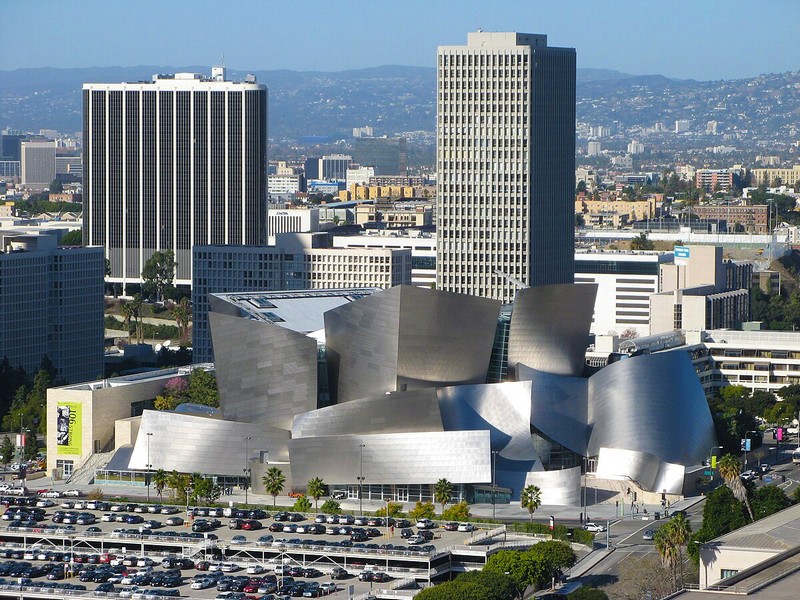
Walt Disney Concert Hall, Los Angeles, USA
“Architecture should speak of its time and place, but yearn for timelessness.”
Gehry’s international reputation was cemented with the Guggenheim Museum Bilbao (1997), a project that not only transformed a city but also became shorthand for the so-called “Bilbao Effect”—the idea that architecture could catalyze urban regeneration. Yet Gehry’s legacy is not confined to Europe or North America. In Asia, his footprint is more selective but equally telling.
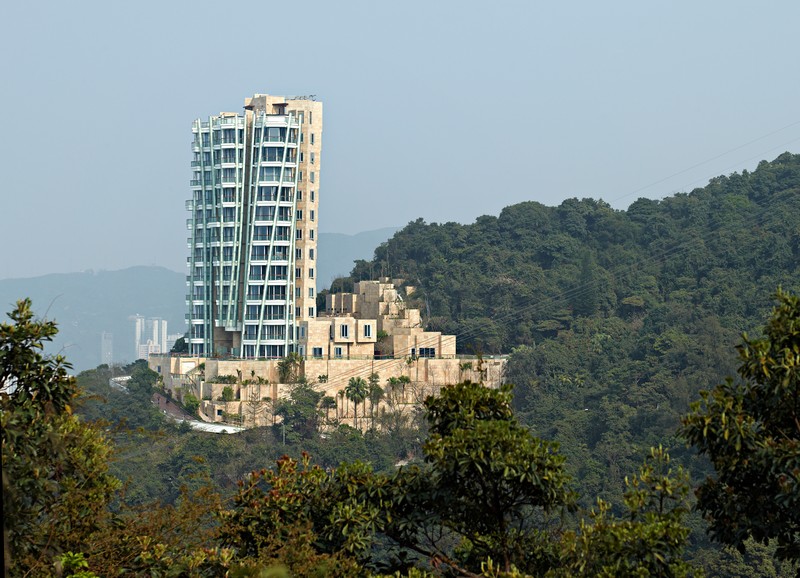
Opus Hong Kong, Hong Kong SAR 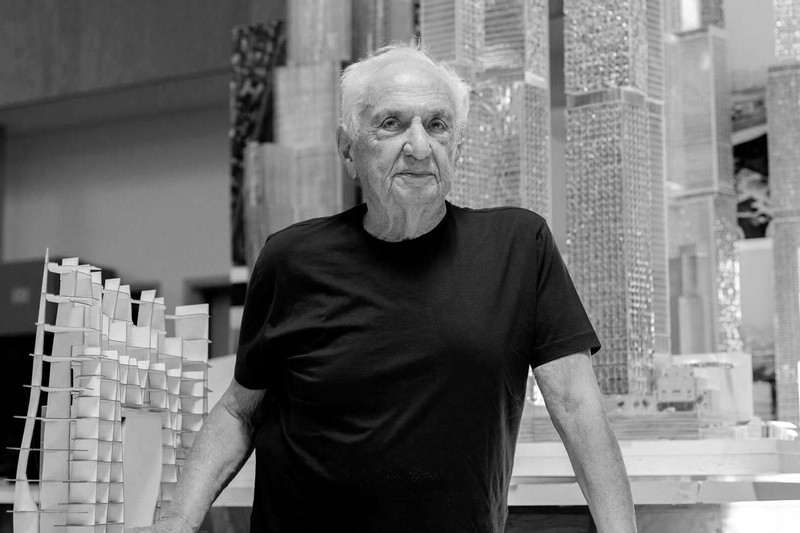
Frank Gehry (1929–2025)
In Hong Kong, Gehry designed Opus Hong Kong (2012), a twisting 12-storey residential tower on Stubbs Road. The building’s spiraling form and panoramic views marked his first residential project in Asia, and it remains one of the city’s most distinctive luxury developments. Gehry was also involved in early proposals for the West Kowloon Cultural District, including a vision for a Guggenheim museum that was ultimately shelved—a missed opportunity that underscored Hong Kong’s ambivalence toward bold architectural gestures.*₁
“You’ve got to bumble forward into the unknown.”
Elsewhere in Asia, Gehry contributed to projects in Taiwan and South Korea, though not all reached completion. His designs often clashed with local planning realities, highlighting the tension between his sculptural ambitions and bureaucratic pragmatism. Still, Gehry’s Asian ventures illustrate his willingness to test ideas beyond the Western canon, even if outcomes were uneven.
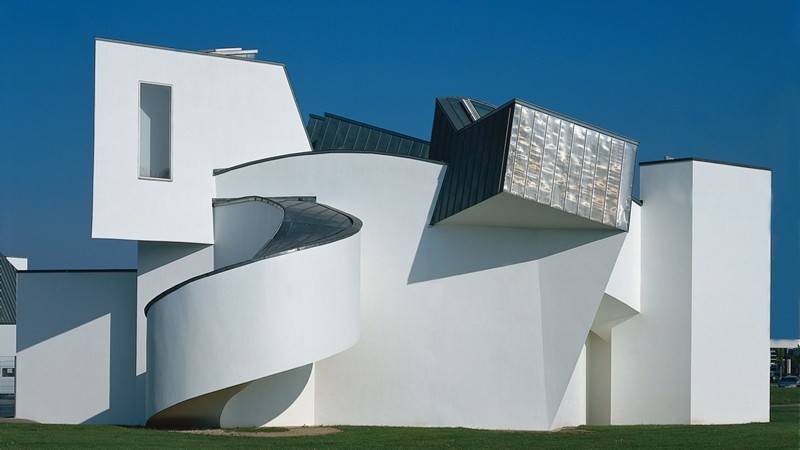
Vitra Design Museum, Weil am Rhein, Germany 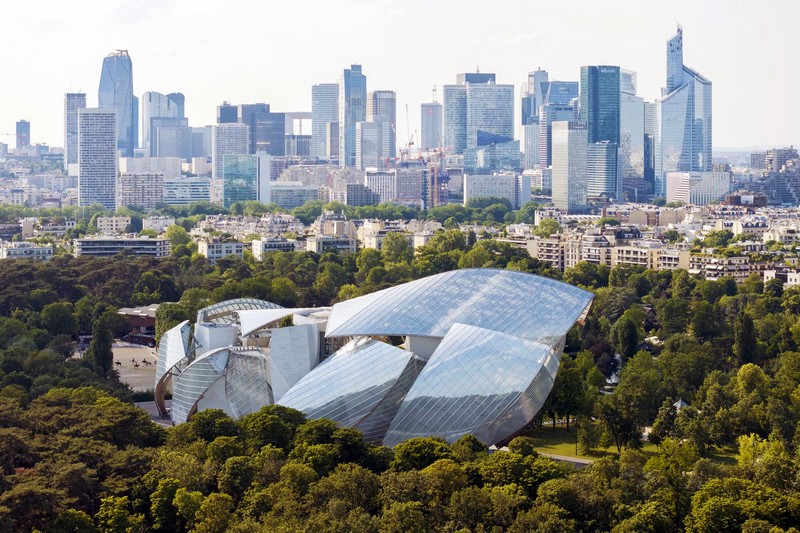
Louis Vuitton Foundation, Paris, France
What sets Gehry apart is not just his titanium-clad facades or fractured geometries, but his insistence that architecture should provoke. He was never content with polite modernism; instead, he pursued buildings that unsettled, delighted, and demanded attention. In Hong Kong and Asia, his projects may be fewer, but they reveal the same uncompromising ethos: architecture as a cultural statement rather than mere utility.
“For me, every day is a new thing. I approach each project with a new insecurity.”
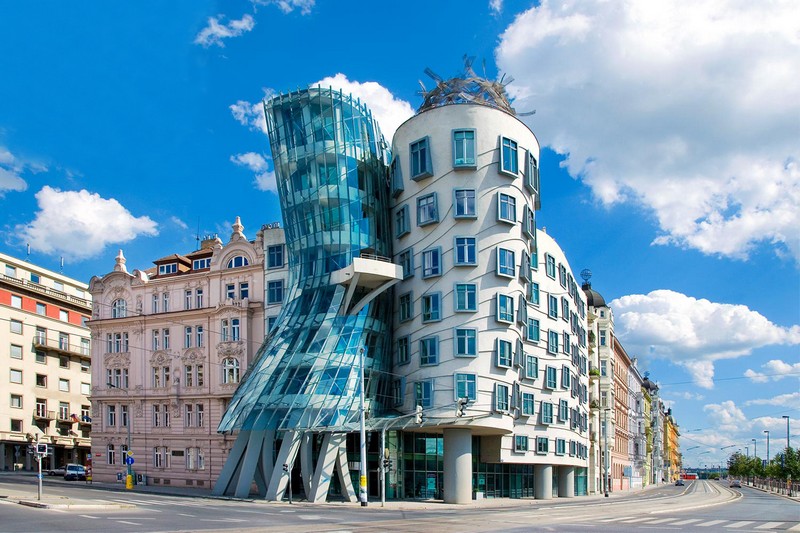
The Dancing House (a.k.a. Ginger and Fred) in Prague, Czechia
In Europe, Gehry’s influence was profound. The Vitra Design Museum in Germany (1989) marked one of his earliest international commissions, introducing his fractured geometries to a continent steeped in modernist tradition. Later projects such as the Dancing House in Prague (1996) and the Louis Vuitton Foundation in Paris (2014) reinforced his reputation as an architect who could challenge historic urban fabrics without erasing them. Gehry’s European work demonstrated how sculptural architecture could coexist with, and even reinvigorate, cities defined by centuries of architectural heritage. His projects became case studies in balancing audacity with cultural sensitivity, influencing a generation of European architects to embrace experimentation.
“Architecture can profoundly affect a place, sometimes transform it.”
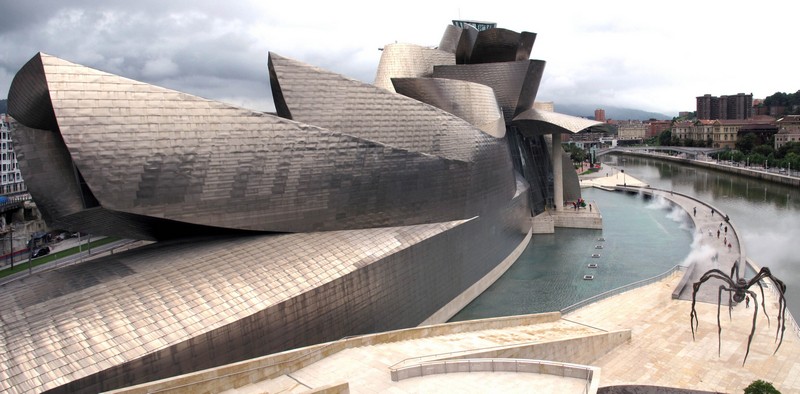
Guggenheim Museum Bilbao, Spain
The Guggenheim Museum Bilbao remains Gehry’s most consequential work. More than a museum, it became a catalyst for urban transformation, drawing millions of visitors and repositioning Bilbao as a cultural capital. Its success redefined the relationship between architecture and economic development, proving that a single building could alter a city’s trajectory. The “Bilbao Effect” entered the lexicon of urban planning, inspiring cities worldwide to pursue iconic architecture as a strategy for regeneration. While not every attempt replicated Bilbao’s success, Gehry’s masterpiece demonstrated the potential of architecture to operate as both cultural artifact and economic engine, securing its place as one of the most influential buildings of the late 20th century.
Ten Particularly Famous Buildings
- Guggenheim Museum Bilbao, Spain
- Walt Disney Concert Hall, Los Angeles, USA
- Vitra Design Museum, Weil am Rhein, Germany
- Dancing House, Prague, Czech Republic
- 8 Spruce Street (New York by Gehry), New York, USA
- Louis Vuitton Foundation, Paris, France
- Experience Music Project (MoPOP), Seattle, USA
- Weisman Art Museum, Minneapolis, USA
- Opus Hong Kong, Hong Kong SAR
- New World Symphony Hall, Miami, USA