








Form follows life
Five slender towers rise above Ivry‑sur‑Seine, proving that adaptability, affordability, and resilience can coexist and that housing should evolve with life.
Information and Images: STAR strategies + architecture
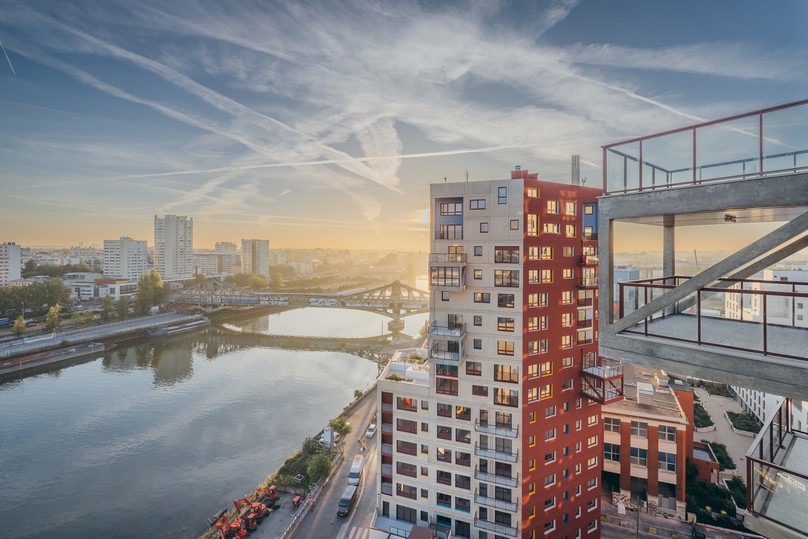
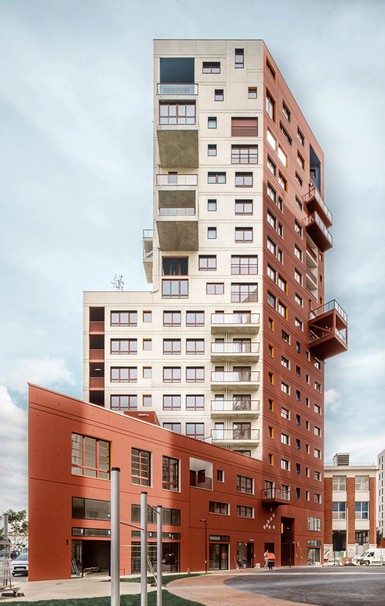
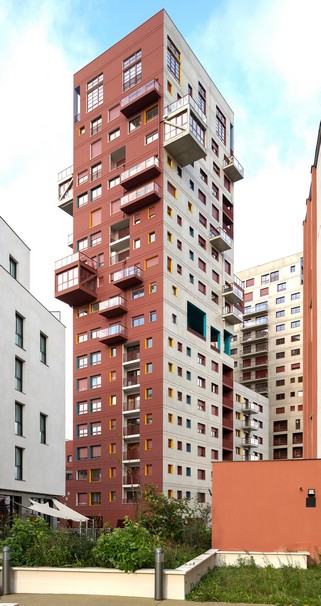
START-Ivry is a bold rethink of housing culture, located in Ivry-sur-Seine within Greater Paris. Rejecting the standardisation of housing production, it responds to the diversity of contemporary lifestyles by starting from the inside out. The project restores the central role of the floor plan, reversing the conventional process by selecting the architect first and inviting developers to compete afterwards.
START stands for Social, Transformable, Affordable and Resilient Typologies — a manifesto and demonstration that better housing can be achieved without increasing surface areas and within constrained budgets. Comprising five towers and 288 dwellings, the project mixes social, intermediate and market-rate housing, creating a new skyline at the confluence of the Seine and Marne rivers. START embodies a paradigm shift: housing adapts to its inhabitants, not the other way around.
Designing for Real Lives
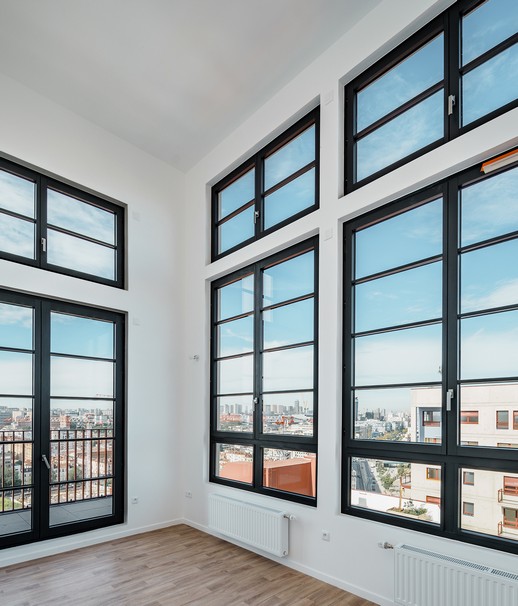
Households today are diverse: single-parent families, blended families, remote workers, elderly requiring assistance, and more. Yet housing has often remained standardised, serving developer logic rather than real life. START-Ivry challenges this mismatch by designing from the resident’s perspective. Dwellings are conceived to adapt — enlarged for a child, reconfigured for a carer, subdivided for rental, or extended by acquiring a neighbouring unit.
Even in their initial state, apartments accommodate multiple users and situations. This adaptability ensures housing evolves with life’s changes, offering resilience and flexibility. START demonstrates that contemporary society’s richness cannot be captured in uniform plans, but thrives in responsive, transformable spaces.
Principles That Shape Architecture
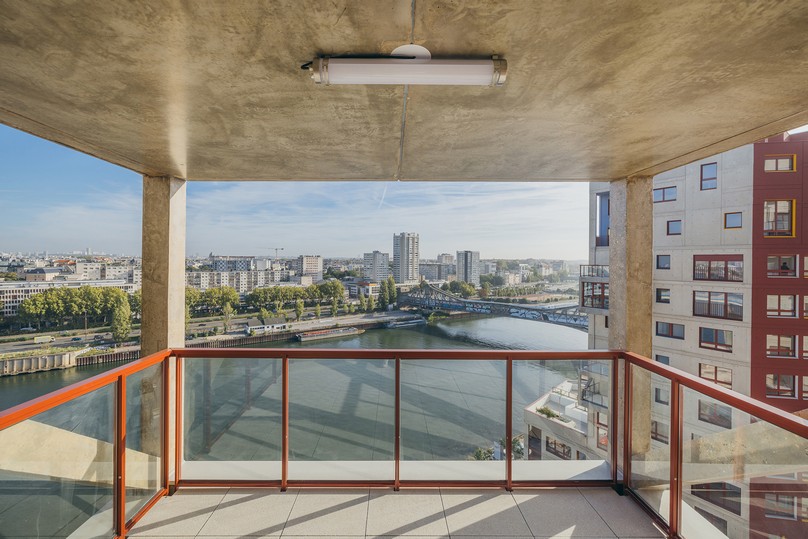
The project is structured around three sets of principles. Ten Adaptability Principles ensure flexibility over time, with divisible large units, alcove “plus” rooms for single parents or remote workers, modular living rooms, and super-adaptable two-bedroom units. Eight Quality Principles guarantee everyday excellence, from naturally lit kitchens and bathrooms to maximised storage and activated corridors. Ten Principles for a Good Tower define conditions for positive density, including circulation spaces, shared terraces, and encounters with both ground and sky.
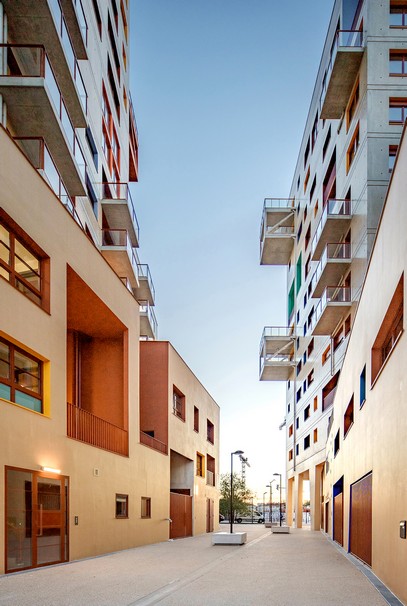
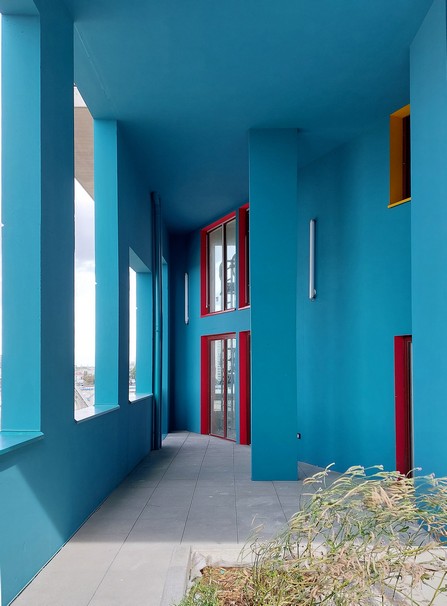
Geometry and façades originate from the internal world: slender volumes just 14 metres deep maximise natural light, ventilation, and views. Ninety percent of homes enjoy double or triple orientations, with most overlooking the Seine or Marne. Façades follow no rigid grid — windows, balconies, and loggias serve domestic use, creating a narrative architecture where apparent disorder reflects life’s unpredictability. Colour accents act as codes, revealing interior functions, while raw concrete and red paint echo Ivry’s architectural history. START’s identity is defined by this interplay of form, use, and meaning, transforming the ordinary into the extraordinary.
Programme Mix & Sustainability
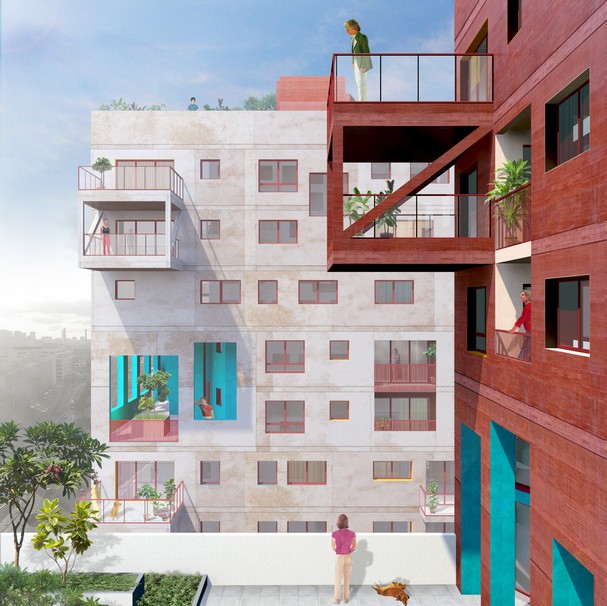
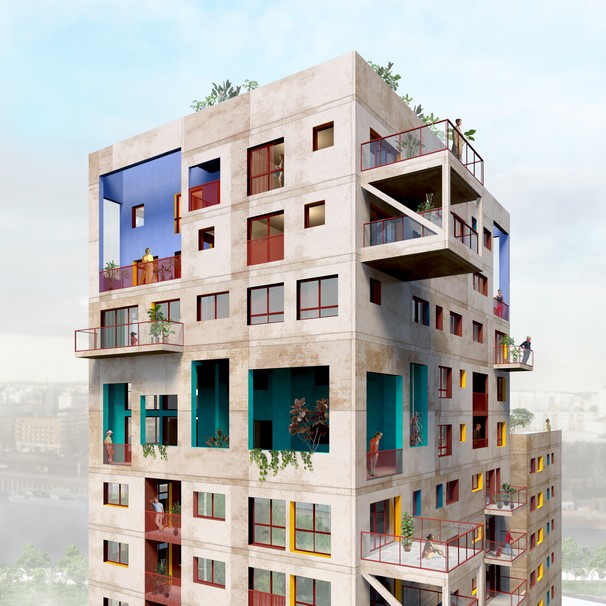
With a surface area of 22,863 m², including 19,700 m² of housing, START-Ivry spans five towers rising between 13 and 19 storeys. The programme includes 288 dwellings — potentially 350 through future subdivisions — with a mix of homeownership, social housing, and intermediate housing. Two towers combine different housing regimes on the same corridor, a rare configuration in France. All residents share communal spaces on upper floors, including multi-purpose rooms, guest rooms, and over 2,000 m² of terraces. At ground level, 2,600 m² of new public spaces include a central square facing the Seine and pedestrian alleys linking to the main avenue. A commercial plinth with 14 adaptable retail units introduces restaurants, gyms, bakeries, and more, creating an active hub for residents and the wider neighbourhood.
Sustainability is embedded: a 20% reduction in energy consumption compared to current standards, 20% low-carbon concrete, and geothermal heating. Yet START goes beyond certifications, placing inhabitants at the heart of sustainability. Divisible dwellings embody social, environmental, and economic resilience, adapting to changing household needs, creating new units without extra resources, and generating income through rental or sale. This integration of adaptability, social mix, and environmental performance positions START as a pilot project redefining housing for contemporary life.
Inverse Method and Legacy
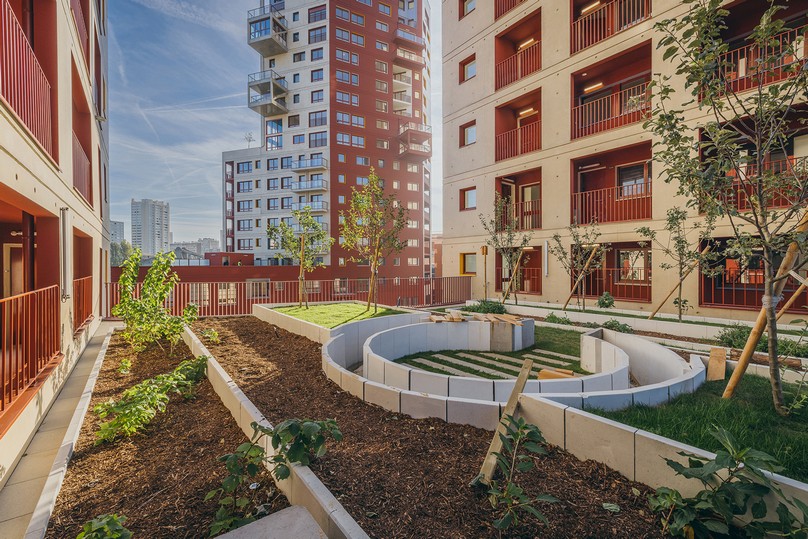
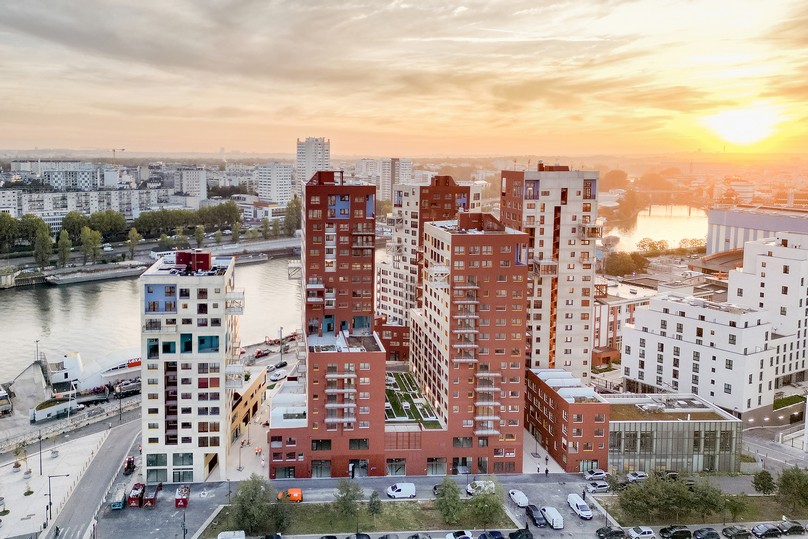
START-Ivry emerged through the Inverse Method, a pioneering process devised by the municipal land developer and refined with the architect. Unlike conventional practice, the architect was selected first, based on methodology rather than renderings, and developers competed afterwards.
Monthly workshops over eight months brought together all stakeholders — land manager, architect, municipality, urban planners, developers, contractors, and consultants — to address design, construction, management, and lifestyles collectively. The winning developer aligned with the architect’s project, ensuring continuity and safeguarding design principles. This process made START possible. Ivry-sur-Seine, with its legacy of visionary housing by Jean Renaudie and Renée Gailhoustet, provided fertile ground for experimentation.
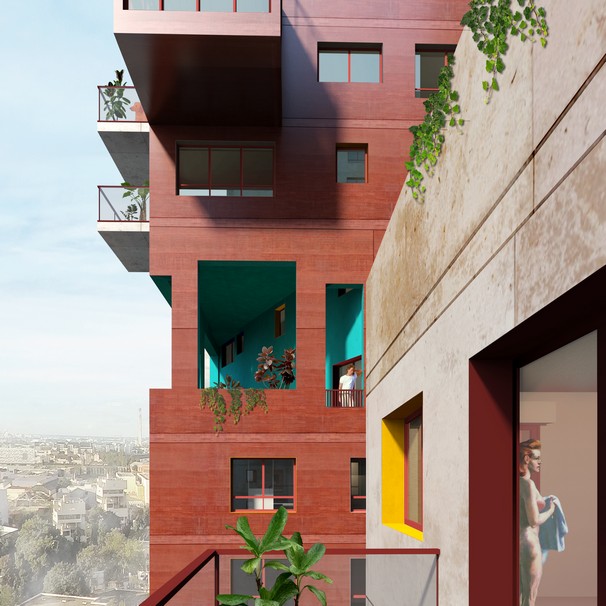
Ivry-sur-Seine implements a price regulation policy through “controlled prices”, allowing a broad range of households to access high-quality housing in an otherwise inaccessible market. START continues this tradition dating back to the 1920s, proposing new solutions through adaptable plans and innovative production methods.
Delivered between 2015 and 2025, the project has already won multiple international awards, from Batiactu Reader’s Award to LOOP Design Awards and AZ Awards. Designed by Beatriz Ramo and STAR strategies + architecture, START-Ivry materialises nearly a decade of housing research, resisting standardisation and offering resilient social structures. It stands as both manifesto and demonstration: proof that housing can adapt to life, shaping a new cycle of experimentation in Greater Paris.
Find out more: