







April 13, the royal couple King Willem-Alexander and Queen Máxima of the Netherlands paid a visit to the residential project Fishtown Urby, designed by Concrete. They were accompanied by Philadelphia Mayor Parker, the Dutch Minister of Foreign Affairs Tom Berendsen and Ambassador Birgitta Tazelaar.
Concrete’s head of architecture and partner Erikjan Vermeulen, shared the architectural design story whilst leading them around. When entering the courtyard, Urby founder David Barry joined, which led to an inspiring 15-minute dialogue. There was a compelling conversation about the differences and similarities between the US and the Netherlands regarding affordable housing, creating communities, and connecting new buildings to neighborhoods. In addition, Peter Ernst Coolen – curator of Street Art Today, discussed the site-specific mural “Songlines for the City.” This artwork was designed by the legendary Dutch tattoo artist Henk Schiffmacher.
The conclusion was that Fishtown Urby sets a great example of intimate, warm, and connected living that gives something back to the local community. It was an honor and a pleasure to be part of the conversation and share knowledge on these important topics.
Fishtown Urby
A project that redefines urban living in one of the city’s most vibrant neighbourhoods. The building blends historical context with contemporary architecture, combining functionality, community-focused spaces, and a unique artistic identity. This project demonstrates Urby’s commitment to creating inspiring urban living environments across the United States, of which Concrete Amsterdam has been part of since its inception in 2010.
Architecture positioned in urban context
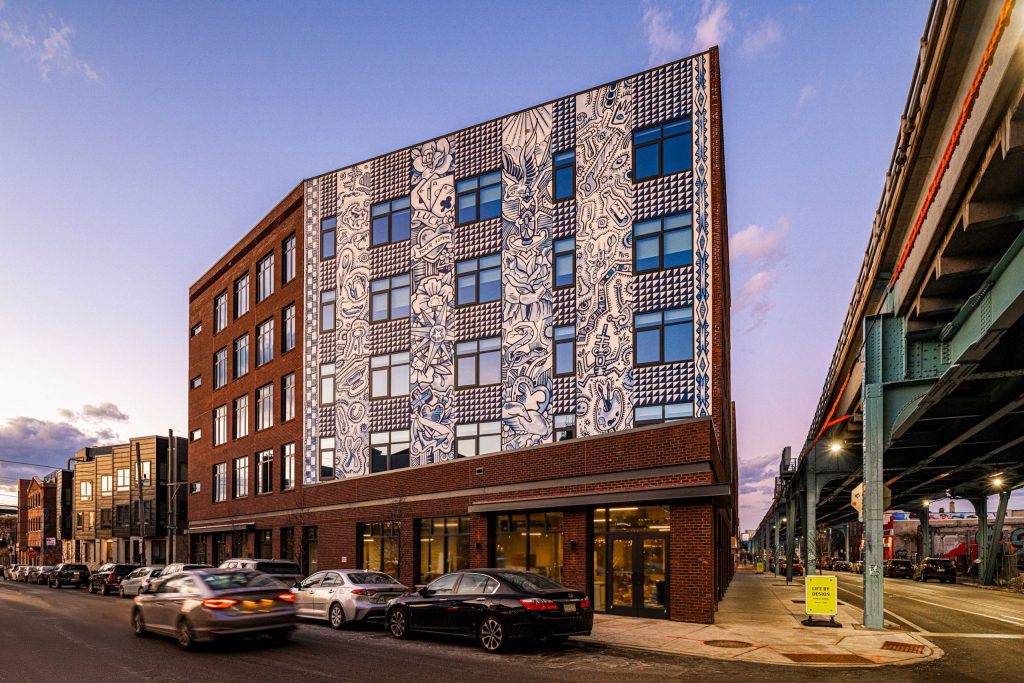
Urby Fishtown at 1700 North Front Street is redefining urban living in Philadelphia, Pennsylvania, United States. The building is designed as a five-story brick structure that reflects the local historical context, characterized by large warehouses and small brick townhouses. The building stands as a monolithic brick mass, but upon closer look, it reveals its intricate details. Strategically placed cut-outs slice into the brick exterior, revealing contrasting materials and colors that bring the structure to life. These cut-outs do more than break down the building’s scale, they introduce warmth, light, and dynamic texture to its form.
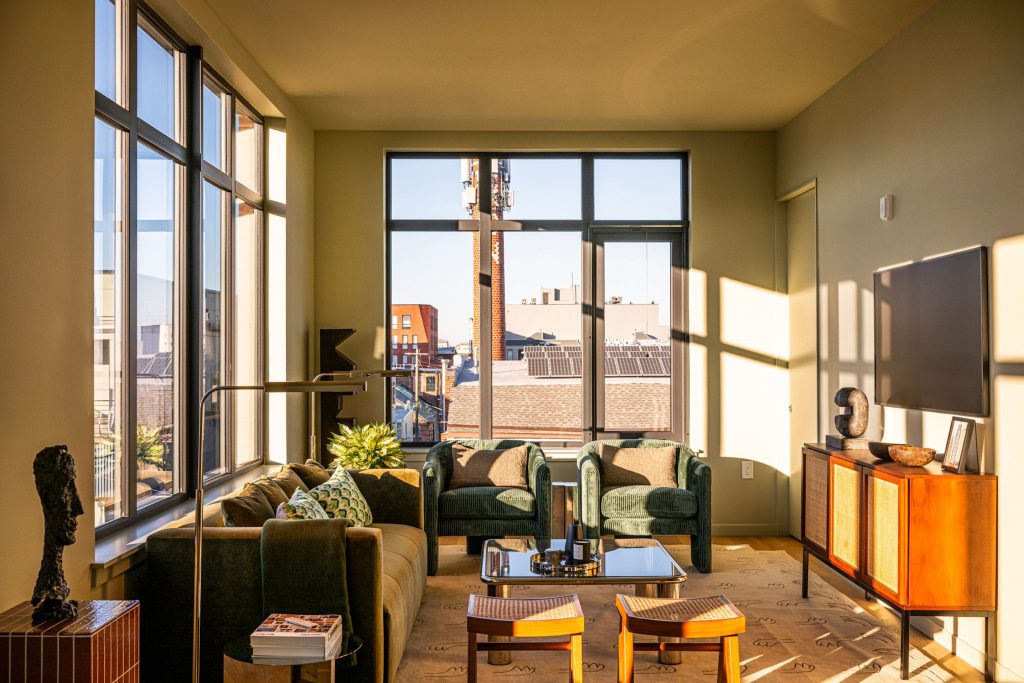
The building’s traditional brickwork paired with large dark-gray windows, allows it to blend seamlessly into the surrounding neighborhood. The windows proportions are carefully considered to maximize the flood of natural light to flow through the residences while maintaining privacy and soundproofing from the street and elevated train. Wrapped continuously around the building, the windows echo the rhythmic characteristic patterns of industrial architecture. The varied transom height is thoughtfully designed to align with the interior layout: lower transoms ensure privacy in bedrooms, while higher ones open up expansive views from the living rooms, balancing both functionality and aesthetic appeal.
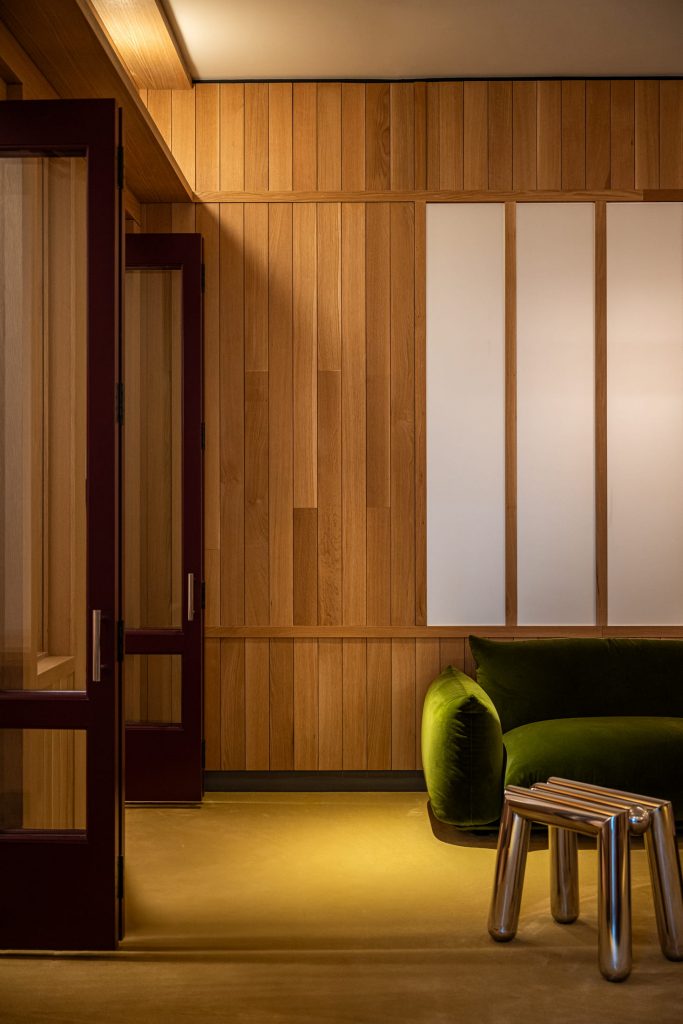
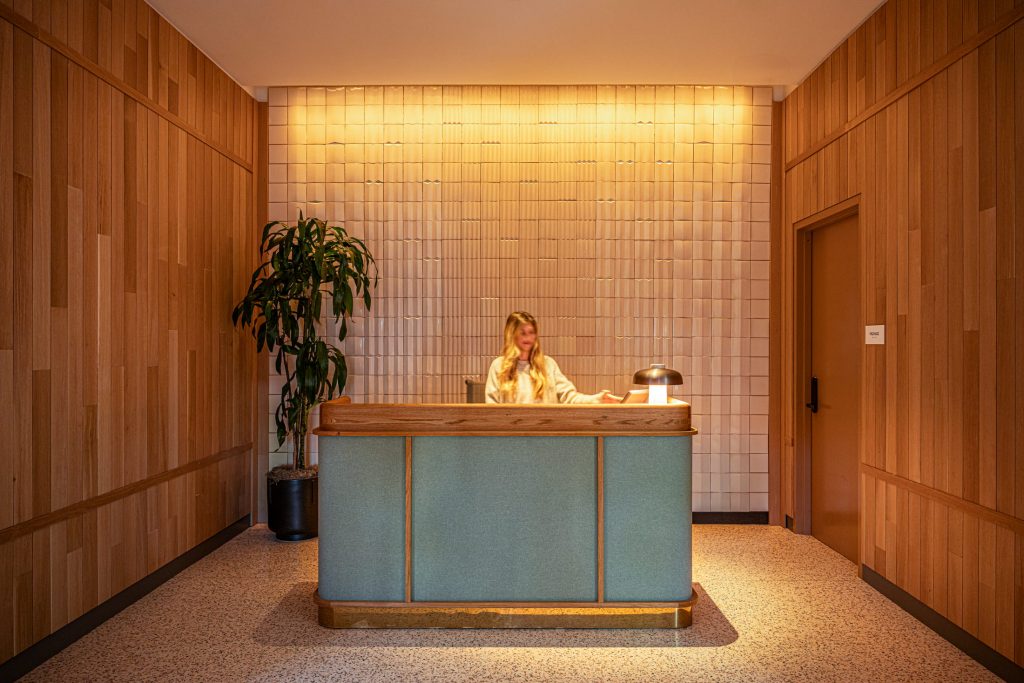
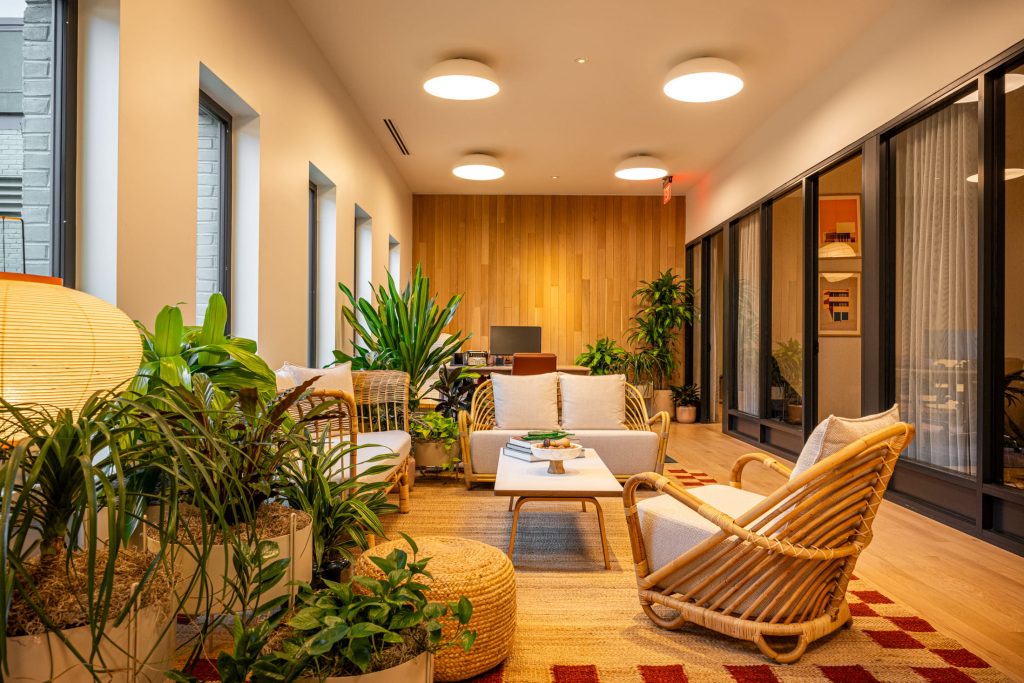
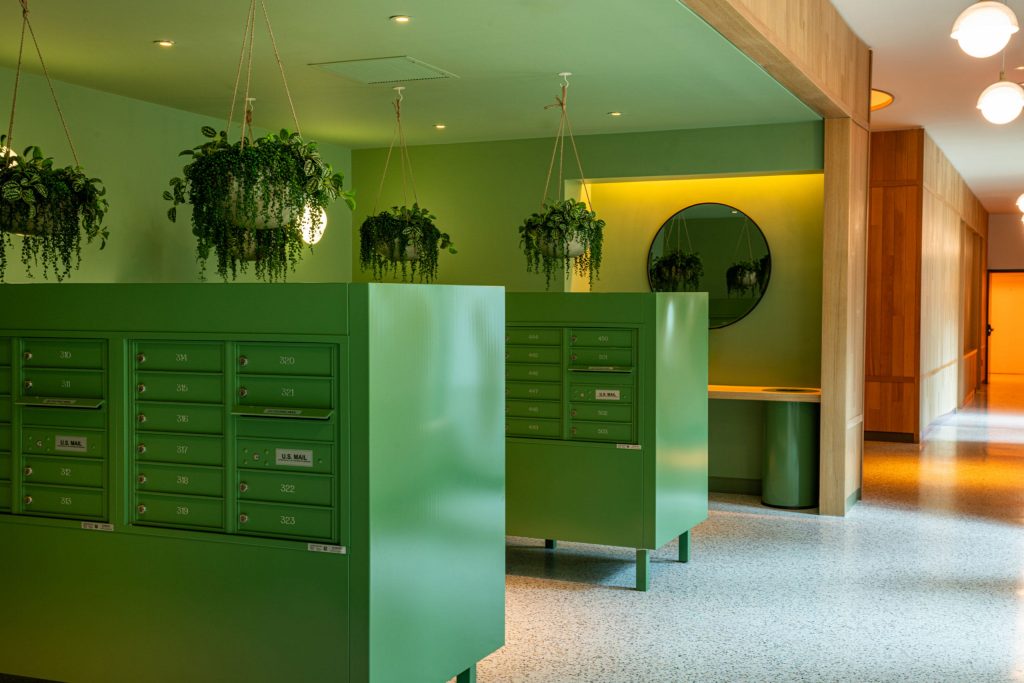
Inside, the apartments carry Urby’s signature design philosophy. Smart and efficient layouts create homes that feel larger than their footprint. With open flows, balanced proportions, and thoughtful details, every unit maximizes comfort and functionality, offering a modern and surprisingly spacious living experience.
“Every architectural detail is designed to enhance daily living, from the robust brick envelope to the smartly positioned transom windows that balance privacy with daylight. It’s about creating spaces that are not only beautiful, but genuinely functional for urban life.”
– Erikjan Vermeulen, Concrete Amsterdam
Opening up to the street
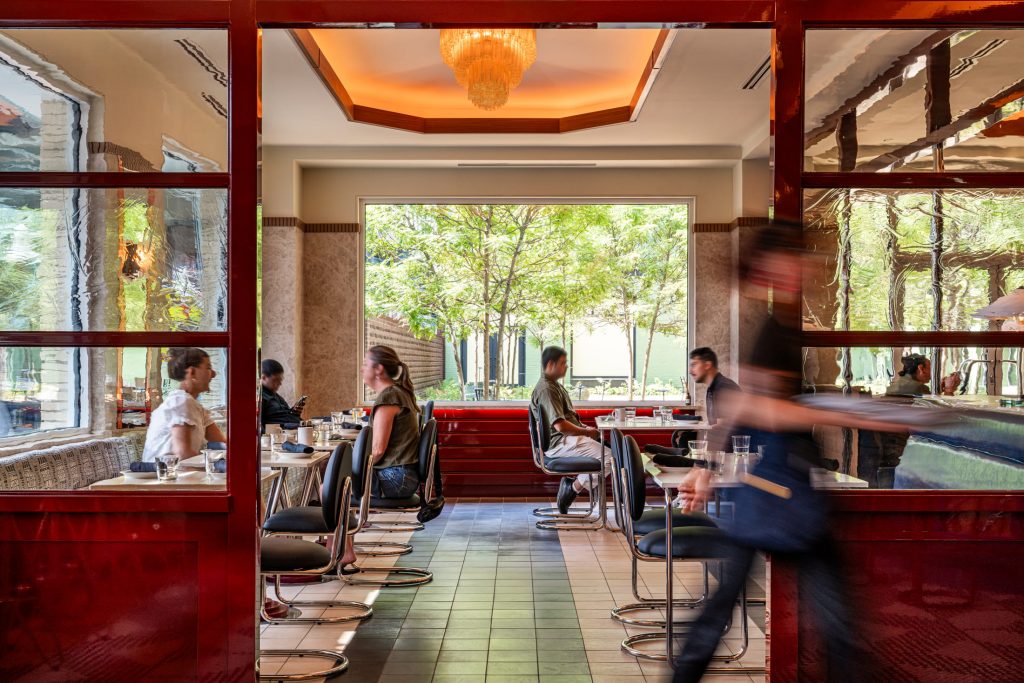
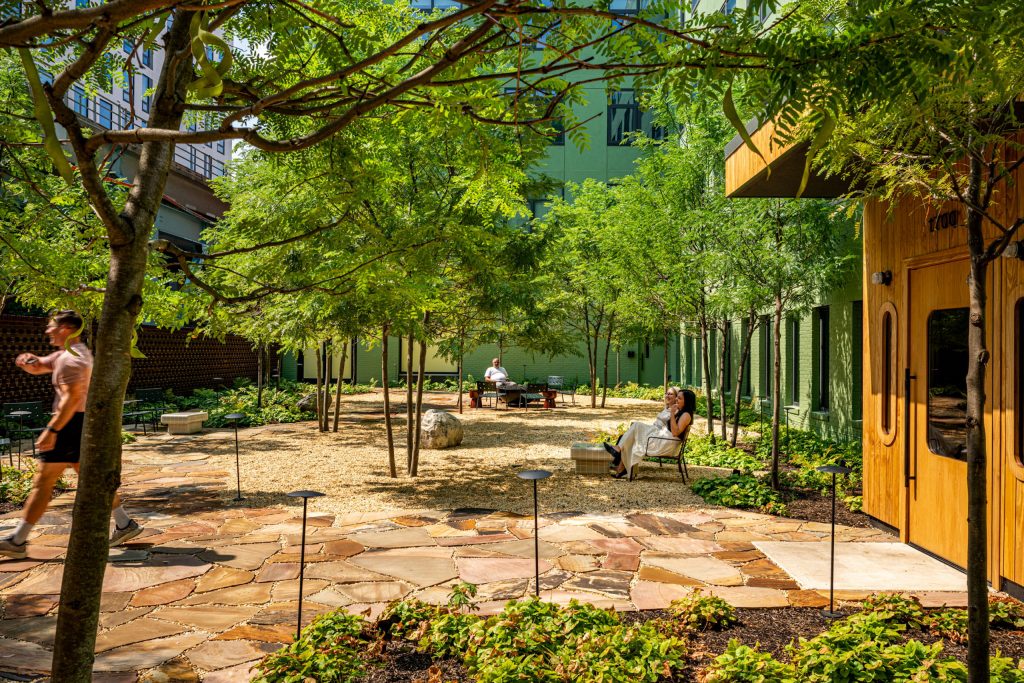
Along North Front Street, the building opens up to a welcoming courtyard that flows naturally into the street, creating a lively main residential entrance. Belgian landscape architect Bas Smets designed the courtyard, filled with lush greenery and an open view of the sky, offering a refreshing escape from the energy of the street below the elevated train. A warm green stucco wraps the space, blending the architecture with the lush planting and creating a calm, intimate atmosphere and an inviting setting for the café terrace designed by Shawn Hausman Design.
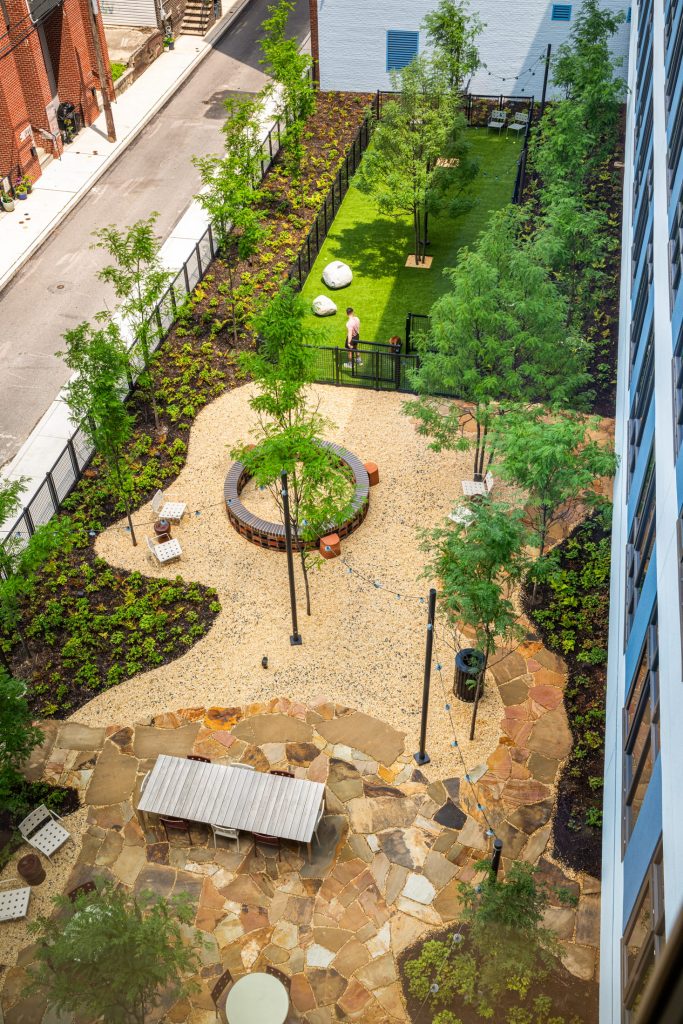
On the opposite side, along Hope Street, a second courtyard brings light and air to the narrower streetscape, complementing the small-scale character of the area. Also designed by Bas Smets, this courtyard brings together abundant planting with communal features, including BBQ stations and a dog park, creating a welcoming environment that serves the residents and fosters a sense of community. Here, a blue stucco finish subtly echoes the color of the elevated train’s steel structure.
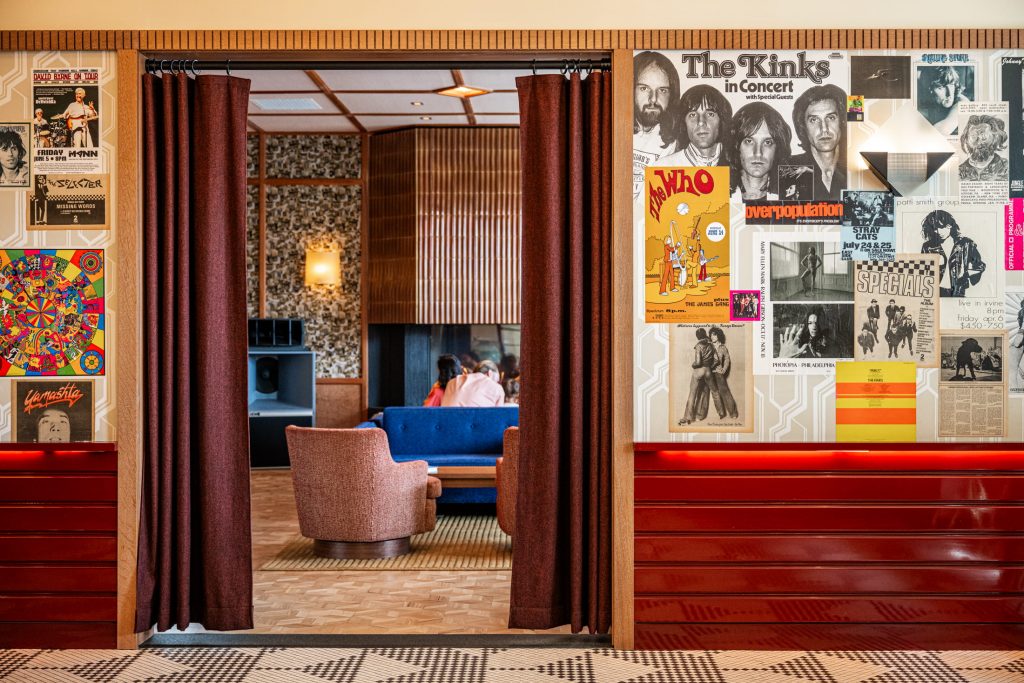
Retail spaces activate nearly every corner of the building, ensuring a lively ground-level experience. Above, a communal terrace on the fifth floor, designed by Eliane Le Roux, offers residents sweeping views across Philadelphia. These views can also be admired from the speakeasy, interior design by Yuria Kailich, which offers another unexpected hideaway within
the building.
Along Cecil B. Moore Avenue, the upper floors appear to be sliced away, creating a large façade that serves as a canvas for street art, a nod to one of Fishtown’s most defining cultural signatures. Integrating art is a defining element of Urby its buildings. For Fishtown Urby, Concrete collaborated with Street Art Today and renowned Dutch tattoo artist Henk Schiffmacher. The resulting artwork called “Songlines for the City” transformed the building’s facade into a vibrant, artistic canvas, infusing the community with a distinctive touch of Dutch blue and creative flair while reflecting Fishtown’s unique history and spirit.
www.concreteamsterdam.nl | @concreteamsterdam