






About BEC Building
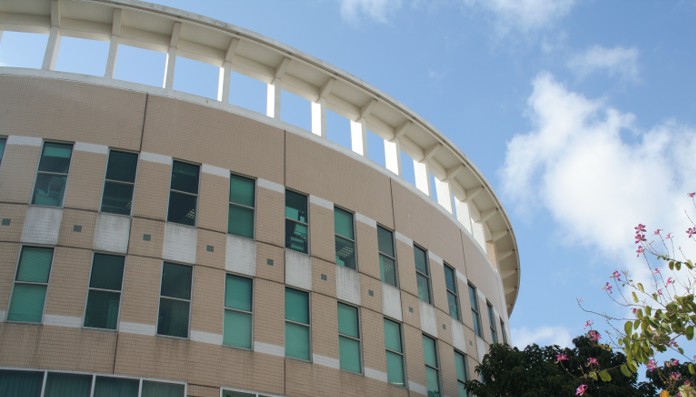
• Also known as the Jockey Club Environmental Building (“JCEB”)
• Completed in 1996
• Located at 77 Tat Chee Avenue, Kowloon Tong
• Recognised as Hong Kong’s “Green Lab” for sustainable building innovation
• Major retrofit and transformation completed in 2016, significantly enhancing environmental performance
• Recognitions:
o BEAM Plus Existing Buildings V2.0 – Final Platinum (2023)
o WELL Core™ Platinum (2024)
Green Building Features
1.Ventilation & Indoor Environmental Quality
- Natural stack ventilation system enhances airflow in atrium by leveraging temperature and pressure differences, without mechanical assistance
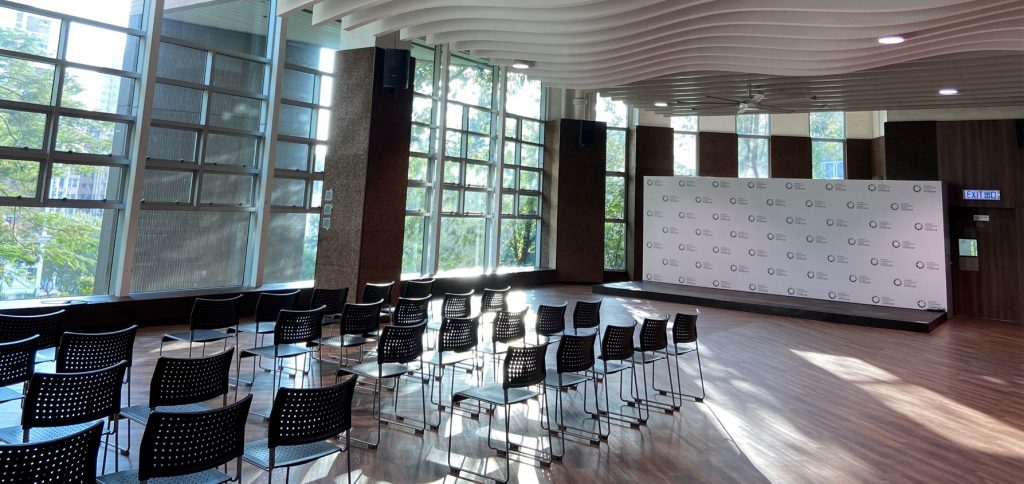
- High-volume low-speed fans improve air movement and thermal comfort in Exhibition Hall
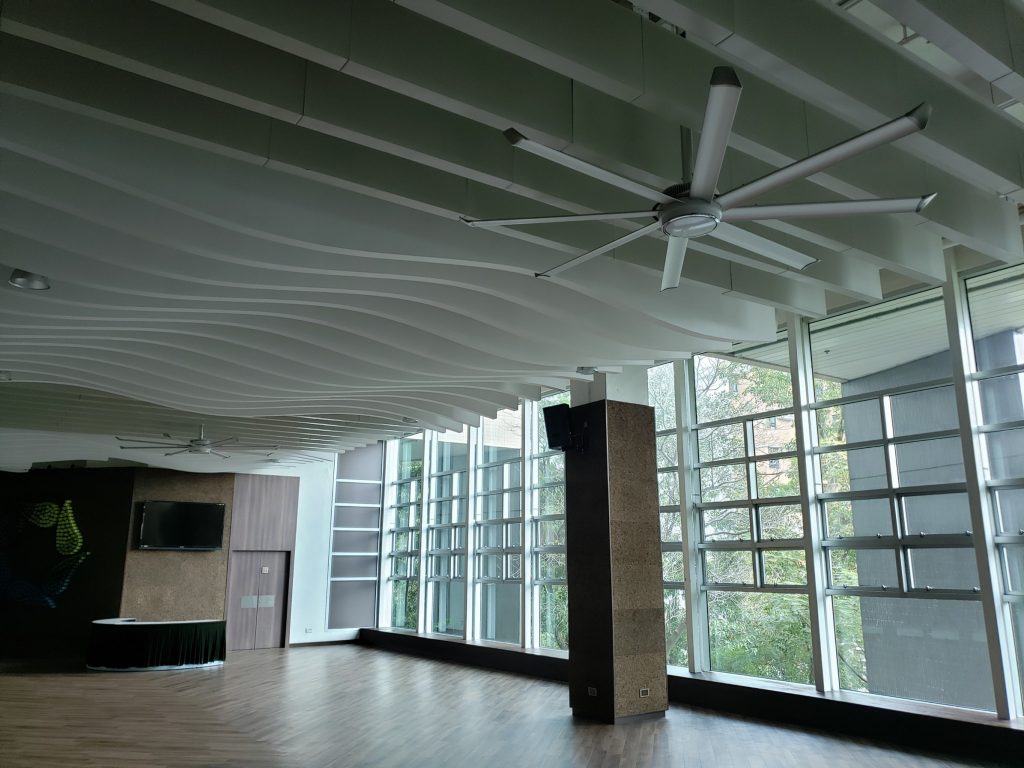
- Use of low-VOC and recycled materials in communal area improves indoor air quality
2. Energy Saving Measures
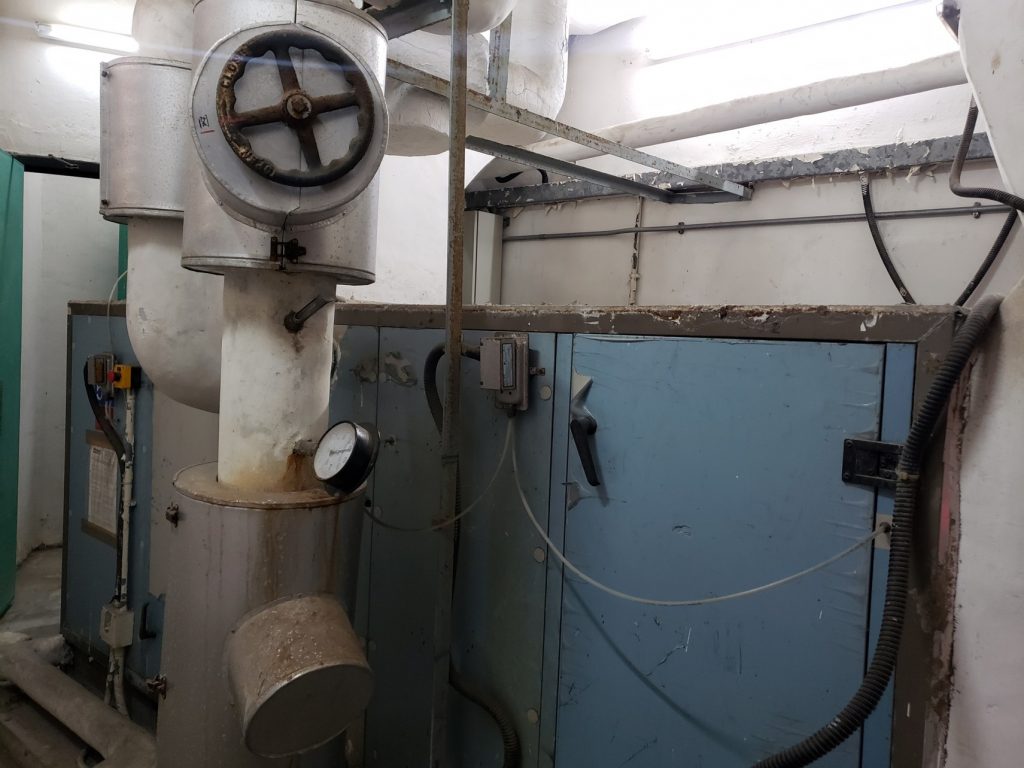
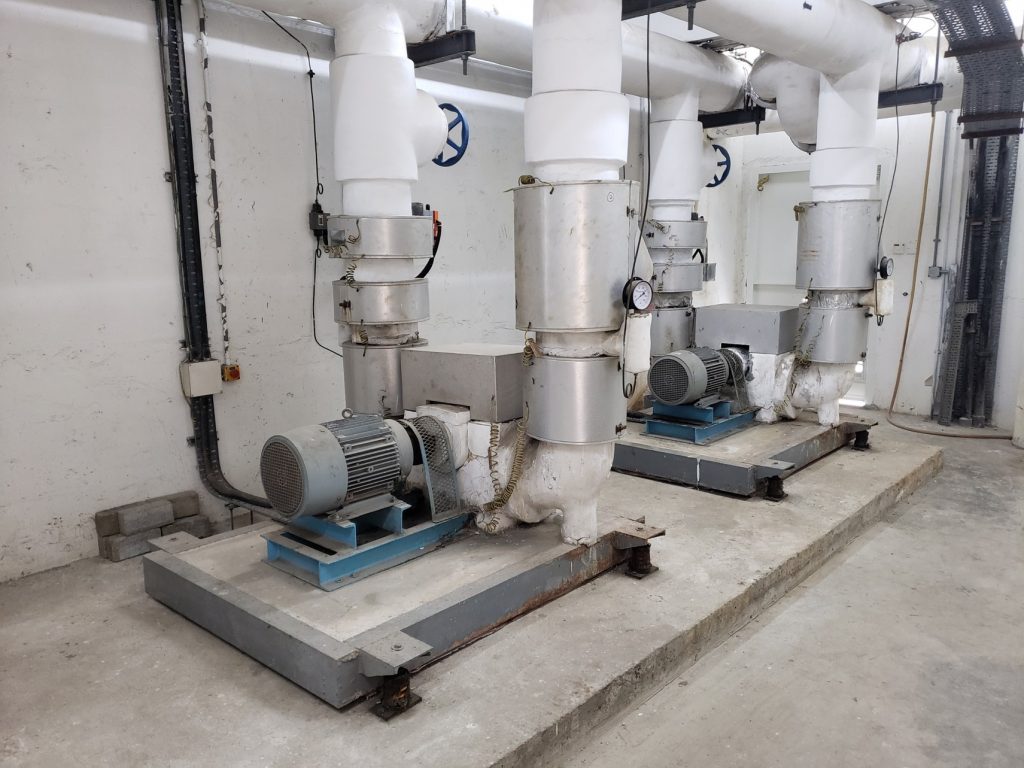
• Oil-free variable speed air-cooled chiller reduces chilled water system energy consumption by approximately 30%
o Automatically adjusts compressor speed based on real-time cooling demand
o Magnetic levitation bearing technology eliminates the need of oil lubricating
▪ Reduces friction and mechanical wear, extending equipment lifespan
▪ Lowers noise levels, improving indoor comfort
▪ Enhances energy efficiency with improved coefficient of performance (“COP”) and part-load performance
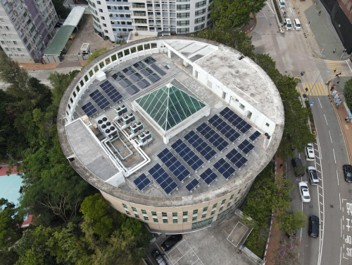
• Photovoltaic panels contribute more than 10% of the building’s monthly energy consumption
o 9,680W AIPV panels (110W x 88 pieces), with aerodynamic aluminium framework
o 42,900W PV panels (650W x 69 pieces)
• LED lighting with daylight and occupancy sensor reduces unnecessary lighting energy consumption
• Installation of lift idling system reduces unnecessary lift energy consumption
• Liquid solar film on windows minimises heat gain, thereby reducing energy consumption for air-conditioning
• Cool roof coating reduces solar heat absorption, thereby reducing energy consumption for air-conditioning
• Building Management System and sub-metering system optimise building operation efficiency
• Variable Speed Drives for air handling units and chilled water pump reduce energy consumption for air-conditioning
3. Sustainable Materials & Circular Design
• Use of recycled and rapidly renewable materials in Exhibition Hall, including:
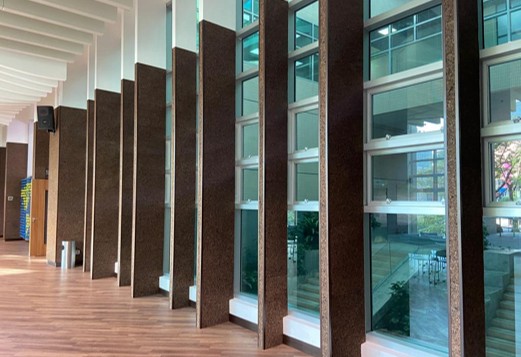
o Harmoni-cork acoustic panels
o FSC-certified bamboo for stage and window-side seating
o FloorScore®-certified recycled plastic flooring
• Auditorium designed with circular and low-impact materials:
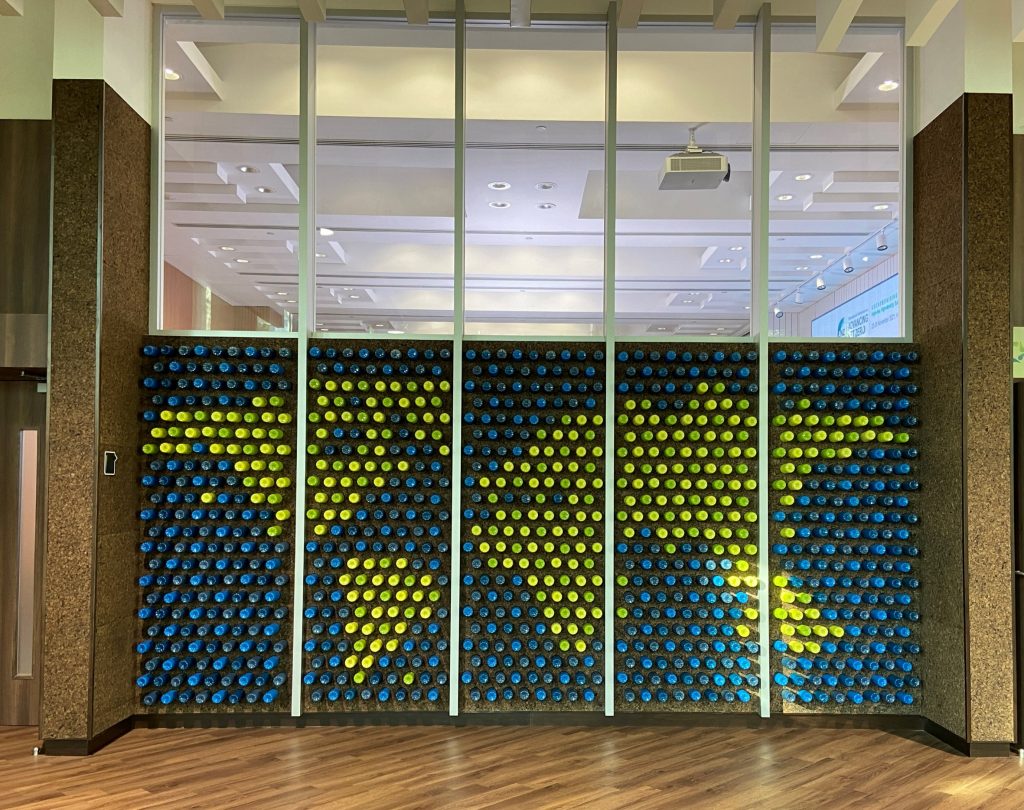
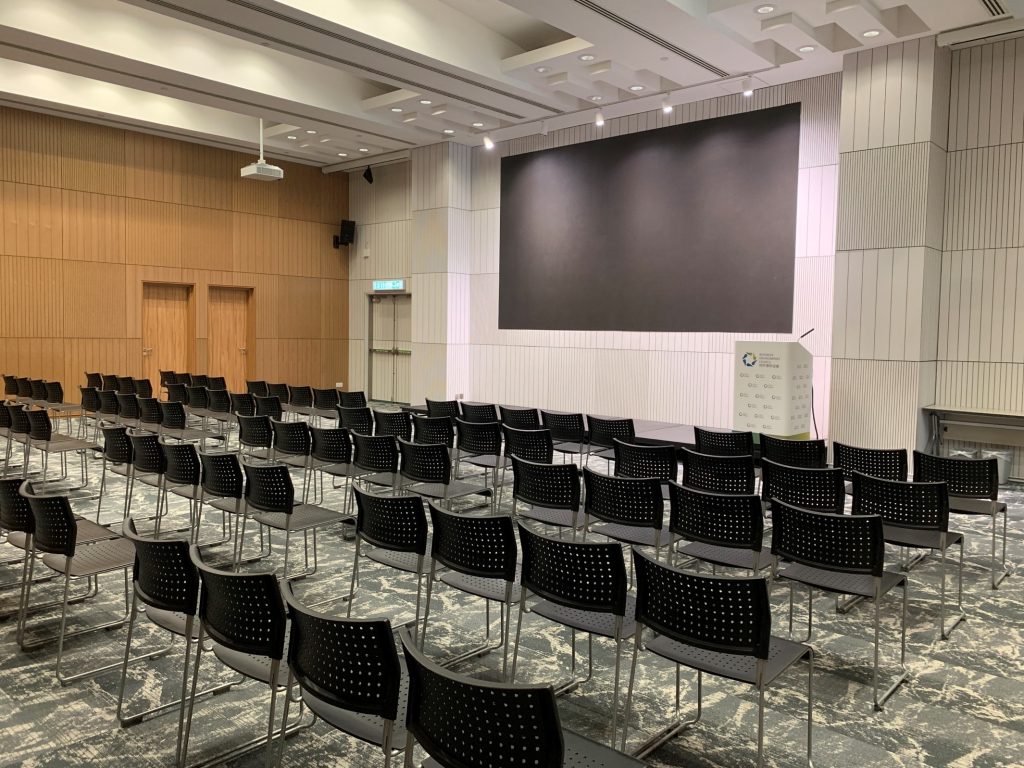
o Feature wall made from reused plastic bottles, finished with low-VOC paint
o Carpets with high recycled content, using 100% yarn from regenerated fishing nets and PVC-free materials
4. Waste Reduction & Recycling
• On-site recycling facilities for plastics, paper, metals, glass, beverage cartons and garments
5. Water Saving Measures
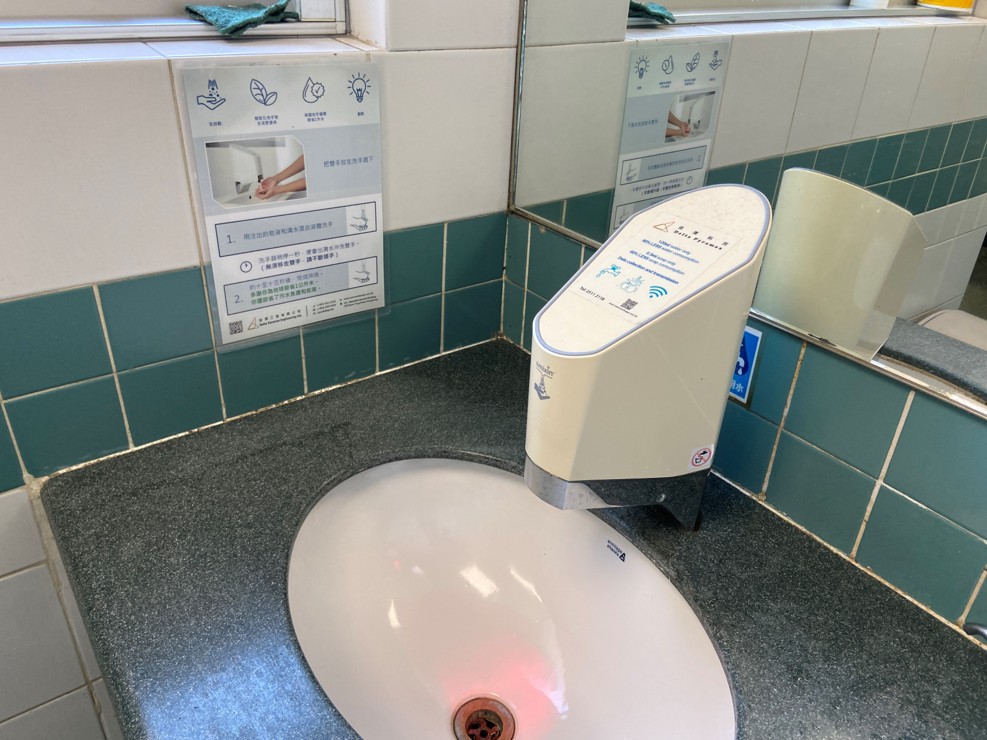
• Water-efficient fixtures, including automatic soap and water dispensers, reduce water use by up to 90% and soap consumption by 60%
• Dual flush toilet and vacuum toilet (as low as 1.5L per flush)
• Flow regulators installed in taps minimise water usage
• Rainwater harvesting system collects up to 165,000 litres of water annually