












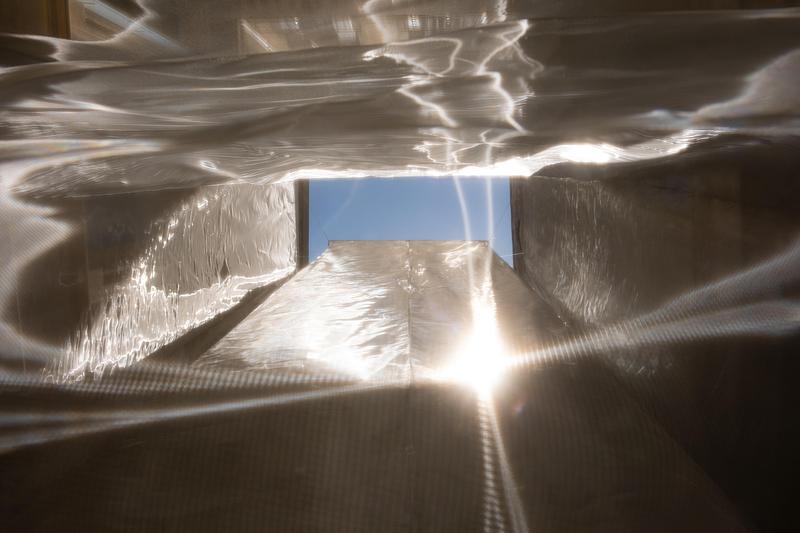
Japanese architect Yurika Takemura (Yurica Design & Architecture) has received the Premier Prix du Jury Spécial 20 ans (20th Anniversary Special Jury Prize) at the Festival des Architectures Vives (FAV) 2026 in Montpellier, France.
Her award-winning installation, Liminality in Motion – As Boundaries Begin to Move, is a site-specific work that combines architecture, installation, performance, and immersive sound within one of Montpellier’s historic courtyards.
The project invites visitors to physically perceive the invisible boundaries that exist between people and place, past and present, self and others, encouraging new ways of understanding the relationships that shape our everyday experience.
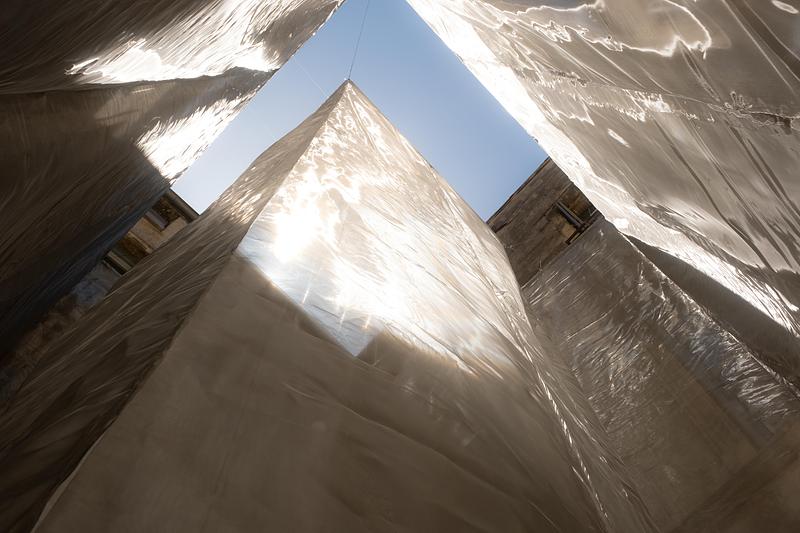
The project began with a desire to draw renewed attention to the beauty already embedded in the everyday landscape of Montpellier’s historic center: the distinctive limestone streets formed from stone quarried in Castries, the warm Mediterranean sunlight, the gentle breeze moving through the courtyards, and the open sky occasionally crossed by birds and airplanes. Rather than introducing another object into this historically rich environment, the installation was conceived as a spatial device that reveals and amplifies the qualities already present within the site.
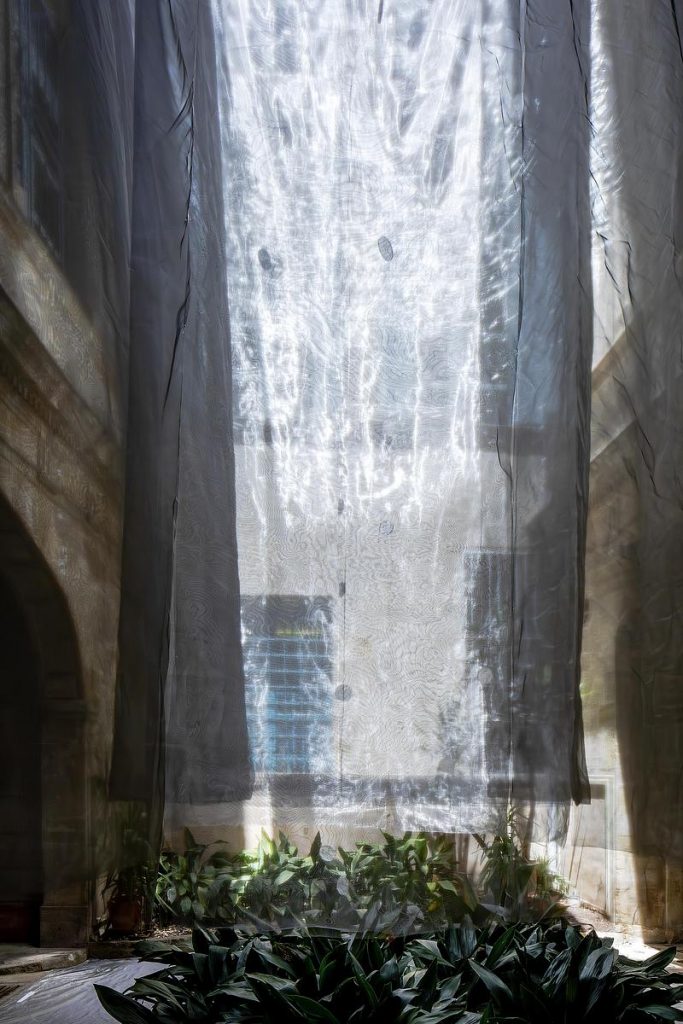
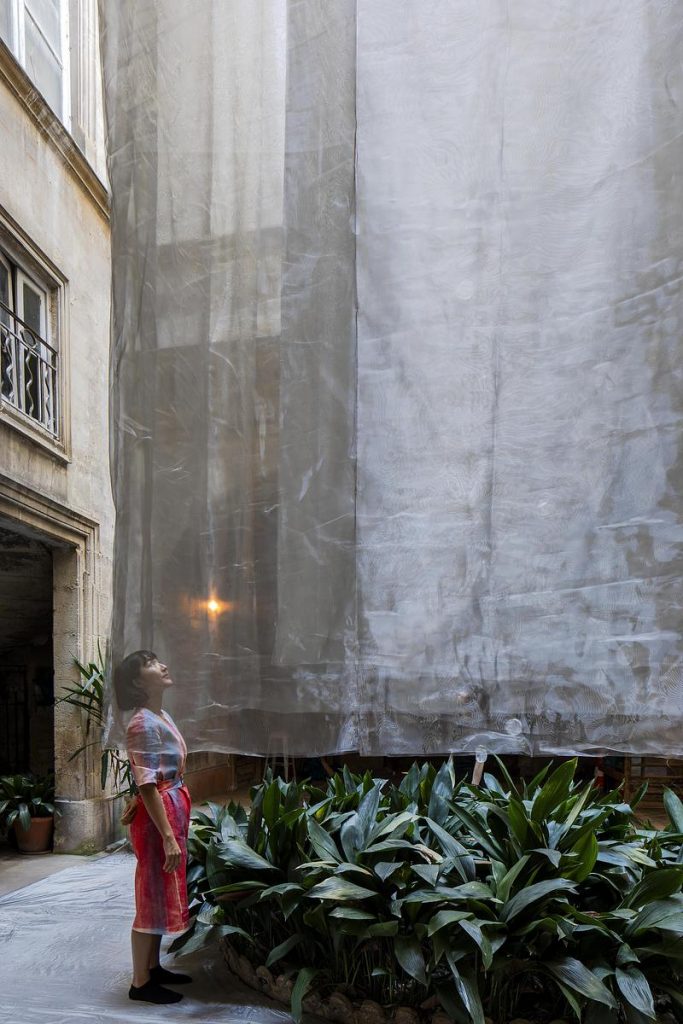
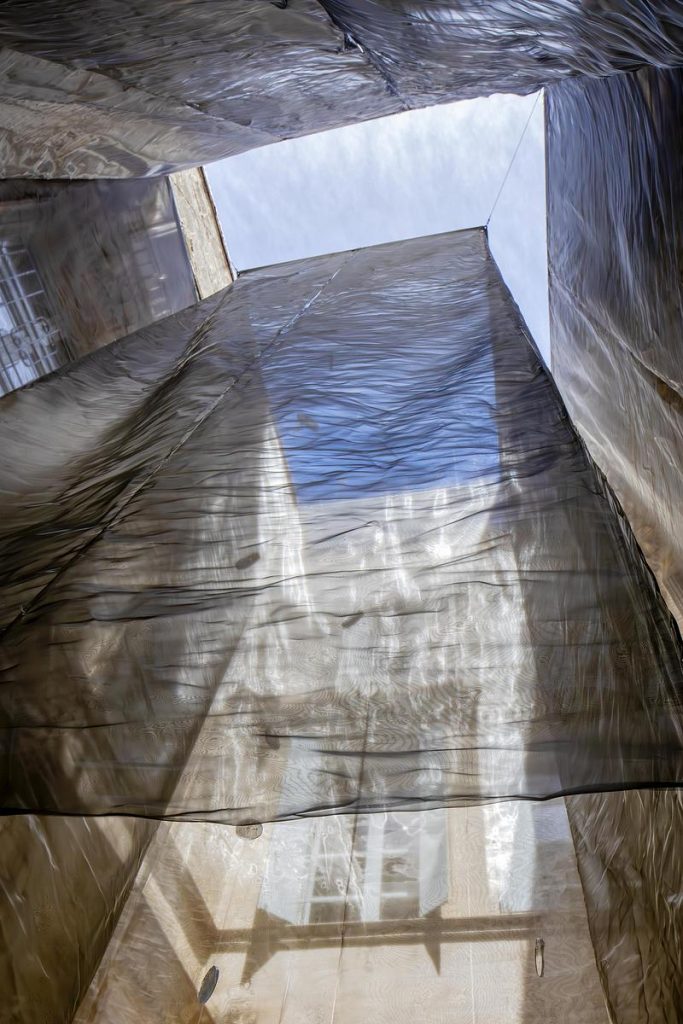
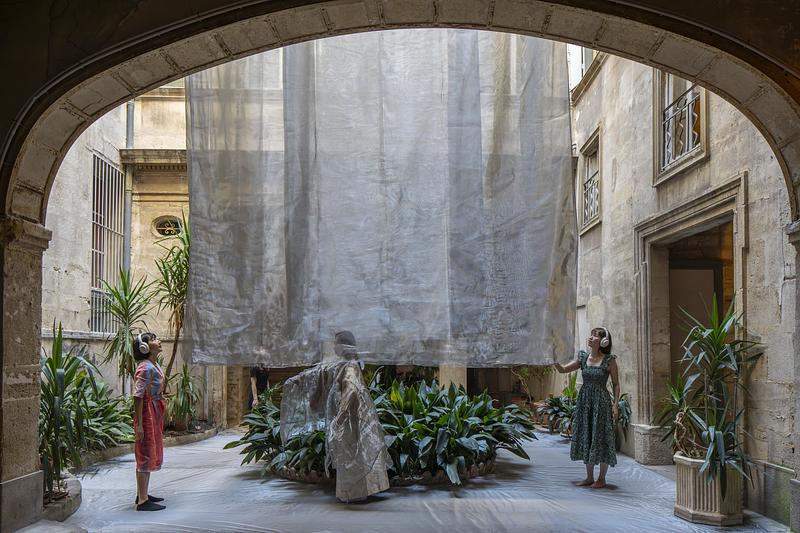
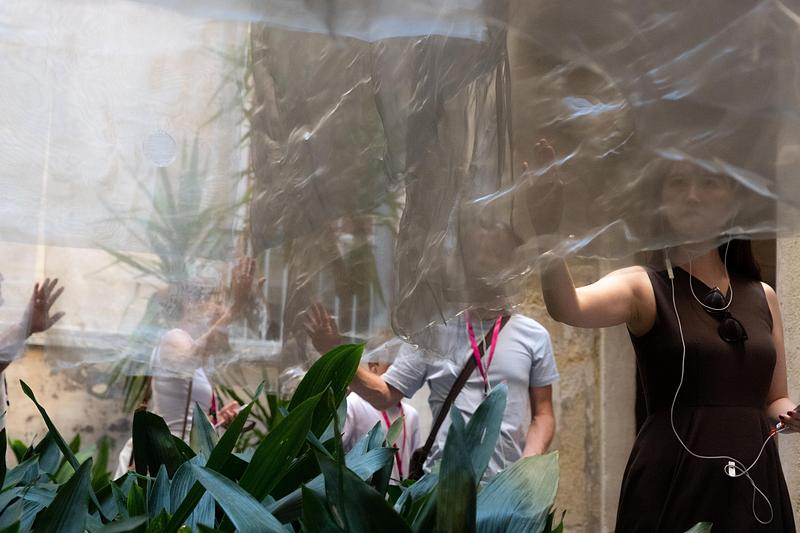
Invisible boundaries were deliberately given physical presence through a suspended metal mesh installation hanging approximately twelve meters above the courtyard. Rather than simply observing it, visitors are invited to move through the mesh, set it into motion with their bodies, and experience the act of crossing a boundary itself. Responding delicately to the wind flowing through the courtyard, the mesh sways quietly like a living organism, making the otherwise invisible movement of air perceptible.
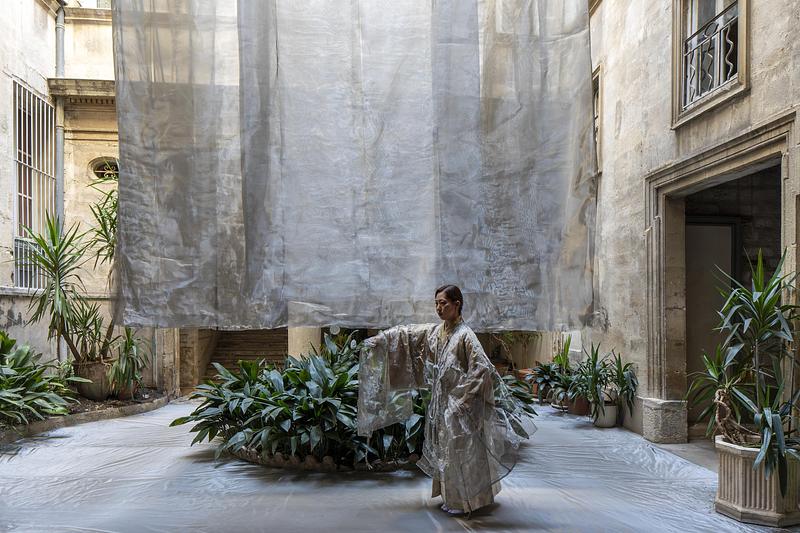
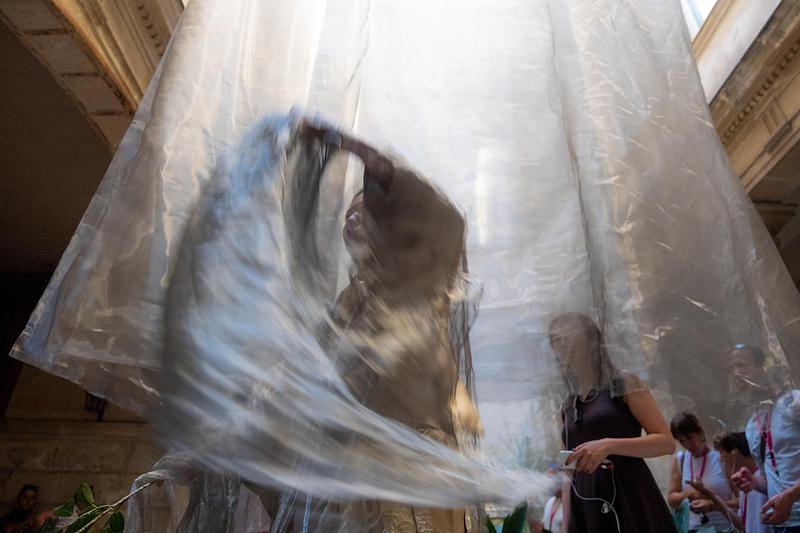
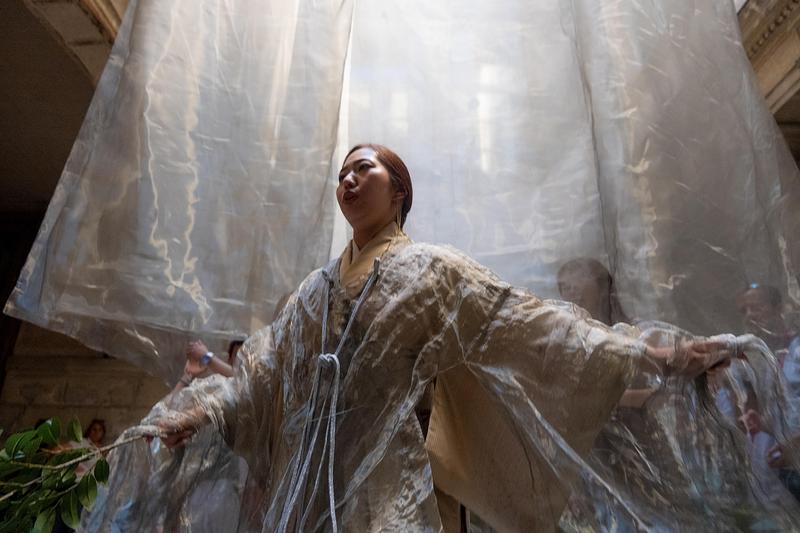
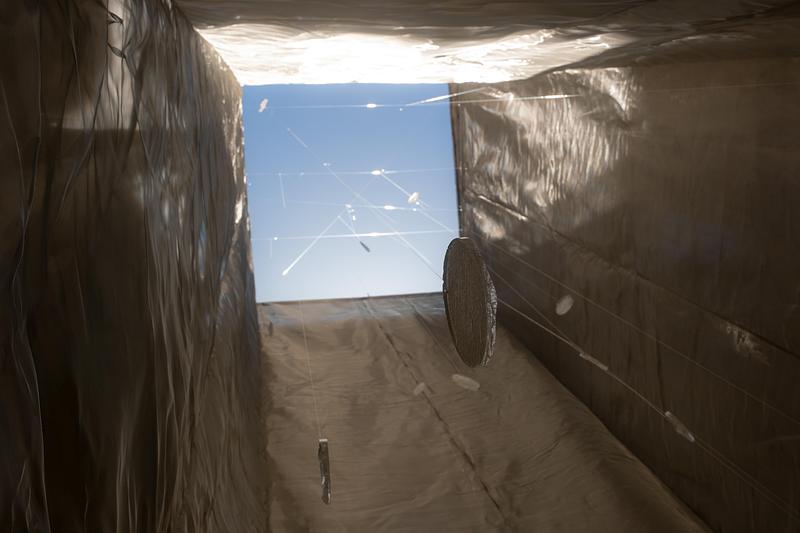
Passing through the mesh like walking beneath a traditional Japanese noren, visitors encounter a circular constellation of transparent, droplet-like resin medallions suspended at the center of the courtyard. Each medallion contains textures collected from the streets and historic courtyards of Montpellier. Illuminated by constantly shifting natural light, they shimmer as though fragments of the city’s memories had gently risen from the ground and begun floating through the air.
Through wind, light, material, and bodily movement, the installation encourages visitors to rediscover Montpellier’s familiar landscape from a new perspective. The historic courtyard becomes a place where the invisible relationships between architecture, nature, memory, and the human body emerge through direct sensory experience.
Throughout the festival, Takemura also presented an immersive performance developed in collaboration with interdisciplinary artist Yui Takeshima and performer Haruna Kawamura. Inspired by the embodied qualities of traditional Japanese Noh theatre, the performance intertwined with the installation, allowing visitors’ own bodies to become a state of awai—an in-between condition where boundaries between self and others, inside and outside, are experienced through movement, perception, and presence.
Liminality in Motion embodies Takemura’s broader vision of architecture as a medium for cultivating relationships rather than defining separation. By making invisible boundaries perceptible, the project proposes architecture not as a static object but as an evolving experience continually reshaped through memory, bodily movement, and encounters across cultures.
Recognized for its innovative integration of architecture, art, and performance within a historic environment, the project was awarded the Premier Prix du Jury Spécial 20 ans, celebrating the twentieth anniversary of the Festival des Architectures Vives.