













Hong Kong’s latest fiscal strategy under Financial Secretary Paul Chan signals a decisive pivot toward structural transformation, pairing fiscal discipline with targeted investment to rebuild long term competitiveness.
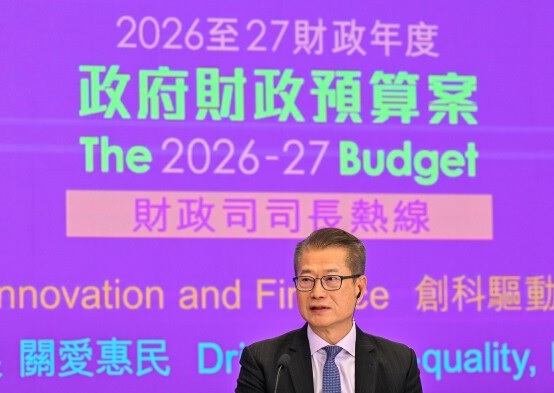
With the economy returning to surplus and the government aligning more closely with the national 15th Five Year Plan, the 2026–27 Budget places innovation, advanced industry, and cross boundary connectivity at the centre of Hong Kong’s next growth cycle. From accelerating the Northern Metropolis to deepening I&T industrialisation and strengthening talent pipelines, the strategy aims to reposition the city for sustainable expansion and deeper integration with the Greater Bay Area.
Industry leaders across infrastructure, construction, research, and real estate have responded with clear views on the opportunities and implications of this policy direction.
Infrastructure and Cross Boundary Connectivity
Wing Law, CEO, Asia, AtkinsRéalis, views the accelerated development of the Northern Metropolis as a critical step in Hong Kong’s long term growth trajectory. He emphasises that infrastructure investment is fundamentally tied to economic expansion, supporting national development priorities while enhancing Hong Kong’s competitiveness. Strategic transport projects—including the Northern Link and the Hong Kong–Shenzhen Western Rail Link—demonstrate the government’s determination to strengthen cross boundary connectivity and unlock new economic synergies.
He adds that deeper cooperation under the 15th Five Year Plan and expanding Belt and Road partnerships will reinforce Hong Kong’s role as a “super connector” and “super value adder,” creating new opportunities in innovation, infrastructure, and emerging industries.
Construction Sector Digitalisation and Talent Development
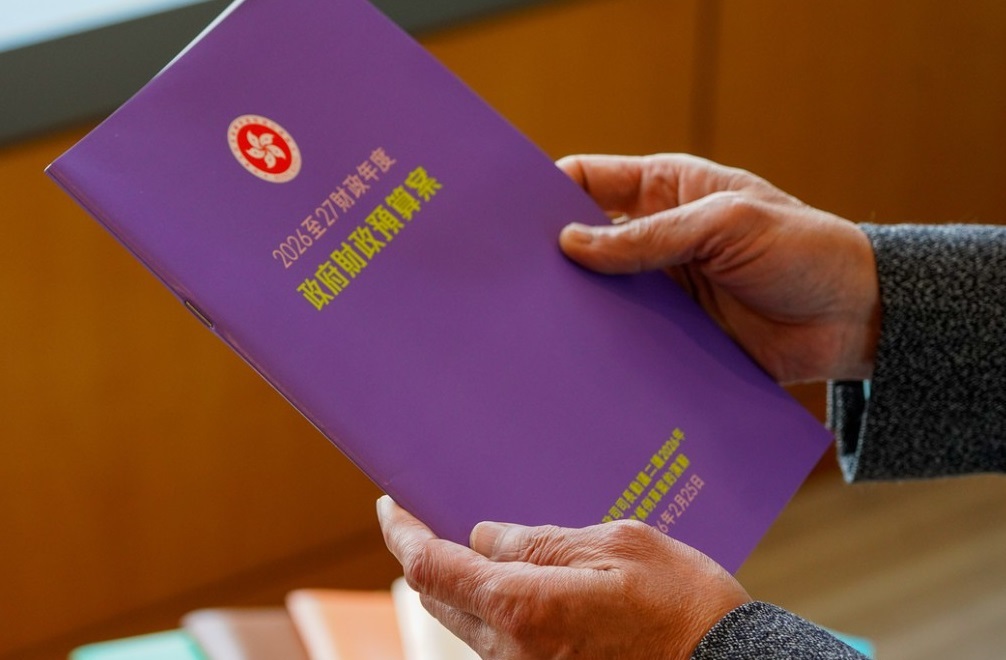
The Construction Industry Council (CIC) welcomes the government’s HK$1 billion injection into the Construction Industry Innovation and Technology Fund (CITF), to which the CIC will contribute an additional HK$400 million. This brings the total to HK$1.4 billion to sustain industry wide adoption of innovation and technology.
Since its establishment in 2018, the CITF has approved 5,549 applications, supporting advanced technologies, robotics, BIM, and related training, with cumulative approved funding reaching HK$2.22 billion and benefiting 1,554 companies and organisations. The CIC will also relaunch the Professional Degree Graduate On the Job Training Subsidy Scheme to strengthen talent pipelines and accelerate digital transformation across the sector.
Economic Transformation and Market Competitiveness
Marcos Chan, Head of Research, CBRE Hong Kong, notes that the Budget directly addresses structural shifts in Hong Kong’s economy by accelerating transformation and enhancing competitiveness. The government’s plan to introduce a local five year economic blueprint—aligned with the national 15th Five Year Plan—will help ensure more strategic allocation of public investment.
With an improved fiscal position, the government has introduced measures to support livelihoods, stimulate domestic consumption, and boost inbound tourism. GDP growth for 2026 is projected at 2.5% to 3.5%, maintaining the 3.5% achieved in 2025. Expected interest rate cuts and rising home prices may further support investment demand. While the Budget does not directly stimulate the commercial property market, initiatives to strengthen Hong Kong’s global financial competitiveness and promote innovation may support long term demand. The decision to withhold general commercial land sales for a second year is seen as appropriate given high vacancy rates in certain segments.

Property Market and Land Supply Measures
Real estate analysts also point to the government’s measured approach to land supply as an important stabilising force in the current market cycle. Alex Barnes, Managing Director for JLL Hong Kong, notes that the decision not to release any commercial sites for tender in the coming year will give the office sector more time to absorb existing supply. Leasing activity has improved since last year, vacancy rates in several submarkets have begun to ease, and Grade A office rents in Central appear to have bottomed out with modest growth expected this year.
On the residential side, Alkan Au, Head of Value and Risk Advisory at JLL, highlights that recent government land tenders have been awarded at or above the upper end of market expectations, signalling a clear improvement in developers’ appetite for land. He observes that the government has opted not to significantly increase land supply despite this stronger sentiment, reflecting a cautious strategy aimed at avoiding downward pressure on the housing market. As the market continues to recover, future land releases may position the government to secure higher revenue.
Innovation, Talent, and Sustainable Development
Kathy Lee, Head of Research & Retail Consultancy at Colliers Hong Kong, notes that the Budget sets out a clear and forward looking roadmap for strengthening Hong Kong’s long term competitiveness. She highlights the government’s emphasis on innovation and technology, ecosystem building, talent development, digital infrastructure, and sustainability as essential pillars that will broaden opportunities across sectors and reinforce Hong Kong’s position as a leading international hub. She also points to the Northern Metropolis as a major growth engine that will deepen cross boundary collaboration, accelerate the clustering of innovation driven industries, and expand land and development capacity—laying a stronger foundation for Hong Kong’s integration with the Greater Bay Area.
Complementing this view, Eric Tsang, Acting Head of Valuation & Advisory Services at Colliers Hong Kong, welcomes the injection of HK$10 billion into the Hong Kong–Shenzhen Innovation and Technology Park, as well as the establishment of a dedicated company with HK$10 billion in initial capital to coordinate the development of the San Tin Technopole. He notes that these initiatives effectively leverage market forces to accelerate development progress and inject growth momentum into the innovation and technology industries within the Northern Metropolis. Together, they signal a strong commitment to building a world class innovation ecosystem capable of driving Hong Kong’s next phase of high quality development.