










MATERIALITY IN MOTION
A bold experiment in materiality and biophilic design, Bambu Atmosfera redefines coastal living in Ubatuba, Brazil. With bamboo as its architectural centerpiece, Perkins&Will demonstrates how natural materials can deliver sustainability, adaptability, and aesthetic distinction—while setting new standards for collaboration between design, construction, and local ecosystems.
Bamboo as Architecture
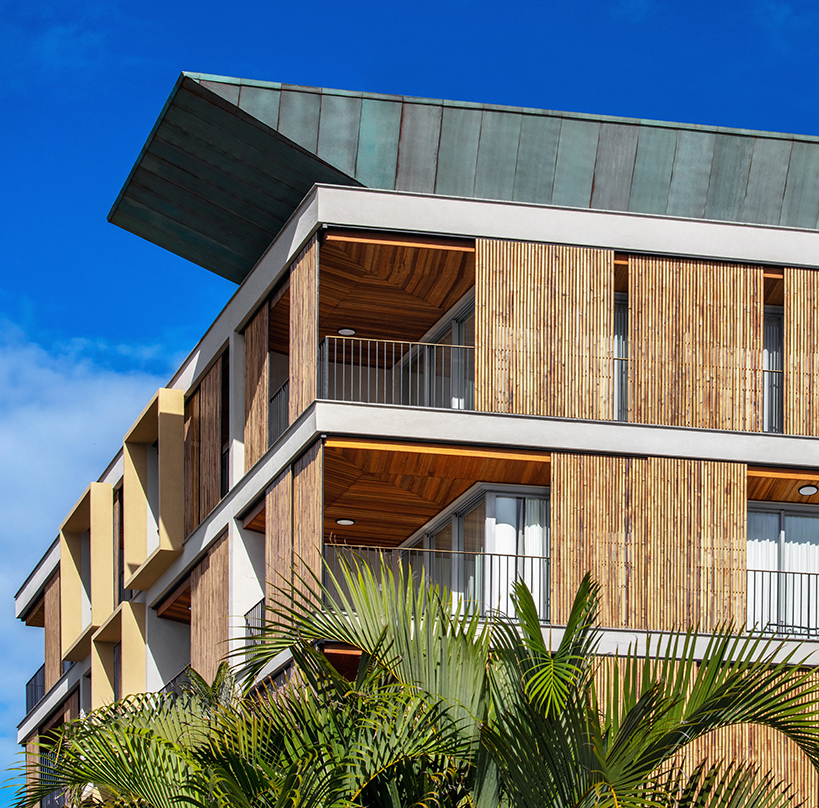
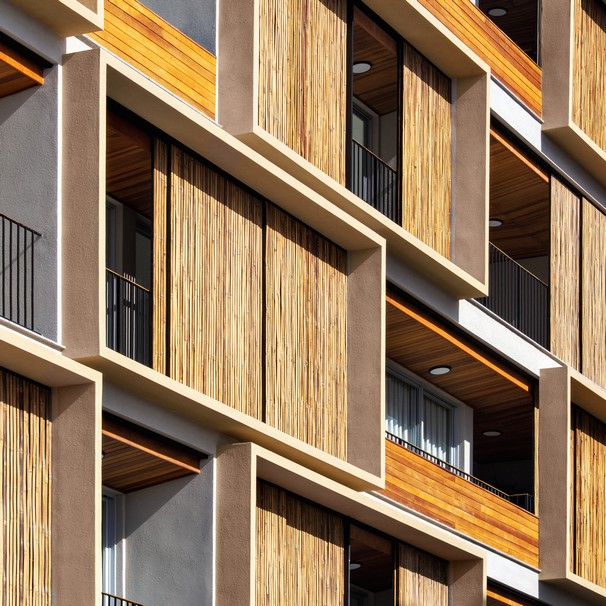
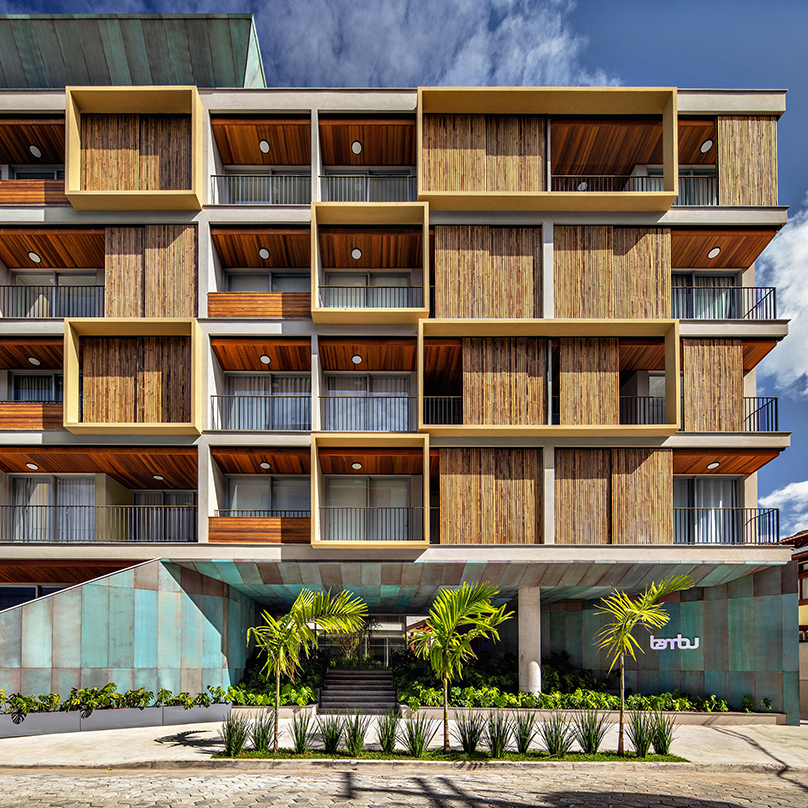
At Bambu Atmosfera, bamboo is not a decorative afterthought but the defining element of the building’s identity. Vertical slats of treated bamboo wrap the facades, forming articulated brise-soleil panels that residents can adjust to control light, ventilation, and privacy. This dynamic skin transforms the building into a living, responsive architecture—one that breathes with its environment and engages directly with the Atlantic Forest ecosystem.
“Bamboo is a good constructive alternative since it adapts to the most diverse applications and shapes,” explains Fernando Afonso, project architect at Perkins&Will São Paulo. Its flexibility, low cost, and rapid growth make it a material of choice for warm, humid climates, while its local abundance reduces transport impacts and carbon footprint. In Ubatuba, bamboo is both a sustainable solution and a cultural statement: a material rooted in place, yet projected into the future.
A Sustainable Blueprint
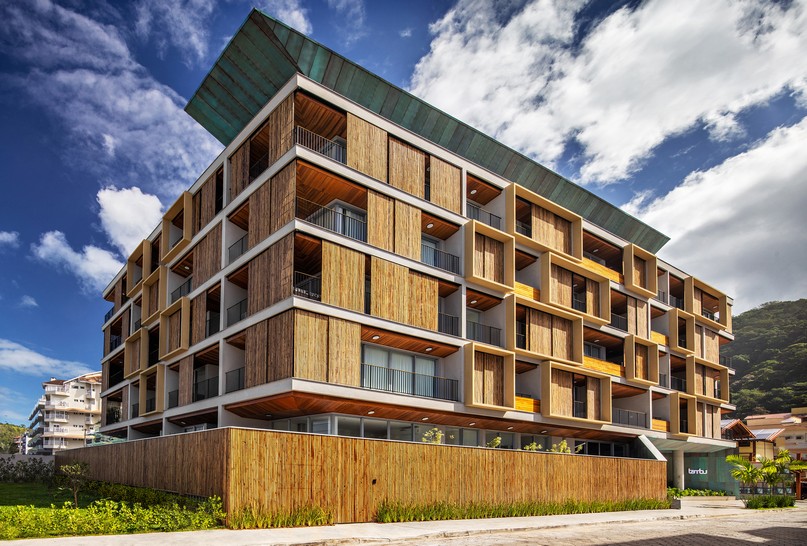
The project occupies a 1,843 sqm plot and rises five floors, with apartments ranging from 62 to 110 sqm. The U-shaped plan creates a generous central square planted with native species, reinforcing the building’s dialogue with the Atlantic Forest. Every unit enjoys ocean views, natural ventilation, and thermal comfort enhanced by bamboo’s insulating properties.
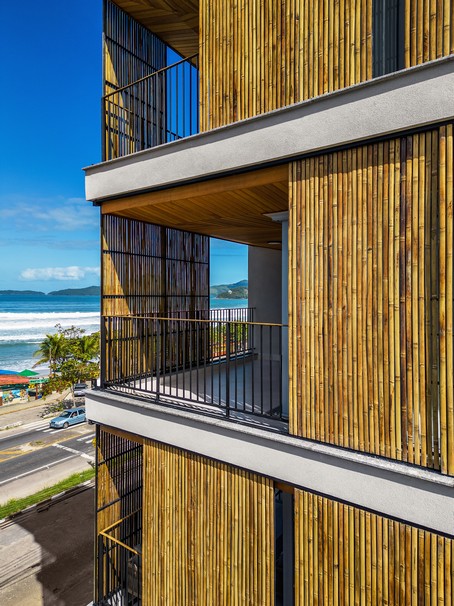
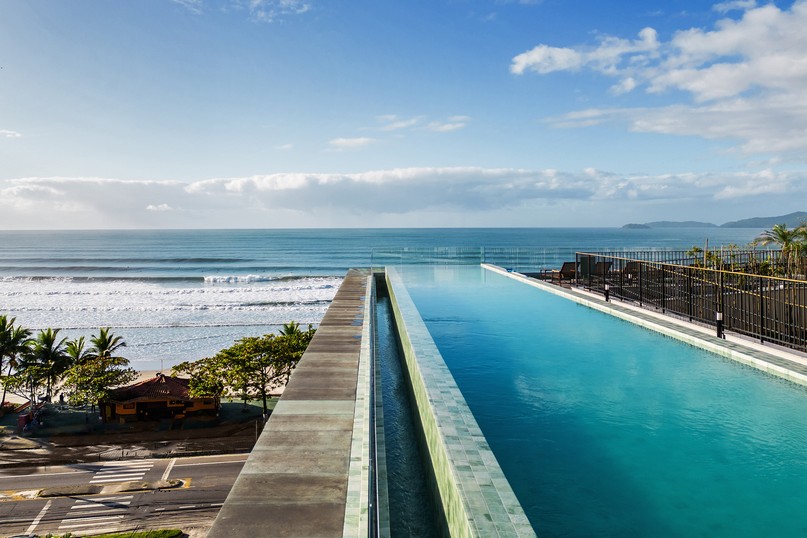
Beyond materiality, the design integrates social and recreational spaces: a fitness area, lounge, library, and a rooftop pool clad in green finishes that merge seamlessly with the coastal landscape. Circulation is conceived as an experience, with cantilevered walkways, bamboo-clad elevators, and galvanized steel railings that juxtapose natural and industrial textures.
The project embodies biophilic design principles, reinstating the human connection with nature as a tool for well-being. Bamboo, glass, stone, and metal combine to create contrasts that heighten sensory engagement. The building is not only a residence but a framework for community, encouraging interaction among residents and visitors through shared green spaces and adaptable layouts.
Creative Freedom, Lasting Impact
“We had creative freedom to design a well-being, high-quality life ambiance with flexibility and convenience. The final result was an edification with raised ground floor, four and a half pavements and 51 apartments, all according to the local legislation,” celebrates Fernando Vidal, Perkins&Will’s Managing Director.
That freedom, anchored in material innovation, has produced a building that is both sustainable and aspirational—a model for how architecture can respect its environment while elevating the quality of life.
Bambu Atmosfera is more than a residential project; it is a manifesto for sustainable materiality. By placing bamboo at the heart of its design, Perkins&Will demonstrates how architecture can harmonize with nature, reduce environmental impact, and inspire new possibilities for the building industry.