










By Ar Prof Ada Fung, BBS, President of Lighthouse Club Hong Kong Branch
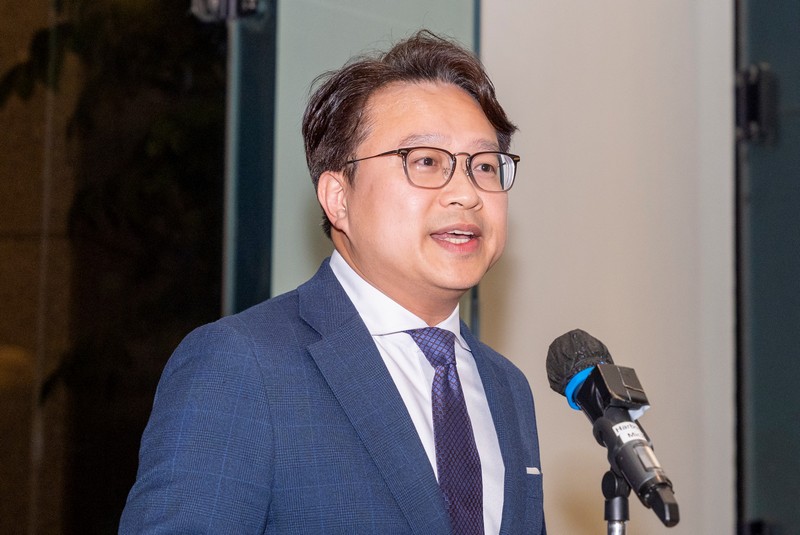
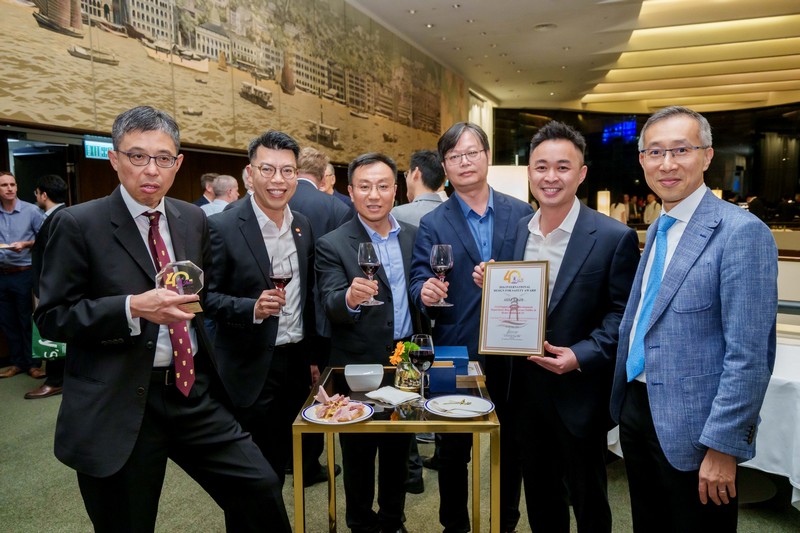
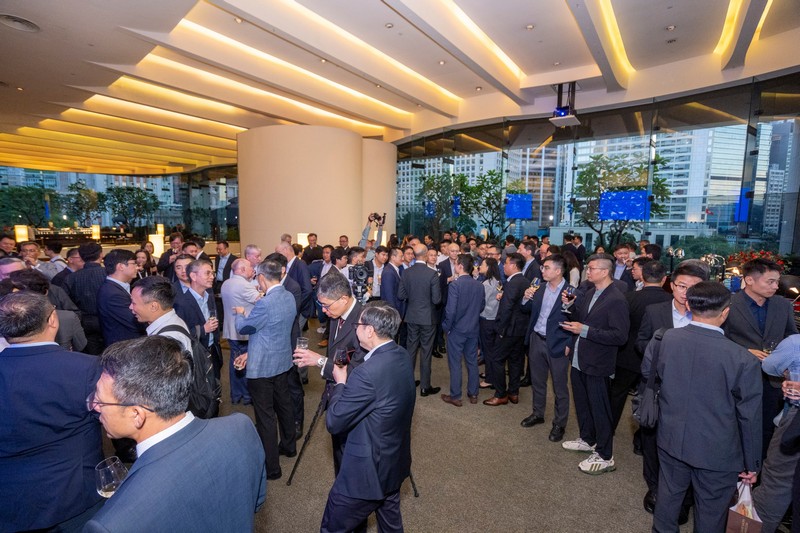
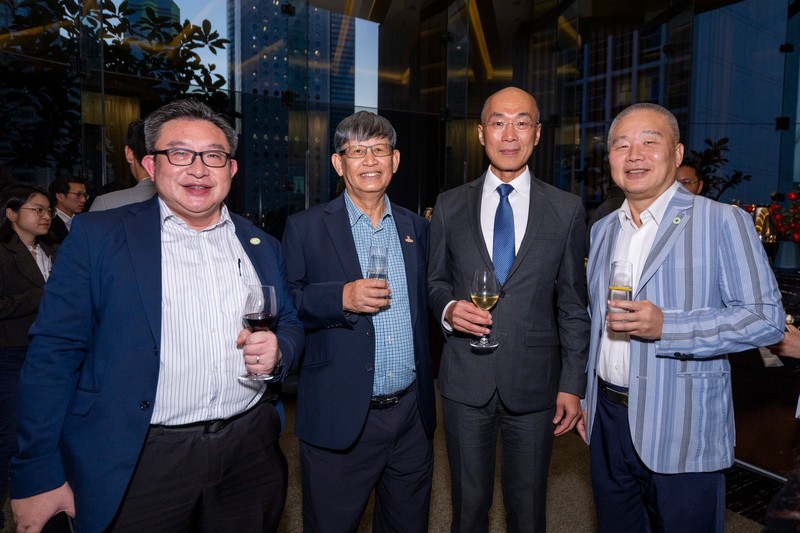
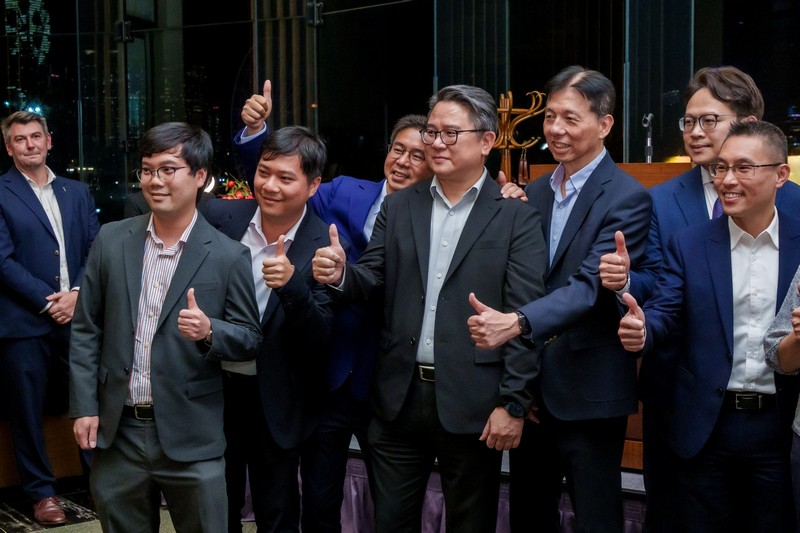
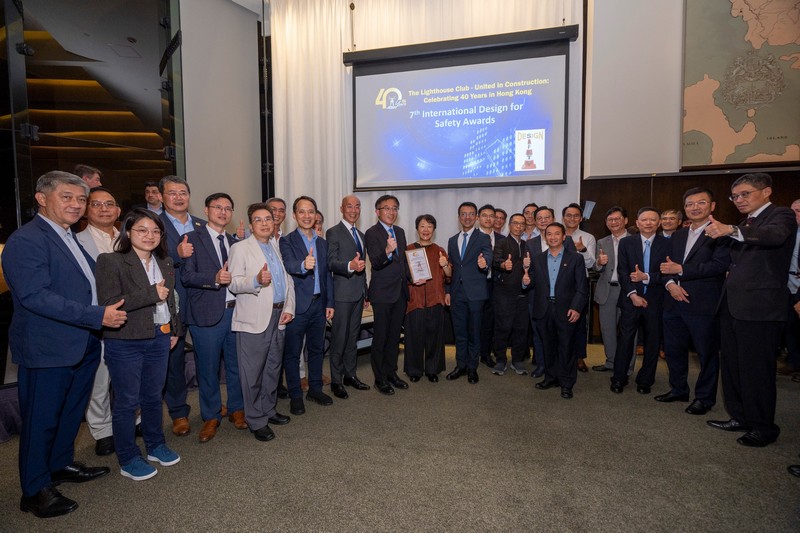
As the Lighthouse Club Hong Kong Branch proudly celebrates its 40th Anniversary, we are honoured to host the 7th International Design for Safety Award — a milestone that reflects both the heritage of our organisation and the forward-looking spirit of our industry. This year’s Awards have drawn a record number of submissions from Hong Kong, Singapore, Australia and beyond, matched by an equally distinguished international judging panel. Such breadth and depth of participation is a remarkable achievement and one that underscores the global resonance of our mission.
The Award exists to recognise those designers and design teams who have gone beyond convention to embed safety into the very fabric of their projects. It celebrates innovation that eliminates, reduces and mitigates risks across the entire lifecycle of an asset — from construction and operation to maintenance, modification and eventual removal. In doing so, it honours the visionaries who understand that safety is not an afterthought, but a fundamental design principle.
This year’s submissions exemplify the diversity and dynamism of our industry. From clients and consultants to contractors and solution providers, entries spanned building and infrastructure projects at every stage of development. Many had already been recognised in other competitions, yet here they stood shoulder to shoulder, judged not only on technical excellence but on their commitment to safeguarding lives. The judging process was rigorous, culminating in a two-day interview session that challenged the panel to select only a handful of winners from an extraordinary field.
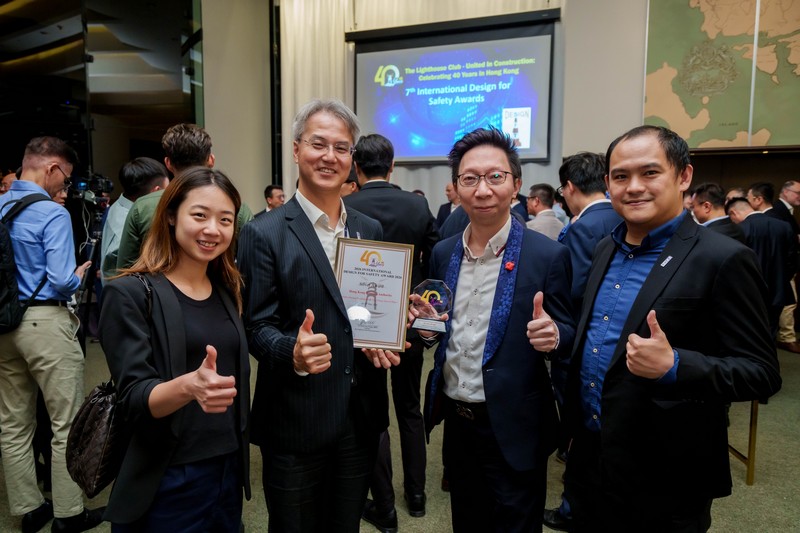
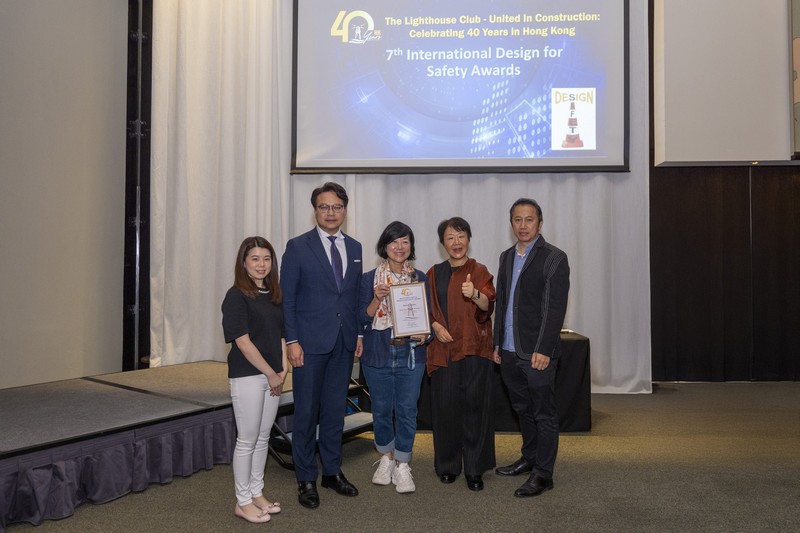
The results speak for themselves: one Gold Award, one Silver Award, two Bronze Awards, seven Merit Awards, fifteen Honourable Mentions, two Special Merit Awards and one Special Honourable Mention. Each represents not just a project, but a philosophy — that safety by design is the highest form of care we can offer to those who build, maintain and inhabit our structures.
As our Guest of Honour, Mr. Chan Chi Ho, Johnny, JP, Deputy Secretary for Development (Works), HKSAR Government, reminded us at the ceremony: “Safety is not just a priority. It is our highest non-negotiable commitment.” His words resonate deeply with the ethos of the Lighthouse Club and with the achievements we celebrate today.
On behalf of the Hong Kong Branch, I extend heartfelt congratulations to all awardees and finalists. Your work demonstrates that designing out hazards is not only possible, but essential. Together, we are shaping a safer, healthier and more sustainable built environment — and in doing so, we honour the true spirit of our profession.
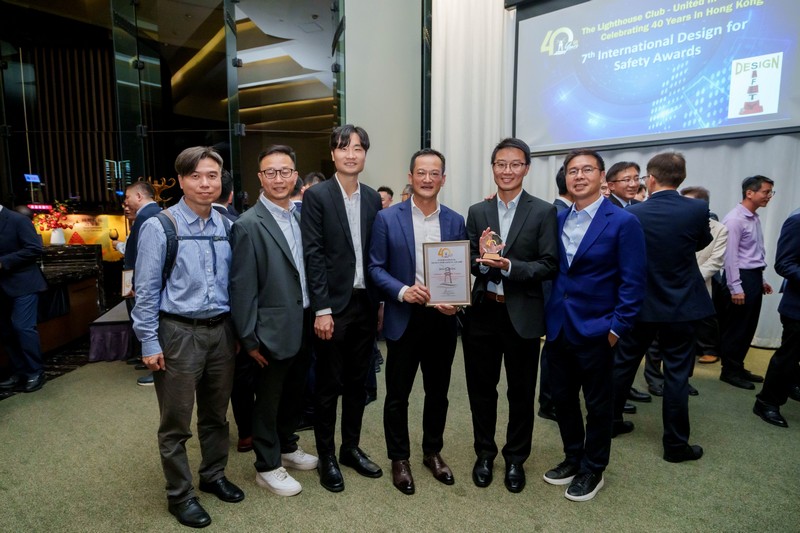
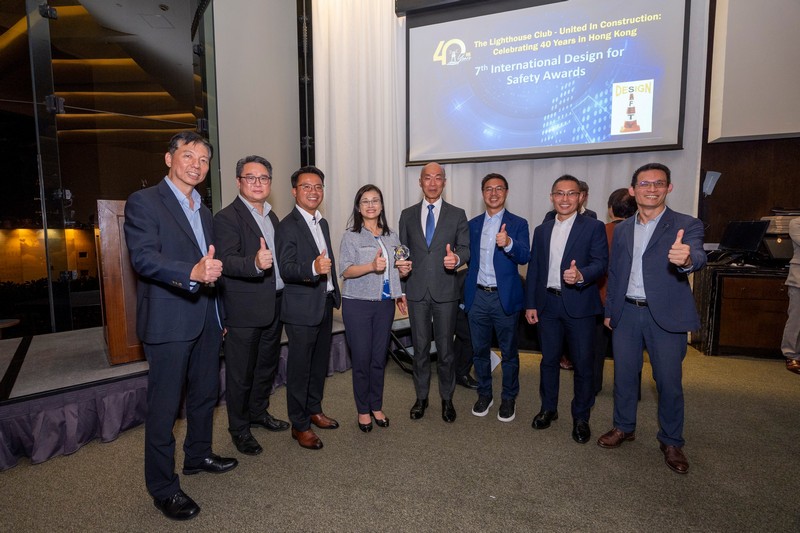
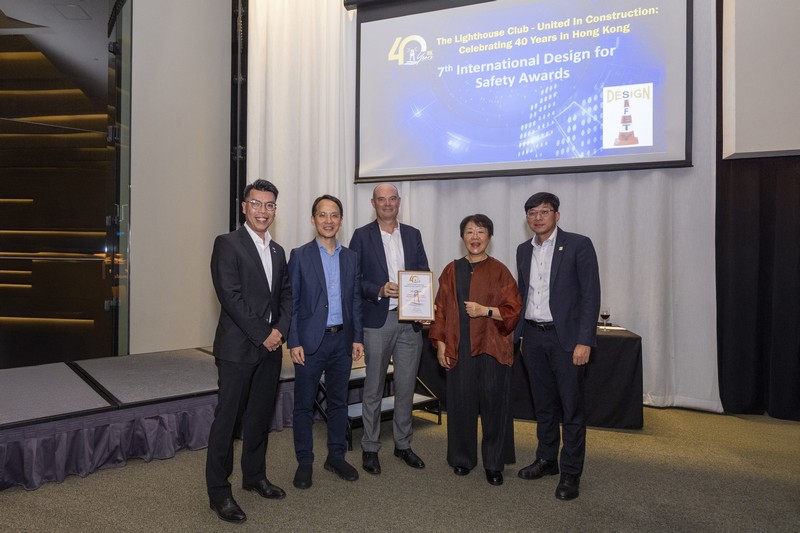
Reflections from the Jury
The Judging Panel was unanimous in its admiration for the calibre of submissions this year. “We commend the innovative design proposals and high-quality submissions received,” they noted, praising the thoughtful use of cutting-edge technologies, digital tools and people-focused, environmentally conscious solutions. Collectively, the entries demonstrated how Design for Safety can be fully embedded into daily practice, creating safer workplaces and healthier built environments.
Professor Billy Hare of Glasgow Caledonian University remarked on the scale and ambition of the initiatives: “I was extremely impressed with both the quantity and the quality of submissions. The innovations being developed within the Hong Kong construction industry are making real differences to the management of health and safety risks, spanning every aspect of the construction process and including digital innovations that are truly world-leading.”
Ir Iain Mowatt of the Temporary Works Forum HK emphasised the industry’s embrace of evolving technologies: “The extent of innovation constantly astonishes me. This year we were gratified to see how our industry has embraced innovation and technology year after year. Civil Engineering and Development Department with Dragages on Trunk Road T2 won outright, showing how Safety by Design can transform a standard project into one that protects every worker. The Housing Authority also demonstrated how technology is making designs safer and easier to build.”
Dr Winson Yeung of the Occupational Safety and Health Council and ISSA highlighted a profound shift in mindset: “What stands out most is the move from simply managing risks to designing them out of existence. Seeing cutting-edge technology applied with real care for the frontline workforce is truly inspiring. These winners prove that safety isn’t just a box to check — it is the very core of brilliant design.”
Prof Dr Daron Leung of HKFOSHA reflected on the long-term evolution of the Awards: “In recent years, I have witnessed the collaborative effort of local teams to make our dream ‘to design out the hazard’ come true. The integration of innovations and AI technology brings us further and faster, while client involvement, particularly from government works departments, expedites the development of the Design for Safety concept. Applying this principle daily not only reduces injuries and accidents but also ensures progress without delay and improves project quality.”
Together, the Jury’s reflections underscore a powerful truth: safety by design is no longer aspirational — it is the defining hallmark of excellence in modern construction.
Citations from the Jury
Gold Award – Trunk Road T2 and Infrastructure Works for Developments at the Former South Apron The Jury commended this submission as a masterclass in preventative design. Safety was embedded into every phase of the asset’s lifecycle, from construction to maintenance and eventual dismantling. By engineering out major hazards at the source — eliminating decompression risks for tunnel workers through atmospheric cutterhead systems and removing internal struts with a double circular cell structure — the project set a new benchmark for comprehensive, forward-thinking safety by design.
Silver Award – Public Housing Development at Tung Chung Area 42 Phase 1 The Jury praised this project for its seamless integration of high-tech automation with smart structural design. The use of Modular Integrated Construction (MiC) minimised complex on-site work, while an AI-driven remote tower crane system enhanced lifting safety. Smart cameras and LiDAR triggered automatic alarms whenever workers approached the moving hook, with tracking data securely logged for future risk analysis. This project was recognised as a magnificent new benchmark for modern construction safety.
Bronze Award – Fanling North New Development Area Remaining Phase The Jury highlighted this design’s brilliance in eliminating the hazards of river-based construction. By shifting bridge supports out of the water, the project removed the severe risks of deep-water work and deep excavations. The adoption of precast beams, instead of heavy temporary works over the river, further reduced high-risk activities. It stands as a clear example of how simplifying a structure can create a safer workplace.
Bronze Award – Public Housing Development at Wang Chi Court, Kowloon Bay The Jury applauded this project’s practical approach to risk elimination across both construction and long-term maintenance. An innovative concrete pouring sequence removed the need for dense temporary propping, while off-site fabrication reduced risky high-level welding. Dedicated permanent maintenance catwalks inside the steel truss ensured safer upkeep. This project was recognised as a strong model for modern safety design.Special Merit Award – District Court Building, Caroline Hill Road The Jury commended the team’s ground-breaking approach to tower crane safety. By relocating the crane cabin to ground level and co-designing controls with experienced operators, the transition to remote operation was made smooth and intuitive. This eliminated the daily risk of falls from climbing, while a robust communications network and smart backup systems ensured operational stability. The Jury recognised this as an exemplary innovation in worker safety.