














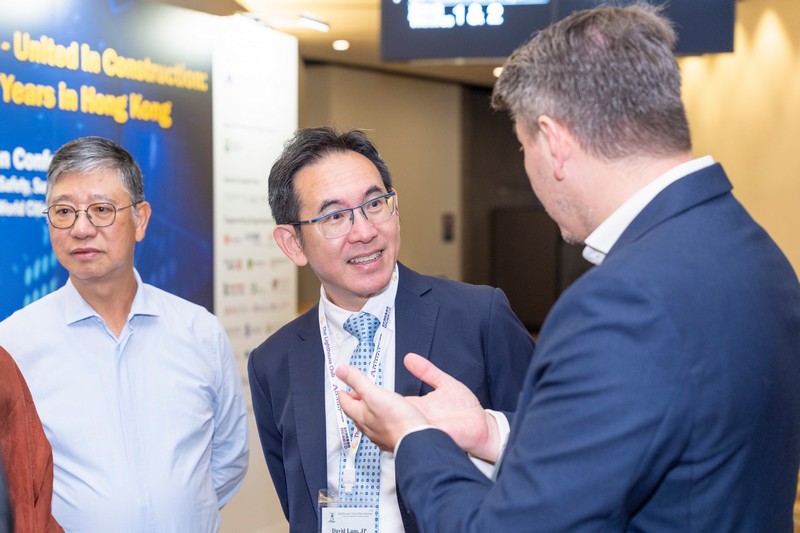
David Lam, Under Secretary for Development, Development Bureau 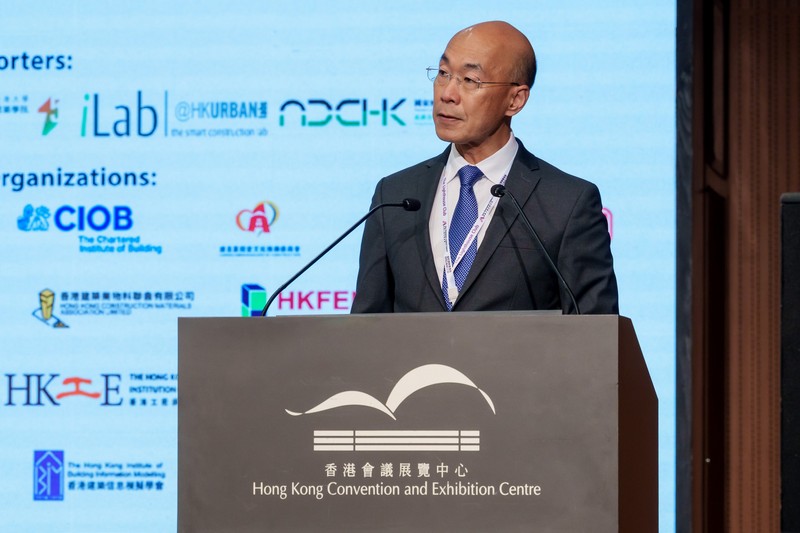
Michael Fong, Director, CEDD
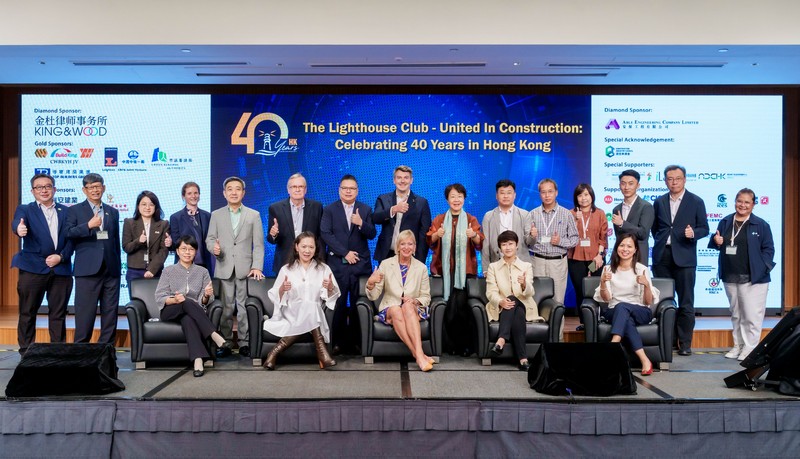
Where will the construction industry be in 20 years’ time? This was the central question posed by the Organising Committee (OC) of the Lighthouse Club 40th Anniversary International Construction Conference.
The OC was led by Ada Fung (President, Hong Kong Branch) together with Keith Buckley (Deputy Chairman, Lighthouse Club International; Chairman, Lighthouse Club Macau), Jim Chessell (then Chairman, Lighthouse Club International), Patrick Daley (Chairman, Hong Kong Branch) and Elaine Man (Administrator, Lighthouse Club International and Lighthouse Club Hong Kong) and Steve Tennant (Committee Member – Lighthouse Club International and Lighthouse Club Hong Kong Branch). Several members were also involved in associated events, including the organisation of the 7th International Design for Safety Award and the drinks reception.
In early February 2026 the OC first met to agree the theme, structure and duration of the Conference. A highly ambitious plan was quickly assembled. Could such a major event be organised within four months? Where would the speakers and delegates come from? Who would sponsor such an undertaking? And why was 2026 such a significant year?
The answer lay in the anniversaries being marked: 2026 represented 40 years since the Lighthouse Club was founded in Hong Kong — and in Asia — as well as 70 years since its origin in the UK. The OC recognised that the calibre of speakers would determine success. They therefore sought world‑class contributors from policy makers, project owners, contractors, consultants, specialist advisors and academics.
This success created its own challenge: how to accommodate so many speakers within a two‑day programme. The solution was three parallel breakout streams.
To support the anniversary events, more than 25 sponsors were secured, including Diamond Sponsors King & Wood and Able Engineering Co., Ltd. With sponsored attendees included, it is estimated that over 200 people participated in the Conference, in whole or in part.
Opening Day Highlights
Welcome messages were shared on behalf of:
Sir Douglas Oakervee CBE, Hon D Eng, FREng, FICE, past Chairman of HS2 and Crossrail in the UK, former Project Director at Airport Authority Hong Kong and past Chairman of the Lighthouse Club UK and
Prof. Dr. Robert F. Care AM, FREng Chair RedR Australia and RedR International, Professor of Practice UNSW, past Chair United Kingdom Middle East Africa Region (UKMEA) Arup Group.
Mr David Lam, Undersecretary for Development of the Hong Kong Government’s Development Bureau, gave a fascinating insight into the HKSAR Government’s aims for advancing the frontiers of construction. He described how the Government acts as an enabler in areas such as innovative procurement, high‑productivity construction and advanced methods. Case studies included the use of S690 and S960 high‑strength steels, fibre‑reinforced ultra‑high‑performance concrete and glass fibre reinforced polymer reinforcement bars. He also highlighted the promotion of advanced technologies such as AI, construction robotics and the 4S Smart Site Safety System.
Although space does not permit a full account of Prof Roger Flanagan’s presentations, his contribution was noted as an important part of the programme.
Dr Richard Freer OBE, Managing Director of Bechtel Australia, shared lessons learned from mega‑project delivery. For Pluto Train 2, Bechtel undertook EPC&C works for Woodside Energy, while at Western Sydney Airport it acted as Delivery Partner for the Airport Corporation. He explained why the client selected each procurement model, emphasising efficiency, safety and resilience.
Michael Fong, Director of the Civil Engineering and Development Department (CEDD), described how CEDD has shifted towards sustainable infrastructure development, where nature and resilience drive prosperity. He introduced the Northern Metropolis project, a HK$224 billion development covering 30,000 hectares. Designed to accommodate 2.5 million people, it will provide 500,000 residential units and create around 500,000 jobs. He outlined in detail the Smart, Green and Resilient strategies guiding this transformation.
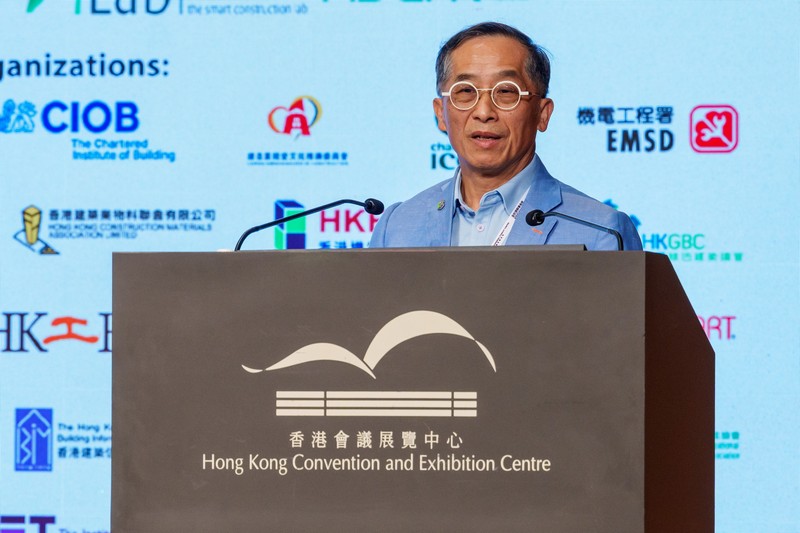
Thomas Ho, Chairman, CIC 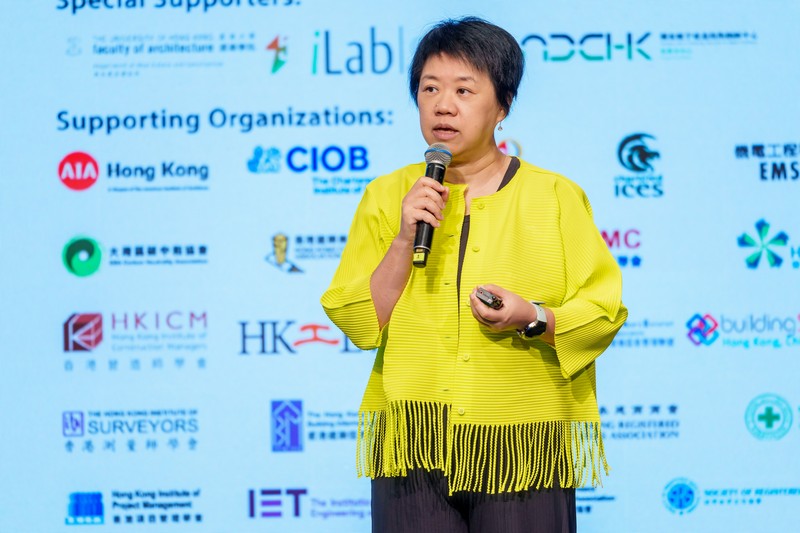
Bonnie Yau, Executive Director, OSHC
Spotlight on Safety, Sustainability & Innovation
Safety
Ir Prof Thomas Ho, Chairman of Hong Kong’s Construction Industry Council (CIC), expanded on points raised by David Lam of the Development Bureau in considering the future of construction in Hong Kong. He highlighted the target of 308,000 public housing units over the next decade, with more than half delivered through Modular Integrated Construction between 2028/29 and 2032/33. The push for Multi‑Trade Integrated Mechanical, Electrical and Plumbing delivery (MiMEP) and Design for Manufacture and Assembly (DfMA) is now firmly underway.
Harman Cheng, Chairman of IOSH Hong Kong, observed that “Climate change is no longer just an environmental issue – it’s a workplace safety challenge.” He introduced ISO/PAS 45007:2026, a newly published guidance standard that helps organisations manage occupational health and safety risks arising from climate change and climate action. The standard reframes climate change as an immediate workplace hazard, enabling companies to protect workers and strengthen resilience. It also supports ESG commitments by embedding climate risk management into safety frameworks. Cheng illustrated this through analysis and business case studies.
Sustainability
Dr Cheung Tin‑cheung SBS, Chairman of the Hong Kong Green Building Council, addressed Sustainability and Advancing Net Zero. He began by reviewing the commitments made by countries to carbon‑neutral pledges, before setting out Hong Kong’s Climate Action Plan. His presentation examined emissions from buildings both globally and locally, highlighting the scale of the challenge.
Prof Martin Zhu, CEO of i2COOL, tackled the question of electricity‑free cooling technology. Far from being a pipe dream, he explained how the technical principles were inspired by the Saharan silver ant. i2COOL’s founders, experts from the School of Energy and Environment at the City University of Hong Kong, transformed their groundbreaking research — published in leading journals such as Science — into commercial applications that revolutionise energy efficiency. With a presence in more than 29 countries, i2COOL’s passive radiative cooling paints and films, made from polymers and proprietary nanomaterials, achieve exceptional solar reflectivity and mid‑infrared emissivity, reducing surface temperatures by up to 42°C. Case studies included well‑known Hong Kong buildings such as the Coliseum and even container offices, where coatings cut temperatures by 29°C.
Ar Ivy Lee, Managing Director of Leigh & Orange, explored the debate around Advancing Net Zero under the theme Ideology or Reality? She reviewed global discussions on carbon emissions, noting that 28% of emissions worldwide arise from building use. Ivy acknowledged the existence of differing views and scepticism around Net Zero Carbon, recognising that not all stakeholders are convinced of its feasibility.
Together, these presentations underscored that sustainability is not simply a technical challenge but a matter of leadership, innovation and belief. The industry must balance ambition with practical pathways, ensuring that Net Zero is pursued with honesty, courage and a readiness to act.
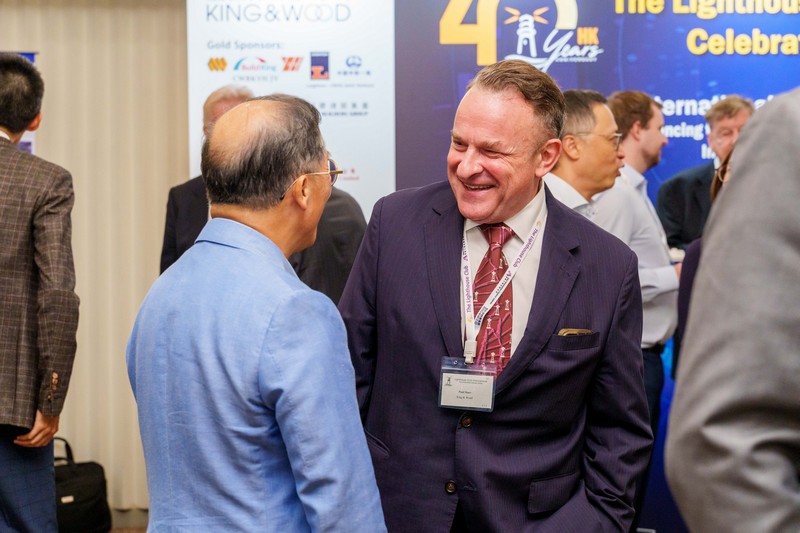
Paul Starr, Partner, King & Wood 
Left to Right: Rosana Wong, Executive Director, Yau Lee Holdings; Shannon Ho, Director, Aedas
Innovation
The Buildings Department is promoting safety and sustainability through digital transformation. Mr Lawsons Yue, Assistant Director, introduced the BIM Building Separation Tool, a new method for assessing building permeability. Under the Sustainable Building Design Guidelines, authorised persons and registered structural engineers must consider airflow and resistance around façades and ground level — factors such as friction and turning costs that affect air movement.
Traditionally, designers relied on 2D methods, wind tunnel modelling or computational fluid dynamics (CFD) simulations, which were costly and time‑consuming. The BIM Building Separation Tool applies a Least Cost Path methodology to calculate how façade shapes influence airflow across buildings. This innovation offers significant savings in both time and cost compared with conventional CFD, while embedding sustainability into design practice.
Alongside this, OpenBIM was highlighted as a contemporary approach to design and construction. Built on open standards and interoperability, it enables seamless collaboration across software platforms. A breakout session showcased buildingSMART International’s award‑winning projects, with Oskar Cheung and Francis Yuen from the EMSD addressing challenges in exporting native BIM formats to OpenBIM for MEP handovers. They presented two solutions, including one developed by EMSD, to overcome these technical hurdles.
Examples of OpenBIM excellence included Kai Tak Sports Park (2024 Design for Buildings Category), The Henderson (2025 Operations Category; 2022 Construction for Buildings Category) and Lee Garden Eight (2025 Sustainability Category). These projects demonstrated how OpenBIM, acting as a “single source of truth,” supports collaboration across dispersed teams during design, procurement and Design for Manufacture and Assembly (DfMA) phases. The framework fosters rationalisation, optimisation, innovation and value engineering, ensuring efficiency and quality.
OpenBIM also enables facilities management platforms for asset management, energy analytics and continuous performance monitoring after handover. This capability is increasingly vital as corporate tenants face ESG reporting obligations imposed by regulators and clients. By integrating digital tools with sustainability requirements, OpenBIM strengthens both operational resilience and compliance.
All three projects reported smoother resolution of challenges, measurable programme improvements and cost savings during construction, as well as reduced operational costs. Together, the BIM Building Separation Tool and OpenBIM illustrate how digital transformation is reshaping Hong Kong’s construction industry, embedding innovation into both design and long‑term asset management.
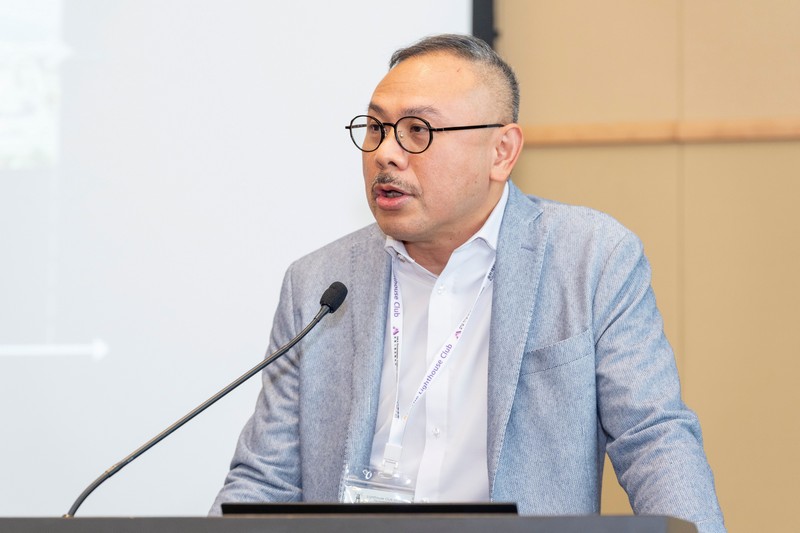
Yue Chak Sang, Assistant Director, Buildings Department 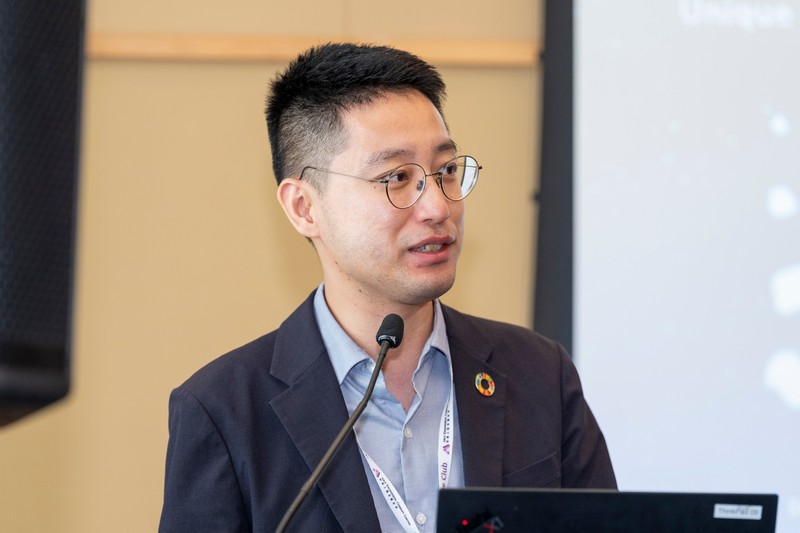
Prof Martin Zhu, CEO i2COOL 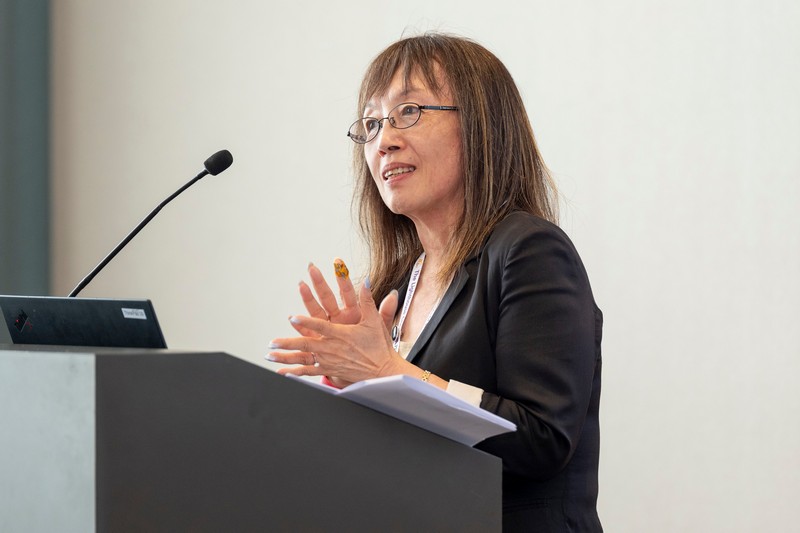
Magdalene Tennant, Partner, Fragomen
Procurement, Payment and Crisis Management
Procurement
“Daring to be different” was a recurring theme throughout the Conference and Tim Parker, CEO of Australia’s High Speed Rail Authority, chose it as the title of his presentation. He outlined the economic and social benefits of connecting Newcastle to Sydney by a dedicated High-speed rail line, emphasising the transformative impact for New South Wales and Australia as a whole.
Key procurement initiatives include mandating modern methods of construction, competitive early contractor involvement, collaborative contracting with opportunities for off‑site manufacture and design for manufacture and assembly. The Authority also encourages contractors to propose new technologies and materials.
Parker went into detail on the Early Contractor Involvement model. Unlike traditional approaches, no reference design will be provided. Contractors, engaged much earlier than usual, will be paid to develop their own designs. This shifts responsibility and creativity to those delivering the project, fostering innovation and ownership.
The Authority’s procurement model also addresses inflation and externalities. Rather than relying on a standard incentivised target cost contract, contractors must price in allowances for indexed categories such as fuel, steel and concrete. They take the plus/minus risk within these allowances, creating a more balanced distribution of risk. Delivery will be achieved through contracts designed to support non‑adversarial behaviours, win‑win outcomes, cost and programme certainty and proper allocation of scope and design risk. Off‑site manufacture is mandated, ensuring efficiency and engagement across the supply chain.
This ambitious approach is expected to attract strong interest from firms in Hong Kong and beyond.
Performance bonds in the USA were discussed between Harris Willliams & Steve Tennant . While the parties involved — owner, contractor and bondsman — are familiar worldwide, the US system differs significantly from Asia, the Middle East, Africa and Europe. In the US, performance bonds are legally required for public projects above certain thresholds and are common for private contracts over US$10 million. Below that level they are less frequent.
Once issued, a bond is held by the project owner. If the contractor defaults, the owner declares the default and notifies the bondsman, who investigates over 60–90 days. If default is confirmed, the bondsman has several options to remedy the situation, including appointing a replacement contractor or paying damages up to the full contract value. There is also the option of denying there has been a default. The US market is highly concentrated, with five firms covering over 40% of performance bonds and the top two accounting for a quarter of the market.
Dr Tim Whitehill of Saible Consult introduced the concept of normalised deviance — the gradual acceptance of risky practices until they become routine. He argued that insolvency in construction is not accidental but structurally produced, embedded in governance and behaviour rather than isolated incidents. Failures repeat because fragility lies in the supply chain, where resilience is weakest.
Whitehill noted that governance often focuses on compliance, reporting and short‑term financial performance, rarely questioning whether operating models are sustainable. This allows deviant practices to persist unchallenged. Using UK construction failures as examples, he showed how distress concentrates in the supply chain. Reforms such as project bank accounts and payment transparency have been layered onto existing behaviours rather than replacing them.
His conclusion was stark: unless governance and culture are addressed, the same pattern of failure will continue under new corporate names. Normalised deviance explains why fragility becomes embedded and why failure repeats across the industry.
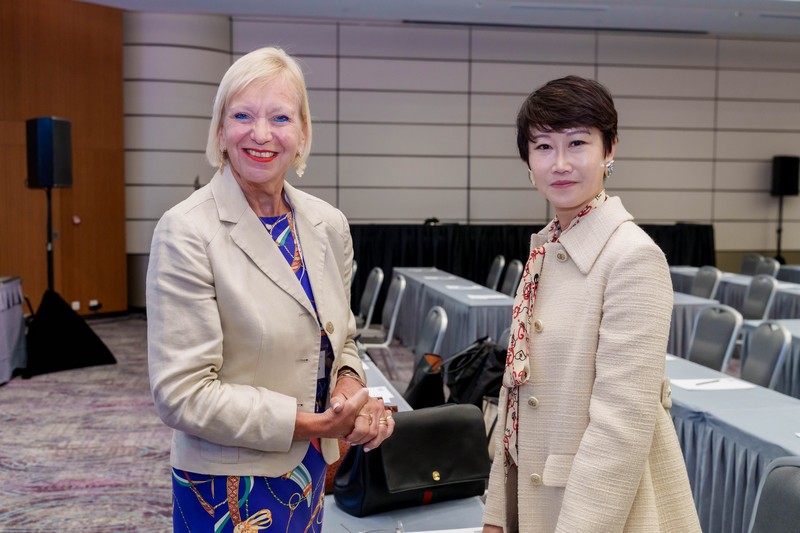
Left to Right: Dr Anne Kerr, Asia Executive Adviser, Mott MacDonald; Ivy Lee, Managing Director, Leigh & Orange 
Payment
As Dr Tim Whitehill noted, security of payment is one of the most pressing issues facing the global construction industry.
It was therefore timely that the Lighthouse Club convened a panel of leading lawyers, moderated by Andrew Goddard KC (Atkin Chambers), to discuss security of payment and adjudication practices in Australia, England & Wales, Hong Kong, New Zealand and Singapore.
A high‑level overview might be summed up as “the same but different in each jurisdiction.” The biggest commonality lies in the extent of the differences. These include the types and values of contracts covered by legislation and whether design, engineering or QS consulting work is included.
In jurisdictions with longer‑standing legislation, subsequent amendments have been required to address shortcomings and stakeholder demands. Yet even with revisions, controversies remain. These include the overall cost of adjudication, which is often treated as another form of arbitration, leading to expenses disproportionate to the sums in dispute.
Crisis Management
Western folklore often claims the Chinese characters for crisis (危机 / 危機) mean danger + opportunity. Linguists note this is inaccurate: 机 / 機 has multiple meanings and in this context the word literally means dangerous moment or critical point.
The session featured three speakers offering distinct perspectives, resulting in a rounded discussion on preparation, communication, people and the reality that crisis is not a question of if but when.
Tim Peirson‑Smith of Executive Counsel stressed that crises are inevitable, even for well‑run businesses. His advice: prepare during peacetime with realistic crisis drills three to four times a year, ideally led by external experts. Teams should be cross‑functional, though in smaller organisations one person may carry the load, making preparation vital. Drills should be challenging, unfolding over hours with time pressure and unexpected twists. On communication, his rule was clear: silence is never golden, as it creates a vacuum others will fill.
Magdalene Tennant of Fragomen examined crisis from an immigration and workforce mobility angle. She identified three challenges: geopolitical volatility demanding resilience, rising compliance risks requiring vigilance and talent gaps combined with economic shifts demanding innovative mobility solutions.
Donovan Ferguson of King & Wood closed with “Crisis, What Crises?” He argued the hardest step is acknowledging a crisis exists. Denial wastes the critical early window when containment is possible. Drawing on dispute and investigation experience, he noted warning signs often appear in correspondence, programme slippage or cost reports but are rationalised away until too late.
The panel agreed that while crisis plans are essential, no plan can cover every scenario. The range of possible crises is simply too vast and varied.
People and Leadership – The Human Side
The common thread across these presentations was clear: the biggest challenges facing construction are not technological, they are human.
Professor Peter Wong of RMIT University examined the relationship between people and advanced technology, asking whether it is a threat or an opportunity. He noted that construction contributes 13% of global GDP and employs 7.7% of the world’s population, yet faces an ageing workforce, rising housing demand and slow adoption of innovation. His research, drawing on Actor‑Network Theory, suggested that technology development is driven less by resistance than by market demand. His closing observation was memorable: “You are not going to be replaced by advanced technology, but you can be replaced by those who know how to communicate and collaborate with it.”
Dan Alfassi, LEAN Lead at Gammon, gave a candid account of Gammon’s LEAN journey from Singapore to Hong Kong. He argued the industry suffers from behavioural rather than technological problems. With 70–90% of projects late or over budget, he blamed a culture of “wishful thinking” where contractors make unrealistic promises. Gammon’s solution was the Obeya Room, a collaborative space where trades identify constraints and make reliable commitments in public.
Mile Sofijanic of ECS Associates presented advanced project management tools for mega projects in South Africa, showing how Lean principles combined with AI‑driven optimisation improved performance. His dashboard tracked multiple contractors, with measurable gains such as 114% tool time availability and a 30‑point rise in task compliance.
Professor Kristof Crolla of HKU addressed the training of human judgment under the title “The Architect After AI.” He found that 80% of undergraduates worldwide use generative AI, creating a “divergence problem” where polished results mask a lack of understanding. He stressed the need to train critical judgment alongside digital tools.
Ir Dr Anne Kerr OBE spoke on accelerating sustainable infrastructure and the associated challenges. Her closing observation captured the challenge: “The industry’s biggest risk is not change, but the pace of change.”
Together, these presentations recognised that the industry’s future will be shaped less by the technologies adopted than by how people are prepared to work with them — and with each other.
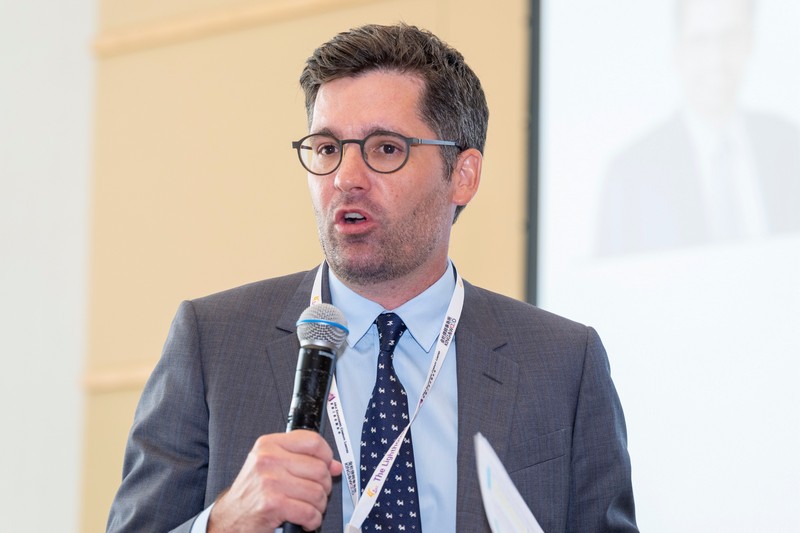
Donovon Ferguson, Partner, King & Wood 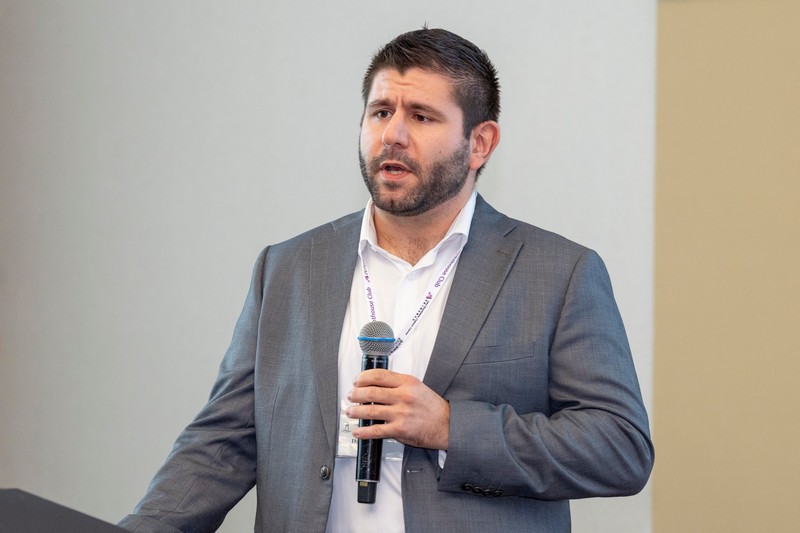
Dan Alfassi, Gammon Construction 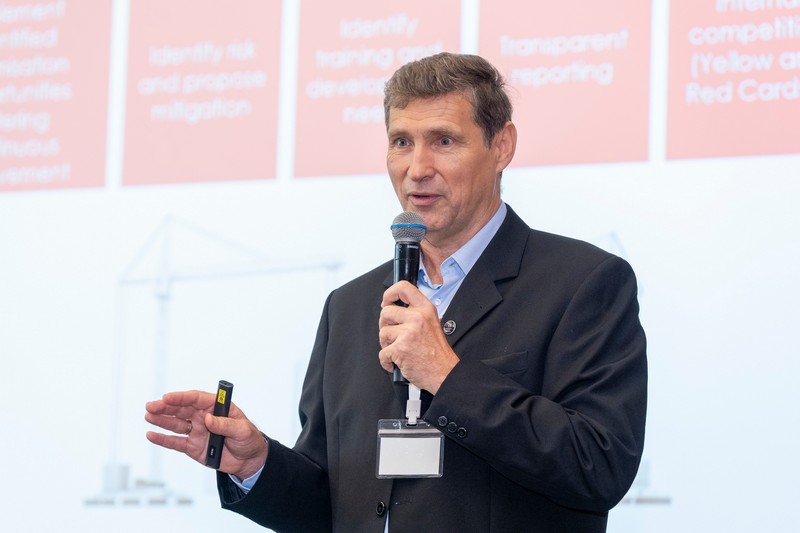
Mile Sofijanic, ECS Associates, South Africa
Day 2 Keynotes: Looking Ahead
The second day opened with a forward‑looking programme examining the future of construction through infrastructure standards, global dispute resolution, supply chain digitalisation and sustainable materials.
Ir Raymond Ip, Commissioner for Northern Metropolis Railways at the Highways Department, presented Hong Kong Railway Standards — a system‑based framework built on British and European models, adapted to local conditions and incorporating MTR Corporation standards. The framework aims to promote safety, reliability and sustainability while enabling more consultants and contractors to participate through performance‑based specifications.
Paul Starr of King & Wood offered a lighter but thought‑provoking perspective with his talk “Why I Liken Hong Kong Gin to the Belt and Road.” Delivered with humour, he introduced a fines box for forbidden words, raising nearly HK$6,000, before closing with a flourish: distributing gin and tonics to the entire audience. His argument, however, was serious: Hong Kong is the only jurisdiction outside mainland China where parties can apply directly to mainland courts for interim measures in aid of a qualifying arbitration.
Anna Lin of GS1 Hong Kong addressed the urgent need for standardised data in construction supply chains. With the EU’s Digital Product Passport regulations now in force under the Ecodesign for Sustainable Products Regulation, products entering the European market — including construction materials — will soon require structured digital records covering origin, composition, sustainability and lifecycle data.
Giving Back – The Charities
The 40th Anniversary events were not only about education and fellowship. An equally important purpose was to generate a financial surplus for the Club’s charitable beneficiaries.
All surpluses from the Conference and associated activities — the 7th International Design for Safety Award, the Anniversary Cocktail Party and the sale of the commemorative book — will go to:.
The Lighthouse Club International Benevolent Trust provides relief to those employed or formerly employed in the construction industry and their dependents, where hardship arises from accident, disability or ill‑health.
The James Battersby Educational Trust supports young people across Asia Pacific connected to the construction industry. Its mission is to assist with training and education for children suffering hardship due to the death, injury or illness of a parent or guardian who worked in construction.
What makes these contributions especially meaningful is the efficiency of the model. The Lighthouse Club’s supported trusts are entirely volunteer‑run: everyone gives their time freely, covers their own expenses and ensures that 100% of donations reach beneficiaries without deduction for overheads.
Closing Reflections
The Conference opened with a question: where will the construction industry be in 20 years’ time? After two days of presentations, panel discussions and breakout sessions, there was no single answer — but participants left with a clearer understanding of the forces that will shape it.
What struck your scribe most and what many attendees also observed, was the quality of exchange. The Lighthouse Club’s strength has always been its ability to bring together owners, contractors, consultants, lawyers and academics in a forum where genuine conversation can flourish. This conference set a new standard in internationalism, industry, professional and academic expertise and excellence, thought leadership and optimism for the future, above and beyond any conference previously held in Hong Kong
The Club has been promoting this in Hong Kong for 40 years. Judging by the energy and commitment on display at the Convention Centre, the next 40 years promise to be just as impactful.
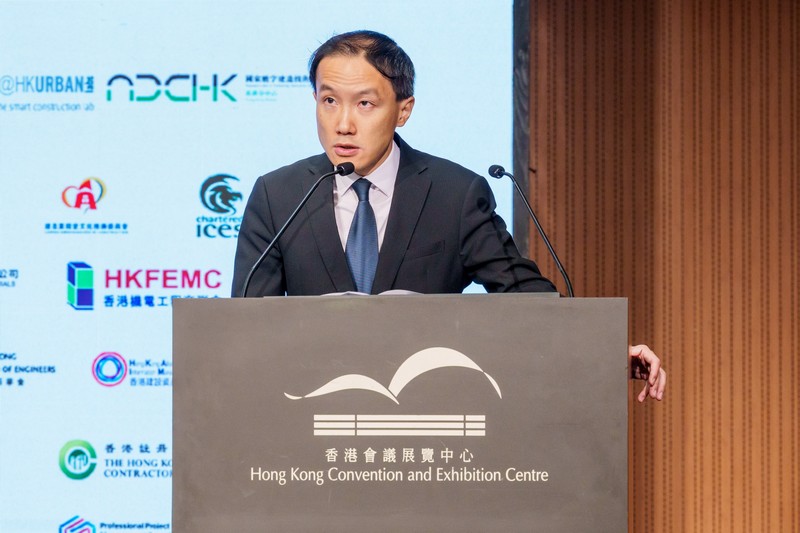
Raymond Ip, Commissioner for Northern Metropolis Railways 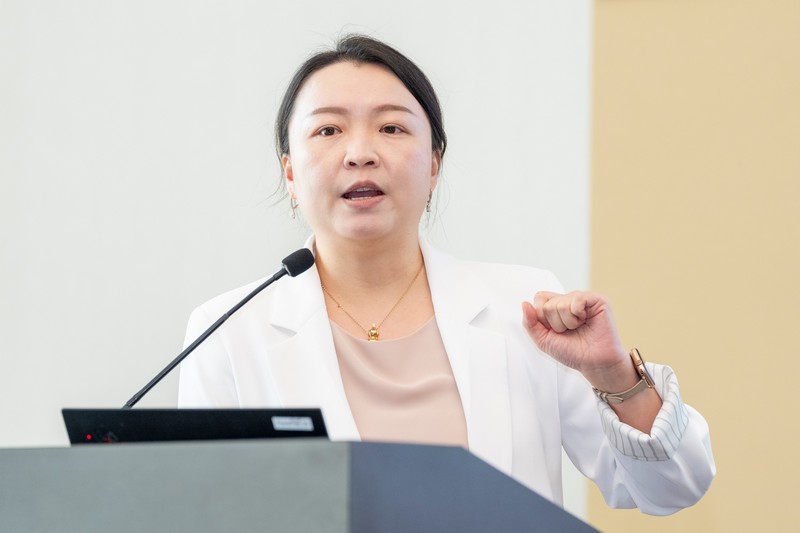
Prof Isabelle Chan, HKU