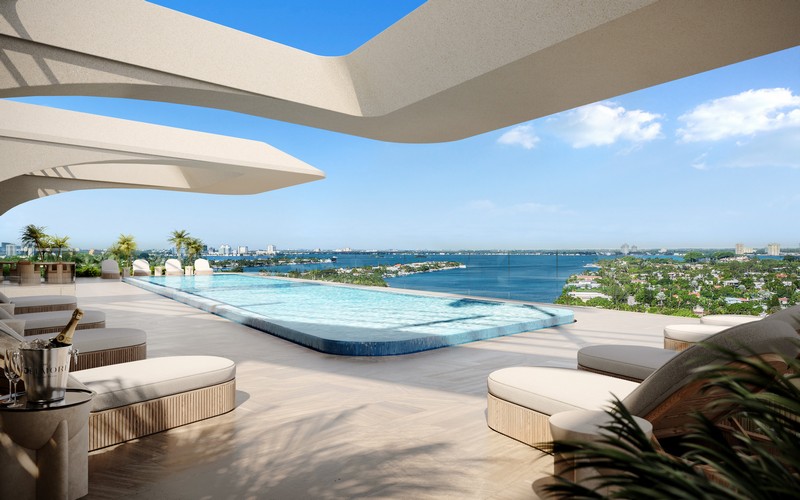











Embrace the international trend and indulge in a tranquil green escape at Forest Pavilion. Meticulously crafted by internationally acclaimed designers.

(Left) Adrian Norman & (Right) Kochiro Ikebuchi
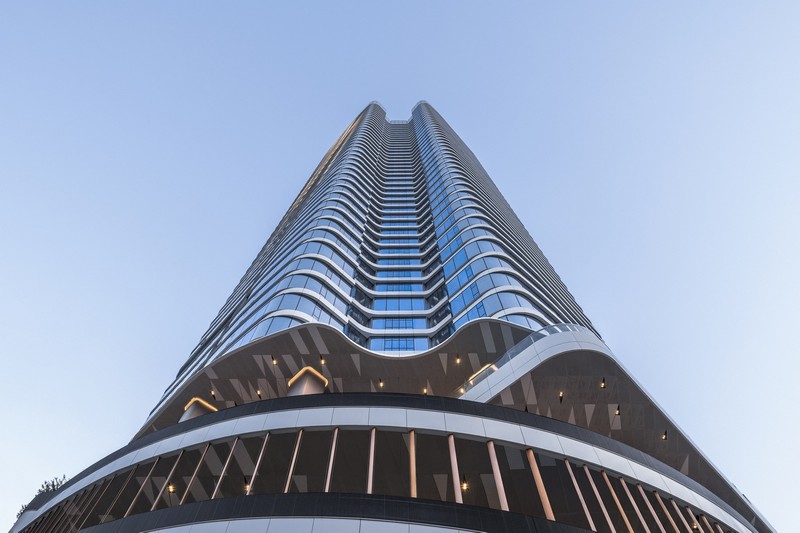
Step into the tranquil greenery of the clubhouse, Forest Pavilion, at THE PAVILIA FOREST I, jointly developed by New World Development and Far East Consortium International at 2 Shing King Street, Kai Tak. You’ll be immediately immersed in a sanctuary of calm. Created by a visionary collaboration between internationally acclaimed interior designer Koichiro Ikebuchi and renowned landscape designer Adrian Norman, together with THE PAVILIA FOREST I, introduces a brand-new forest bathing-inspired lifestyle to Hong Kong within PAVILIA COLLECTION of renowned residences.


Inspired and rooted in the concept of “Forest Journey,” the clubhouse is meticulously crafted to offer residents an exclusive, tranquil forest that nurtures both body and soul, while gently guiding them from the frantic turmoil of everyday life into a state of quiet inner calm.
A serene forest escape amidst the turmoil of the city
Shinrin-yoku, also known as forest bathing, is a Japanese term emerged in the 1980s, based on the idea of immersing yourself among in the ambience of forest to promote wellbeing and overall health. This deep connection with the forest promotes relaxation, connection and harmony within the natural environment. Today, shinrin-yoku has blossomed into an international trend, embraced across diverse cultures and geographies.
The practice typically includes activities such as walking through green woodlands to appreciate the ambient sounds of nature, as well as engaging in yoga, meditation, and relaxation exercises among the trees. These activities are supplemented by multisensory experiences, such as gently touching foliage, inhaling the characteristic scents of the earth and forest flora, and listening to birdsong and the subtle movements of wildlife. These practices are widely recognised for their ability to significantly reduce stress and promote overall wellbeing.
For many urbanites starved of greenery however, reconnecting with nature in this way is always a challenge. To overcome this, the clubhouse, Forest Pavilion, has been meticulously designed exclusively for residents of THE PAVILIA FOREST I, offering a restorative escape, allowing individuals to immerse themselves in the serenity of the forest immediately after a day of urban toil and stress.
A Forest-inspired retreat with five themed zones and 50 diverse facilities
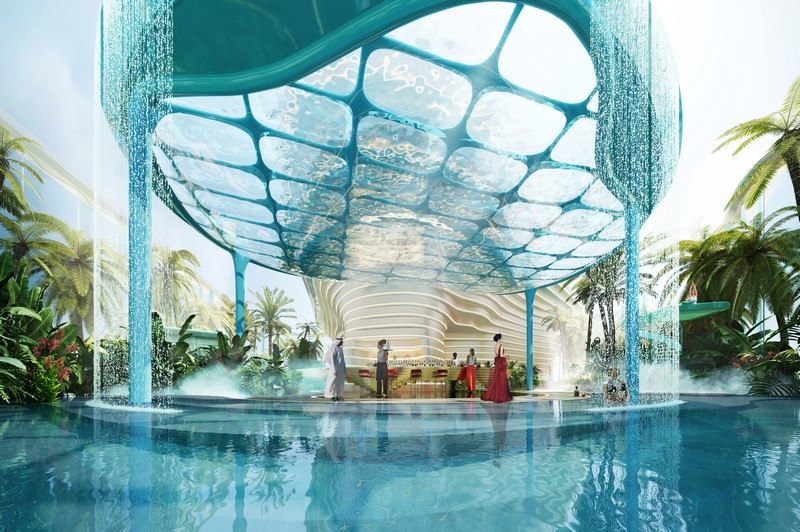
The design embraces five themes: Forest Bath, Forest Cave, Forest Meadow, Forest Ruins, and Forest Peak. Together, the clubhouse encompasses 50 thoughtfully curated facilities, including an approx. 50m Forest Pool, an approx. 25m Indoor Pool, Badminton Court, and Sky Seaview Dining Room, which collectively provide a spectacular urban oasis where the gentle murmur of flowing water and joyful laughter weave a comforting blanket of rejuvenating calm.


Recreating an ode to nature with shades and sound – Koichiro Ikebuchi
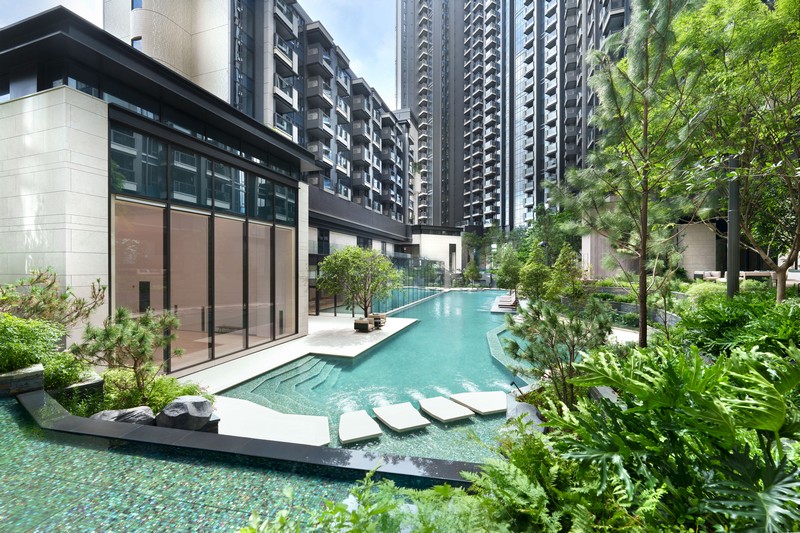
From the moment you enter the Forest Pavilion, you are surrounded by water, trees and plants and soothed by gentle breezes in a serene oasis of peace and calm. A major highlight is the rippling approx. 25m Indoor Pool surrounded by stones to inspire tranquil moments by the water’s edge. The pool is adjacent to the approx. 50m Forest Pool which is surrounded by trees to resembling a true Forest Lake.

This soothing environment was co-designed by the celebrated, Japanese designer Koichiro Ikebuchi, who has won many international awards5 during his over 30 years of practice. These include the Diamonds International Awards from De Beers, the Design Saporiti Italia, and the President’s Design Award Singapore. Mr Ikebuchi drew his inspiration from “Werifesteria”, which refers to the act of wandering through the forest, and the many sensations that evokes in the imagination. As one passes by the myriad hues of overlapping leaves, the enigmatic rock formations crafted by nature and the beautiful pebbles visible beneath the clear forest streams the mind is both soothed and energised.
By finding joy in nature in this way, Mr Ikebuchi uncovered deeply nostalgic emotions of mystery and adventure and used a variety of tiles with different expressions of colour and texture to form passages resembling a cave with a slate veneer.
“I hope residents can relax, refresh and reset as if living in the forest, providing a space where they can escape the hustle and bustle of daily life both mentally and physically”, Mr Ikebuchi said.


Crafting a seamless journey of rejuvenation through nature – Adrian Norman
The other co-designer of Forest Pavilion is Mr Adrian Norman, who has over 30 years of experience in all aspects of landscape consultancy and has attained numerous awards for projects in Hong Kong, China, Singapore, Indonesia and the Philippines with his company. He structured the landscaping of the clubhouse into two distinct sections to create a calm and tranquil environment that allows residents to reconnect with nature. The exterior provides sweeping views of the harbour, cityscape, and hillsides, while the interior features a secluded garden designed as an unexpected woodland pool retreat.
All the areas from the clubhouse courtyard to the Forest Pool, Forest Pond, Forest Cascade, Forest BBQ3 and Forest Avenue are seamlessly connected, with the Forest Pool purposefully set at a lower level to visually link with the Indoor Pool and allow for terraced landscapes4.
Mr Norman explained, “This design encourages residents to stroll among the trees, indulge in picnics or secluded brunches, relax in the forest onsen and completely immerse themselves in leisure, mindfulness, and comfort. With the expansive greenery, every day here offers rejuvenation in the sensory experiences of nature”.


Ms Cannas Ho, the Director of Sales & Marketing at New World Development said, “THE PAVILIA FOREST I is the pinnacle of New World Development’s esteemed PAVILIA COLLECTION, alongside the newly launched clubhouse, Forest Pavilion, it brings the architectural aesthetics showcased in our opulent PAVILIA COLLECTION residences on Hong Kong Island, while embracing the renowned international concept of forest bathing – meticulously crafted to offer a sublime and tranquil living environment that truly nourishes the soul”.
Mr. King Chan, General Manager of Sales & Marketing of Far East Consortium International Limited also said, “THE PAVILIA FOREST I situated by the waterfront in Kai Tak, where the residents can enjoy panoramic sea views from home. Benefiting from “Smart and Green Mass Transit System” in Kai Tak, which connects the runway precinct to Kai Tak MTR station. This feature will provide convenient access to international sports and entertainments at the nearby Kai Tak Sports Park in the near future.”.