









The new Columbarium and Garden of Remembrance (CGR) in Tuen Mun, the largest of such facilities managed by the Food and Environmental Hygiene Department (FEHD), has gained a prestigious industry accolade – the Building Environmental Assessment Method (BEAM) Plus Platinum Rating under the Hong Kong Green Council’s BEAM Scheme.
(按此瀏覽中文版)
Much of the honour can be credited to the sustainability efforts of leading contractor Leighton Asia (a member of CIMIC Group), commissioned by FEHD, project management by the Architectural Services Department and designed by the lead consultant, Simon Kwan & Associates Ltd., to construct the columbarium in-line with a comprehensive set of performance criteria relating to environmental issues associated with the planning, construction, and commissioning of the building.
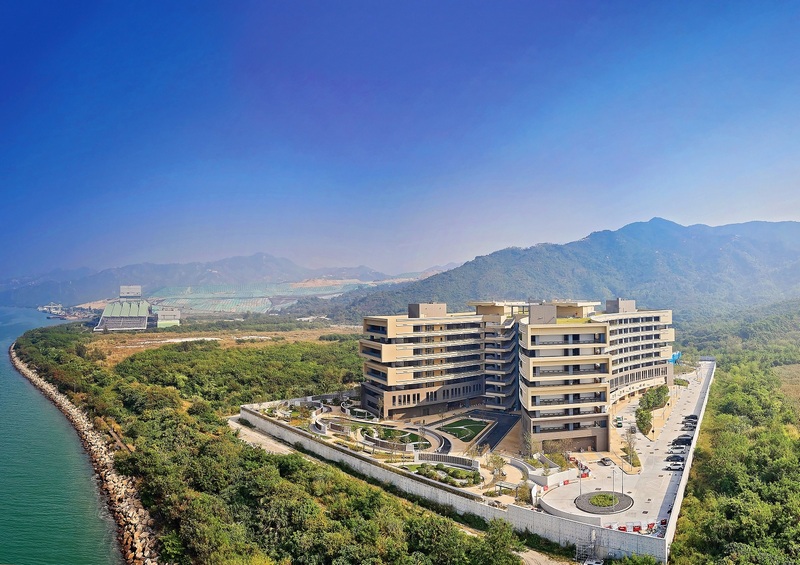
Catering to the public regardless of religious faith, the 8-storey iconic building provides about 160,000 niches, surrounded by approximately 6,700 square metres of landscaped gardens.
Maximising natural lighting and ventilation
“The columbarium maximises the building’s natural lighting and ventilation to enhance the comfort of visitors while reducing the level of its energy consumption and carbon footprint,” said Mr. Hercules Tsoi, Project Leader of Leighton Asia’s CGR project. This is achieved by utilising opened spaces to bring in ample sunlight and fresh air.
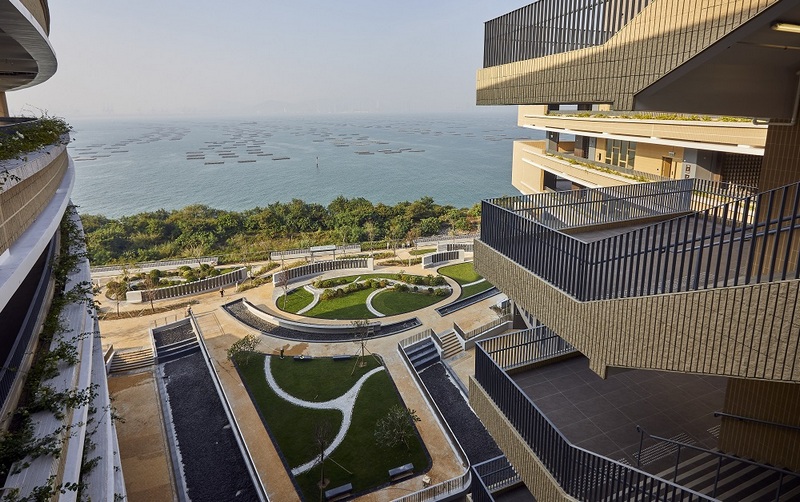
“In the Garden of Remembrance, dedicated areas are set aside for columbarium users to perform memorial rituals, scatter the cremated ashes of their loved ones and mount commemorative plaques in fond memory of the deceased,” he added.
Challenging soil conditions
Leighton Asia’s scope of works as main building contractor also included the design and construction of a foundation system, together with pile caps and strap beams, to support the building.
“From a green perspective, one of the main challenges we faced was the site itself. The site sat on a parcel of brownfield land with different deposits. The design solution involved covering the entire area of deposits with a layer of natural soil about one metre thick,” said Mr. Tsoi.
H-piles were designed to lay a deep foundation for the site. The building loads are supported by these piles without displacing or affecting the underlying soils. “Because of this, we managed to minimise the disposal rate and trips for soil export, in-line with best environmental protection practices.”
Heat island effect
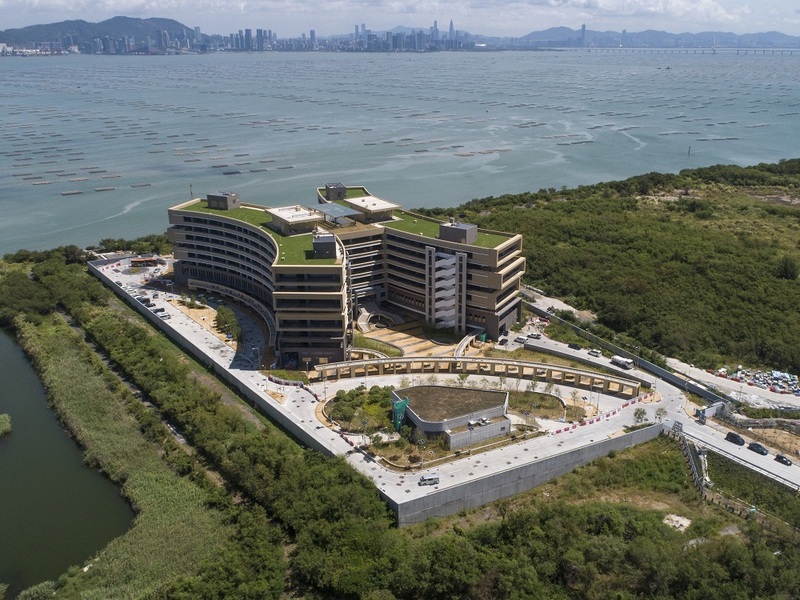
“We installed a green-roof system for insulation purposes. Instead of the commonly used foam boards, roofing materials like rockwool, fiberglass, metals, paving blocks and tiles were chosen for their solar spectrum reflective characteristics, with a Solar Reflectance Index of 78 documented. Fifty percent of the roof area is covered with vegetation to protect it from direct sun exposure and keep the interiors cool,” said Mr. Tsoi.
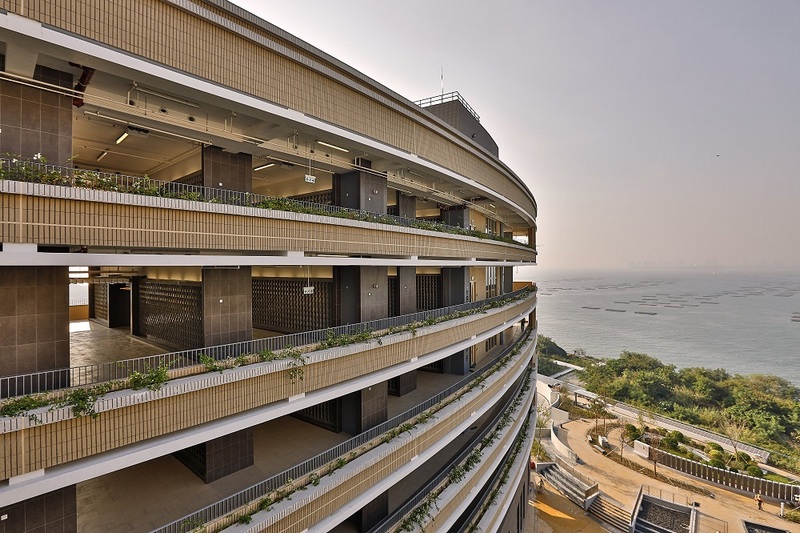
Vertical greenery was “planted” on the exterior walls to raise the columbarium’s visual appearance and energy savings. These efforts have been undertaken to mitigate the urban heat island effect, in order to provide comfort for visitors.
Sustainable procurement
Another sustainable move by the project was to procure materials, including joss burners, soft wood, materials for stone masonry, steel rebars and concrete, within a radius of 800 km from the site, to limit emissions of delivery vehicles and decrease air pollution on the site. Timber used for project construction was sustainably sourced from FSC (Forest Stewardship Council)-certified suppliers in Mainland China.
“Energy efficiency is another top concern factored into our sourcing and procurement decisions. Energy-efficient construction equipment were procured, in parallel with the import of eco-friendly heating, ventilation and air conditioning (HVAC) plant and equipment. Similarly, care was taken to ensure the insulation materials supplied to the project were manufactured entirely without chlorofluorocarbons or hydrochlorofluorocarbons blowing agents”, said Mr. Tsoi.
In addition, the team pursued a “Three Rs” approach to facilitate reduction, reuse and recycling of office paper, plastic water bottles, metals and concrete waste, ensuring that high sustainability standards were observed throughout the project cycle from construction planning through to completion.
Better asset management using digital engineering
Leighton Asia’s surveying team extended the application of laser scanning and photogrammetry to the completed CGR project. The two technologies can be associated with 2D Computer Aided Drawings and 3D Building Information Modelling for comparison. This creates reality captures including geospatial data for inaccessible area, and hence facilitates the asset management and maintenance of the CGR if there is need.
Next goal: BEAM Plus (Existing Buildings)
Mr. Tsoi concluded: “We are delighted that our project has achieved Platinum rating, the highest level under the BEAM Plus (New Buildings). Based on the green foundation we have built, we hope the project operator will take the newly-won title to the next level of assessment – BEAM Plus (Existing Buildings) – in the years to come.” The new Columbarium and Garden of Remembrance (CGR) in Tuen Mun, the largest of such facilities managed by the Food and Environmental Hygiene Department (FEHD), has gained a prestigious industry accolade – the Building Environmental Assessment Method (BEAM) Plus Platinum Rating under the Hong Kong Green Council’s BEAM Scheme.